What Is A Joist?
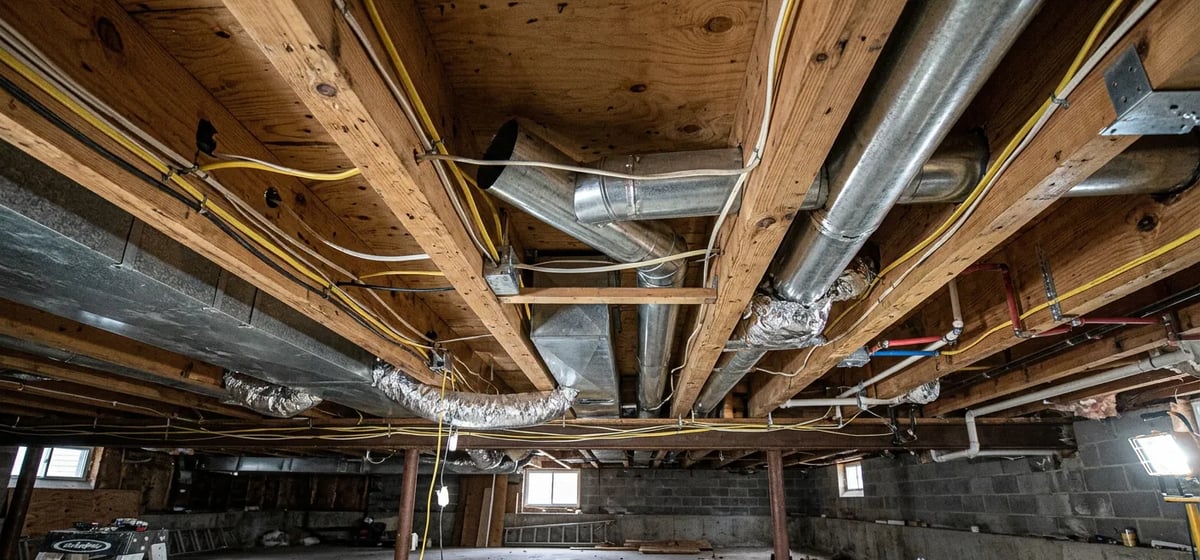
A joist is a thick, sturdy beam that runs horizontally across your house. Builders use these beams to create the framework for your floors and ceilings. If you stand in an unfinished basement and look up, you'll see a row of wooden boards running parallel to each other. Those are your floor joists. They span the open spaces between your foundation walls or main support beams.
In most residential homes, builders space joists 16 inches apart from the center of one board to the center of the next. Sometimes they space them 24 inches apart. Your plywood subfloor sits directly on top of the floor joists. Your drywall ceiling hangs directly from the bottom of the ceiling joists.
Why They Matter
Joists carry the weight of everything in your house. That includes your furniture, your appliances, and your family. Strong joists keep your floors flat and prevent them from bouncing when you walk. They're a core part of your Foundation & Structure.
When joists are too small or spaced too far apart, floors can sag or feel spongy. Over time, heavy items like a cast iron bathtub or a large kitchen island can bend a weak joist. This leads to cracked floor tiles and squeaky floorboards.
Common Joist Problems
Because they are usually made of wood, joists face a few common threats. You should watch out for these main issues:
- Water damage from hidden leaks that causes the wood to rot and crumble.
- Termites and powderpost beetles that eat the wood from the inside out.
- Bad cuts and notches made by careless contractors running new pipes.
- Overloading from heavy new additions like a grand piano or a granite kitchen island.
You should always fix leaks in your Plumbing right away to protect your structural beams. Wet wood rots quickly and invites pests.
Repairing Joists and What It Costs
If you find a damaged joist, you don't always have to replace the whole thing. Contractors often fix bad joists by sistering them. Sistering means bolting a brand new piece of wood directly alongside the damaged one. The new wood takes over the heavy lifting.
Repair costs depend on how hard it is to reach the damaged area. If the joist is exposed in an unfinished basement, a contractor might charge 150 to 300 dollars to sister a single beam. If the damaged joist is hidden behind a finished drywall ceiling, the price jumps. You'll have to pay to tear down the drywall, fix the beam, and put up new drywall. In those cases, expect to pay 500 to 1,000 dollars or more per joist. Keep in mind that local labor rates and material costs mean these ranges vary.
If you want to tackle small repairs yourself, make sure you understand the basics of load bearing structures. You can read more about deciding when to hire help in our guide to DIY vs. Hiring a Pro.