What Is a Roof Valley?
A valley is the V shaped line where two sloping sections of a roof meet. The term comes straight from geography. Just like a valley in nature sits between two mountains, a roof valley sits between two peaks on your house. When it rains, water flows down the slopes and collects in this crease. The valley acts like a giant funnel. It gathers all that water and sends it rushing straight into your gutters.
Because it handles so much fast moving water, a valley is a critical part of your Roofing system. It takes a heavy beating during severe storms. Roofers pay special attention to this area to make sure it stays completely watertight.
Open vs. Closed Valleys
When you look up at your roof, you'll usually see one of two valley styles. Roofers call them open or closed.
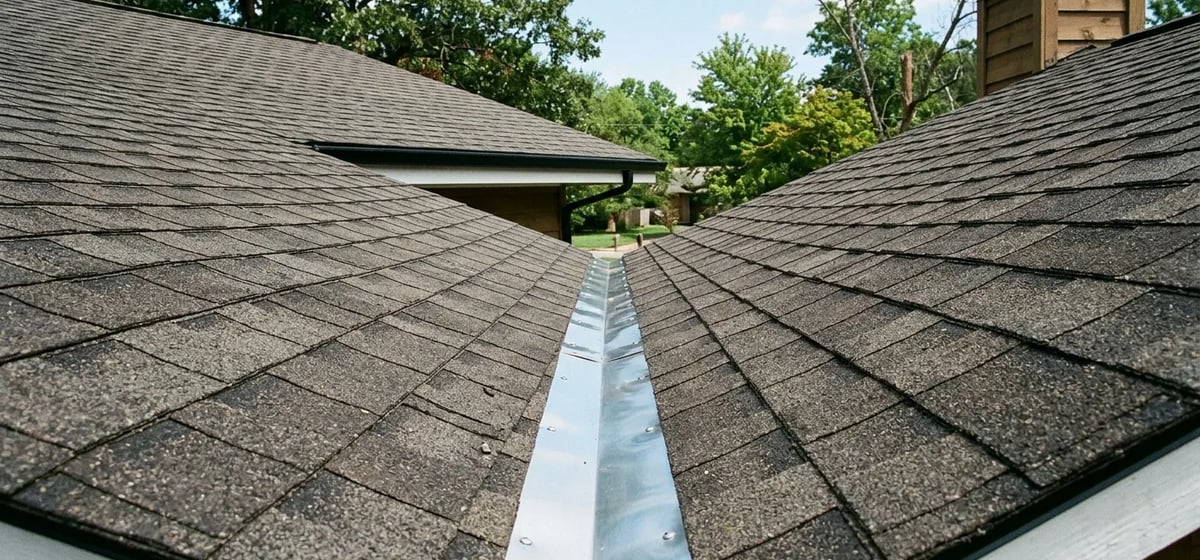
- Open valleys: These have a visible strip of metal running down the crease. The roofer leaves the metal exposed to help water slide off fast. The metal is usually steel, aluminum, or copper. Open valleys tend to last longer because metal sheds water better than asphalt.
- Closed valleys: These don't show any metal from the outside. Instead, the roofer weaves the asphalt shingles together across the crease. Underneath those shingles, there is still a thick protective waterproof layer.
Why Valleys Matter to You
Valleys catch everything that falls on your roof. That means they catch water, leaves, pine needles, and fallen sticks. If debris piles up in the valley, it creates a small dam. A dam stops rainwater from flowing down to the gutters. The trapped water will eventually back up under your shingles and leak into your attic.
A leaking valley is a common cause of Home Emergencies. The water can travel along your roof beams inside the attic and drip onto your ceiling far away from the actual leak. That makes valley leaks tricky to spot right away. Often, by the time you see a brown water stain on your ceiling, the roof has been leaking for a while.
What to Watch For
You should inspect your roof valleys twice a year, usually in the spring and fall. You don't need to climb a ladder to do this. Just stand in your yard with binoculars and look for a few clear warning signs.
- Piles of debris: Look for thick clumps of leaves or small branches stuck in the V shape.
- Curling shingles: Check if the edges of the shingles near the valley are curling up or cracking.
- Rust spots: If you have an open metal valley, look for red or brown rust stains on the metal.
- Missing granules: Asphalt shingles are covered in tiny stone granules. Rushing water can wash these small stones away over time. Look for dark bald spots on the shingles right next to the valley.
Costs to Repair a Valley
If your valley starts leaking, you'll need to call a professional. Fixing a valley isn't a good weekend project. A roofer will usually need to tear off the old shingles around the leak. Then they must replace the waterproof underlayment, install new metal flashing, and carefully put down new shingles to match.
Repair costs for a single roof valley usually run from 300 to 1000 dollars. Prices depend heavily on your roof steepness, the materials used, and where you live. Keep in mind that costs vary widely. If the leak caused the wooden roof decking underneath to rot, the roofer will charge more to replace that damaged wood. If you want to learn more about budgeting for repairs, read our guide on Hiring Contractors & What Things Cost.