What a Crankcase Heater Does
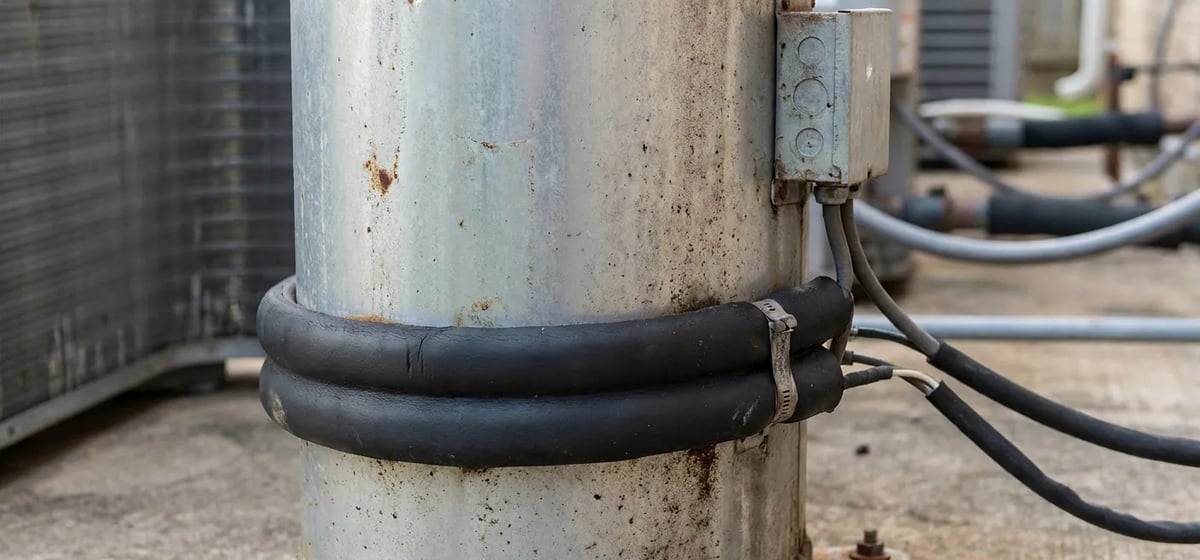
Your outdoor air conditioner or heat pump has a large compressor inside it. This compressor acts like the heart of your HVAC & Climate Control system. It pumps refrigerant gas through the copper lines to cool or heat your house. Just like a car engine, this compressor needs lubricating oil to keep the moving metal parts running smoothly. When the weather gets cold, this oil gets thick and sluggish. A crankcase heater is a small electrical band or heating element that wraps around the bottom of the compressor. It turns on automatically when the temperature drops. This keeps the oil warm and fluid so your system can start up safely in cold weather.
Why It Matters for Your System
Cold weather causes a big problem for heat pumps and air conditioners. Refrigerant naturally wants to mix with the lubricating oil when the system sits idle. If the temperature gets low enough, the refrigerant turns into a liquid and settles at the bottom of the compressor. When the system kicks on, the compressor tries to pump this liquid. Compressors are built to pump gas, not liquid. Pumping liquid refrigerant can break the internal valves or wash away the protective oil. This causes heavy wear and tear. The crankcase heater prevents this by keeping the compressor warm. The heat boils the liquid refrigerant back into a gas and leaves the lubricating oil right where it belongs.
Where You Will Run Into It
You'll usually only hear about a crankcase heater if you live in a colder climate and own a heat pump. Heat pumps run all winter long, so they rely heavily on this small heater to survive the freezing temperatures. Air conditioners also have them if you run your AC when it's chilly outside. You might spot a mention of it on a home inspection report if the inspector notices the heater band is loose or broken. You might also see it listed on a quote for a new heating system. Many modern units come with this heater already installed at the factory. Older units might need a technician to add a strap-on heater around the base of the compressor.
What to Watch For and Repair Costs
A broken crankcase heater won't stop your heating system from turning on. Instead, it slowly damages the compressor over time. Watch for these common signs that your heater might be failing:
- A loud grinding or banging noise when the outdoor unit turns on.
- The compressor tripping the circuit breaker on cold mornings.
- A visible loose metal band hanging off the bottom of the compressor.
If you suspect a problem, you should call a professional to check it. Replacing a broken heater is an easy job for a technician, but you shouldn't try it yourself because it involves high voltage. You can learn more about when to call an expert in our guide to DIY vs. Hiring a Pro.
If you need to replace a bad heater, expect to pay between 150 to 300 dollars for the part and the labor. Prices and ranges vary depending on your location and the brand of your system. A new heater is a tiny price to pay to protect a compressor that costs thousands of dollars to replace.