What is fascia?
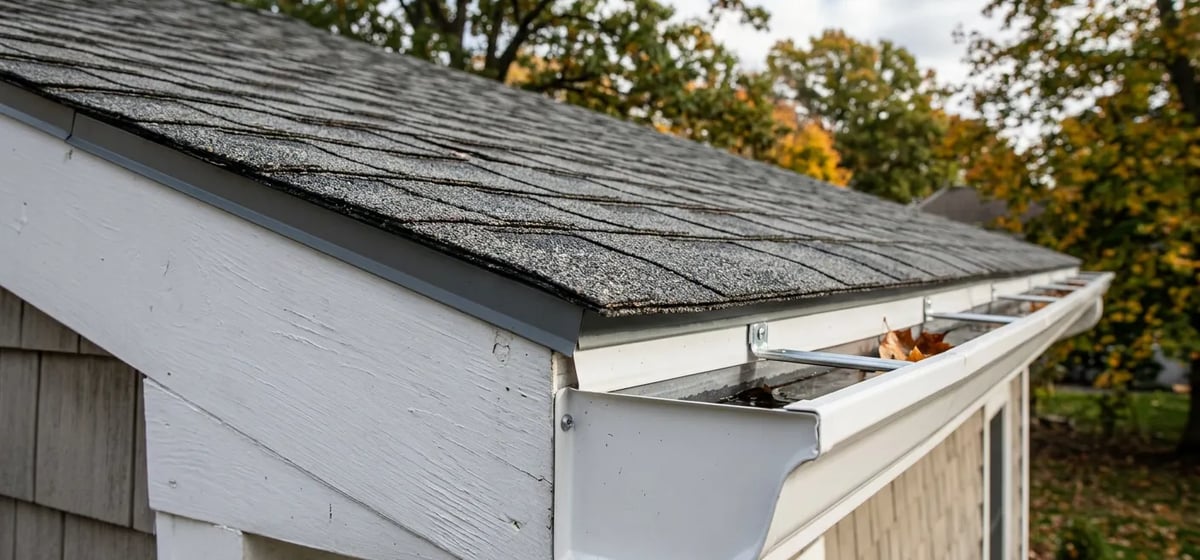
Look up at the edge of your roof. You will see a long, straight board running along the lower edge. This is the fascia board. The word comes from Latin, where it means a band or bandage. Builders use this term because the board wraps around the edge of your roof like a protective band.
Fascia covers the exposed ends of your roof rafters. It creates a smooth, finished look for the outside of your house. More importantly, it gives your gutters a solid place to attach securely. Without this board, you would just see the rough, unfinished ends of the wooden beams holding up your roof structure. It bridges the gap between your roof and your exterior walls.
Why this board matters
Your fascia does a lot of heavy lifting. It is the frontline defense for your roof and attic. It blocks wind and rain from blowing inside your attic during a severe storm. It also stops birds, bats, mice, and squirrels from chewing their way inside to make a nest.
Since it holds up your gutters, it handles a massive amount of weight. During a heavy rainstorm, gutters fill with gallons of water and heavy wet leaves. If your fascia is weak or rotting, the gutters can pull away from the house and crash to the ground. Keeping this board in good shape protects your Roofing system from serious water damage. It also works with a metal piece called a drip edge, which directs rainwater away from the wood and right into the gutter.
Common materials used
Builders use a few different materials for these boards. The right choice depends on your budget and how much maintenance you want to do over the years.
- Wood: This is the most common and affordable choice. Pine, spruce, and cedar are very popular options. Wood looks great but requires regular painting and sealing to stop rot from setting in.
- PVC or Plastic: These synthetic boards cost more up front but they never rot. You don't have to paint them, and wood-boring bugs leave them alone completely.
- Aluminum: Many homeowners wrap their existing wood fascia in custom-bent aluminum. This protects the underlying wood from water damage and saves you from having to paint it every few years.
Signs of trouble
Because these boards sit right under the roof edge, they take a beating from the sun, rain, and snow. Water is their absolute biggest enemy. If your gutters clog with leaves, water spills over the back and soaks into the wood. Over time, the wood rots and turns soft and spongy.
You should walk around your house twice a year to look for common problems. Watch for dark water stains, chipped paint, or boards that look warped and wavy. If your gutters look like they're sagging or tilting away from the house, the wood behind them might be failing. Catching these issues early saves you money and protects your Exterior: Siding, Garage & Decks from water running down the walls and ruining your foundation.
What it costs to replace
If you find rot, you need to replace the damaged sections quickly before the rot spreads to your roof rafters. You generally hire a roofer or a skilled carpenter for this job. For more details on finding the right pro, check out our guide on Hiring Contractors & What Things Cost.
Costs depend heavily on the material you choose and where you live. Keep in mind that prices vary widely across the country. On average, you can expect to pay 15 to 30 dollars per linear foot to replace a standard wood fascia board. If you choose PVC or composite materials, the cost jumps to 20 to 45 dollars per linear foot. If the contractor has to remove and carefully reinstall your gutters to do the job, you'll pay extra for that labor time. A small repair might cost 300 to 600 dollars, while replacing the boards around your entire house can easily cost 1500 to 3000 dollars.