What a Footing Drain Is
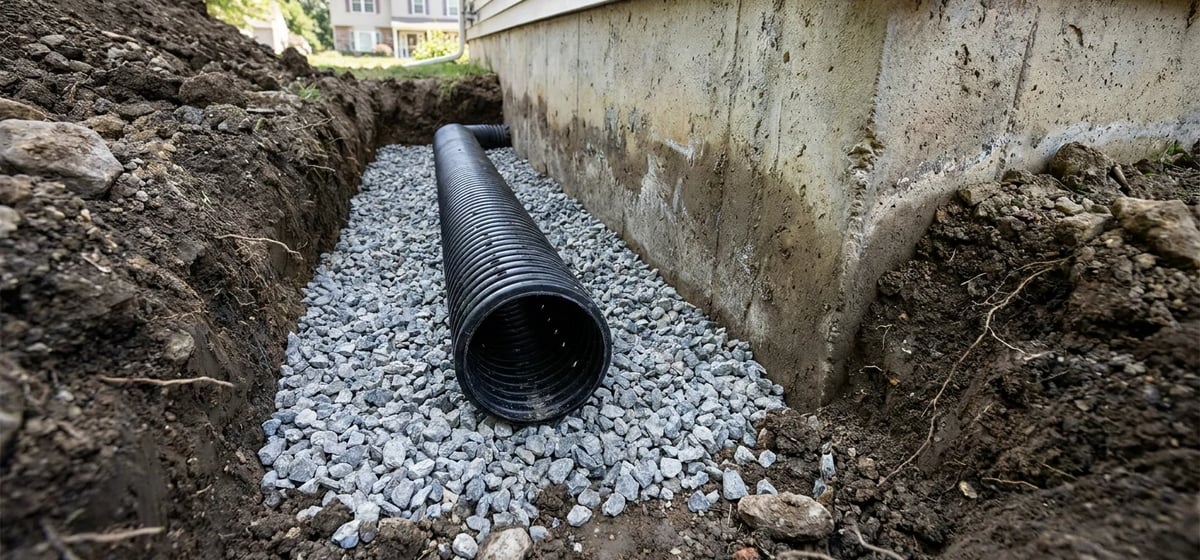
A footing drain is a pipe buried deep in the ground around the base of your house. Builders place it right next to the concrete footing that holds up your walls. The pipe usually has holes in it. It sits in a bed of gravel wrapped in a special cloth. When it rains, water seeps into the ground. Instead of pushing against your basement walls, the water trickles through the gravel and into the pipe. The pipe then carries this water safely away from your house.
Older homes might have clay pipes. Newer homes use flexible plastic or stiff PVC pipes. This system works quietly underground to keep the lowest level of your home dry. You can learn more about how your house sits on the ground in our Foundation & Structure guide.
Why It Matters to You
If you have a basement or a crawlspace, groundwater is your biggest enemy. Wet soil gets very heavy. It pushes hard against your concrete walls. Over time, this pressure causes cracks, bowing walls, and severe leaks.
A footing drain takes that pressure away. It acts like a gutter for the dirt. Without it, water will eventually find a way inside. A flooded basement ruins your belongings and causes mold to grow fast. Fixing water damage costs thousands of dollars. A working drain stops these disasters before they start. If your yard has a steep slope or heavy clay soil, this pipe is even more important. Good drainage protects your investment and keeps your indoor air healthy.
Interior vs. Exterior Drains
Most homes have an exterior footing drain installed when the house is built. This pipe lives on the outside of the foundation walls. But if your exterior drain fails, digging up your yard to replace it is very expensive. Because of this, many homeowners choose to install an interior footing drain instead.
An interior drain goes inside your basement. Contractors use a jackhammer to break up a narrow strip of your concrete floor right next to the walls. They lay a new pipe in a trench, cover it with gravel, and pour new concrete over the top. This interior pipe catches water as it enters and sends it to a sump pump. The sump pump then shoots the water outside. Interior systems are highly effective and usually cost less than digging up your entire yard. They also do not require you to destroy your landscaping or driveway.
How to Spot Trouble
Since the drain is buried deep in the dirt, you can't see it. But you can see the signs when it stops working. Look for the following warning signs:
- Damp spots on your basement walls near the floor.
- A white, powdery substance on the concrete left behind by dried water.
- Puddles on the floor after a heavy rain.
- A strong, musty smell downstairs.
Sometimes, tree roots grow into the pipe and block the water. Mud and silt can also clog the holes over time. If you notice any of these signs, you need to act quickly. You can read more about dealing with bad smells in our Smells & Odors guide.
Never plant large trees close to your house. The roots will seek out the moisture in your footing drain and crush or clog the underground pipes.
Repair and Replacement Costs
Fixing a broken footing drain is a major project. A professional must dig up the dirt around your foundation to reach the pipe. If you just need to clear a small clog, a plumber might charge 300 to 600 dollars to snake the line. But if the pipe has collapsed, you will need a full replacement.
Installing a new exterior footing drain costs between 5,000 and 15,000 dollars. Prices depend on how deep your foundation goes and what sits on top of the dirt. Digging up patios, decks, or large bushes adds to the final bill. Keep in mind that costs vary widely by region and the size of your house. You can check our guide on Hiring Contractors & What Things Cost for tips on getting good estimates.