What Galvanic Corrosion Is
Galvanic corrosion is a chemical reaction that destroys metal pipes. It happens when two different types of metal touch each other in water. Think of it like a tiny battery forming inside your plumbing. The water acts as a bridge between the two metals. This creates a weak electrical current. That current slowly eats away the weaker metal until it fails completely.
You will hear this term mostly in plumbing. It happens most often when a copper pipe connects directly to a galvanized steel pipe. The term honors Italian scientist Luigi Galvani. He discovered the electrical nature of chemical reactions in the 1780s. Plumbers adopted the term to describe the electrical current that eats away at mixed metal pipes.
Why It Matters to You
This slow destruction leads to weak pipes, tiny pinhole leaks, and eventually massive pipe bursts. A sudden burst pipe can flood your home in minutes. It ruins drywall, flooring, and furniture. Fixing water damage often costs 1500 to 5000 dollars. Those ranges vary based on where you live and how fast you catch the leak.
If you catch the problem early, the fix is cheap. If you ignore it, you will pay for a major cleanup. Knowing about this reaction helps you spot bad plumbing jobs before they turn into disasters. It is especially important to check for this when you move into an older home.
Where You Find It in Your Home
You will usually find this problem where old plumbing meets new plumbing. Builders used galvanized steel pipes in homes built before the 1960s. Modern plumbers use copper or plastic. When someone connects new copper directly to old steel, the reaction begins.
Look for these common trouble spots:
- Water heater connections where copper pipes meet the steel tank.
- Places where a new copper water main ties into older steel indoor pipes.
- Outdoor hose bibs where a copper line connects to a steel fixture.
- Under your kitchen or bathroom sinks if someone did a quick repair.
You can learn more about how your home pipes work in our guide to Plumbing.
How to Spot the Signs
You do not need to be a professional to see the warning signs. You just need to look closely at the places where two pipes join together. The metal will look sick and crusty.
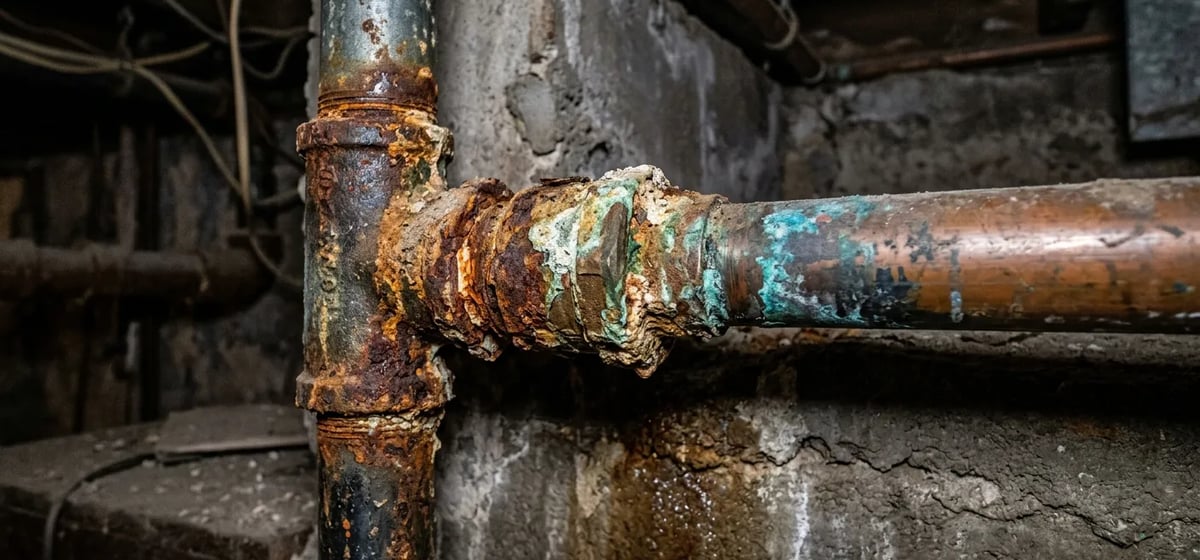
Watch out for a thick, crusty buildup right at the joint. You might see a powdery white or green crust on the copper side. You will likely see dark red or brown rust on the steel side. Sometimes the joint looks wet or feels damp to the touch. You might also notice a drop in your water pressure if the rust builds up inside the pipe and blocks the water flow.
Never try to scrape the crusty rust off a pipe joint. That crust might be the only thing holding the water inside. If you knock it loose, the pipe could start spraying water everywhere.
Fixing the Problem
You stop the reaction by separating the two metals. Plumbers use special fittings called dielectric unions to do this. A dielectric union has a rubber or plastic washer inside it. This washer creates a physical barrier so the copper and steel never actually touch. Without contact, the electrical current stops.
Plumbers also use brass fittings as a middleman. Brass does not react strongly with copper or steel. A plumber can put a brass valve between the two pipes to keep them safe.
If you hire a professional, expect to pay 150 to 350 dollars to replace a bad joint with a dielectric union. Prices and ranges vary by region and the plumber you choose. If you are unsure about doing this yourself, read our guide on DIY vs. Hiring a Pro to help you decide.