What It Is
A gas valve is a heavy metal knob or lever located on a pipe. It lets you turn the fuel supply on or off for a specific appliance. The word gas comes from the Greek word chaos, which early chemists used to describe formless air. Plumbers have used heavy brass shutoff valves since the late 1800s when cities first started piping natural fuel into homes.
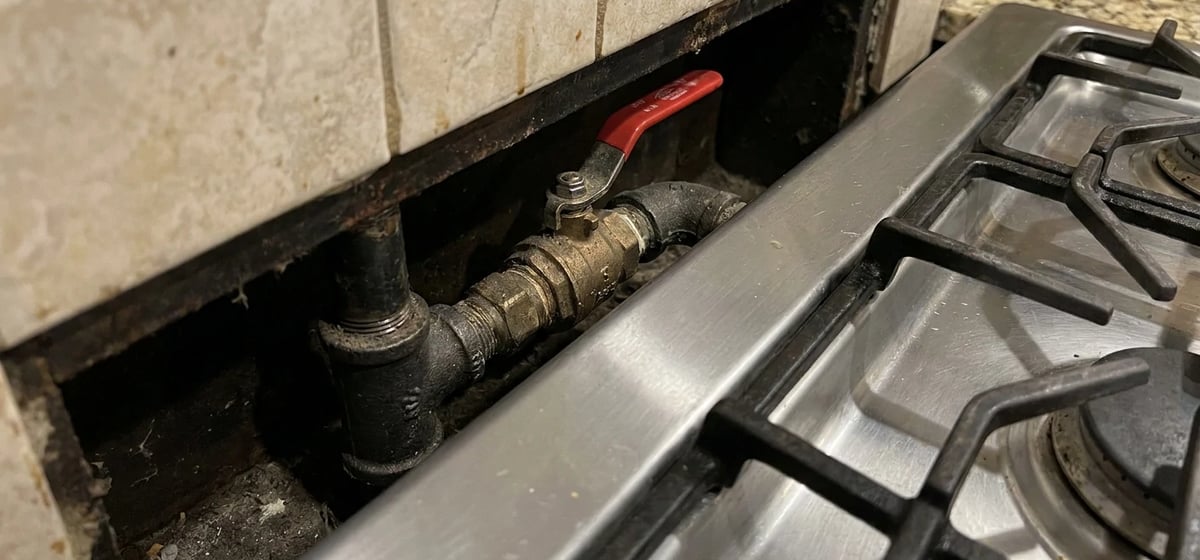
Today, you will usually see a brightly colored handle that you turn a quarter of the way to stop the flow of fuel. These modern versions are called ball valves. Inside the brass fitting is a metal ball with a hole through the middle. When the handle is in line with the pipe, the hole lines up and the fuel is flowing. When you turn the handle so it crosses the pipe to make a T shape, the solid side of the ball blocks the pipe and the fuel is completely off.
Why It Matters To You
Knowing how to use these shutoff points is one of the most important safety skills you can learn. If you smell rotten eggs, you might have a leak. You need to act fast to stop the fuel from filling your home. Turning the lever cuts off the supply right at the source. This is a critical step in handling Home Emergencies.
You do not need any special tools to use most indoor shutoffs. You just reach behind the appliance and turn the handle. This simple action can prevent fires and keep your family safe while you wait for a professional to arrive. It is a good idea to show every adult in your home how these shutoffs work.
Where You Will Find Them
You will find one of these controls near any appliance that burns natural fuel or propane. They are usually placed within a few feet of the machine. Here are the most common spots to look:
- Behind or beside your kitchen stove or oven.
- Behind your gas clothes dryer in the laundry room.
- Near the base of your gas water heater.
- On the metal pipes leading directly into your furnace.
- Next to an indoor gas fireplace.
You can learn more about your heating setup in our HVAC & Climate Control guide. Beyond these indoor spots, there is also a main shutoff at the meter outside your house. This main control usually requires a wrench to turn. It shuts off the supply to the entire house at once.
What To Watch For
Older homes often have older controls that can get stuck over time. Do not force a stuck handle. If you push too hard, you could break the pipe and cause a major leak inside your wall. You might also notice a faint rotten egg smell near the pipe connection. If you notice Smells & Odors like this, call a plumber right away. They can test the connection with a special soap solution that bubbles if fuel is escaping.
Replacement Costs
Plumbers usually charge between $150 and $400 to replace a bad shutoff control behind an appliance. These price ranges vary based on your local labor rates and how hard it is to reach the pipe. The part itself is very cheap, usually under $20. You are mostly paying for the plumber to safely seal the new connection and test the line. It is never a good idea to do this job yourself. A bad seal can lead to a dangerous situation that puts your whole house at risk.