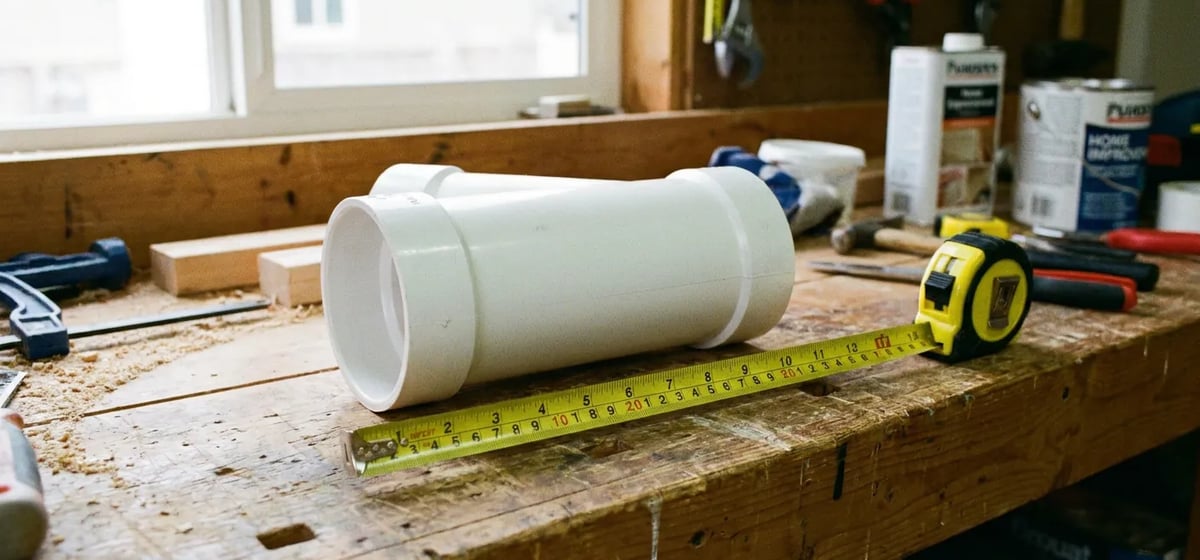
What is a wye fitting?
A wye fitting is a piece of plumbing pipe shaped exactly like the letter Y. You use this connector to join a branch line into your main sewer pipe. It meets the main pipe at a smooth 45 degree angle. Plumbers use these fittings in your drain and vent systems. Most wye fittings in modern homes are made of white PVC or black ABS plastic. In older homes, you might see them made of heavy cast iron.
The straight part of the Y shape connects to your main drain line. The angled part catches wastewater from a sink, toilet, or shower. They come in many sizes to match your pipes. Your kitchen sink might use a small 2 inch wye fitting. Your main sewer line will use a large 3 inch or 4 inch wye fitting to handle the heavy flow from multiple bathrooms.
Why the shape matters so much
The gentle 45 degree curve is the whole point of a wye fitting. This smooth angle stops solid toilet waste and toilet paper from clogging. It helps wastewater flow smoothly out to the street or your septic tank. Gravity pulls the water down the angled path without a harsh stop. This rule keeps your plumbing system flowing freely without messy backups.
If a plumber used a sharp 90 degree fitting instead, the water would crash into the wall of the pipe. Solid waste would pile up at the sharp turn. That sharp turn is called a sanitary tee. Plumbers can only use sanitary tees when water drops straight down. Whenever a pipe runs sideways along your floor or ceiling, the plumbing code requires a wye fitting.
Where you will find wye fittings
You'll spot these Y shaped pipes all over your house if you know where to look. They live in your basement, crawlspace, or attic. You'll see them anywhere two drain pipes merge into one.
- Basement ceilings: Look up to see smaller pipes from upstairs sinks joining the large main drain.
- Under the floor: Crawlspaces often have a main trunk line with wye fittings catching water from different bathrooms.
- Cleanout access points: Plumbers often put a screw plug in the angled part of a wye. They can remove this plug to snake a clogged drain.
- Vent stacks: Wye fittings also join air vent pipes together in your attic before they exit the roof.
What to watch for
Wye fittings are tough, but things can go wrong. The biggest issue happens during a bad bathroom remodel. A handy homeowner might grab a cheaper sanitary tee instead of a wye fitting for a horizontal drain. This mistake guarantees future clogs. It'll also fail a city inspection.
You should also watch for purple or clear glue drips at the joints. Plumbers use a special primer and cement to weld the plastic pipes together. If they forget the primer, the joint will eventually crack. If the glue joint fails, wastewater will drip out. Look for water stains on the drywall below the pipe. Listen for a gurgling sound when you flush. A gurgle might mean a wye fitting in your vent pipe is clogged with leaves or a bird nest.
Costs to replace or install
The plastic wye fitting itself is very cheap. You can buy one at a hardware store for 5 to 20 dollars. However, installing it takes skill. You've got to cut the main sewer line, fit the pieces perfectly, and glue them fast before the cement dries. Because of the mess and risk of leaks, you might want to look at our guide on DIY vs. Hiring a Pro.
If you hire a licensed plumber to replace a cracked wye fitting, expect to pay 150 to 400 dollars for the job. Plumbers charge for their travel time and hourly labor. Costs always vary based on where you live and how hard it is to reach the pipe. If the pipe is buried under a concrete slab, the price will jump to 1000 dollars or more. You can read more about standard labor rates in our guide to Hiring Contractors & What Things Cost.