What is a joist hanger?
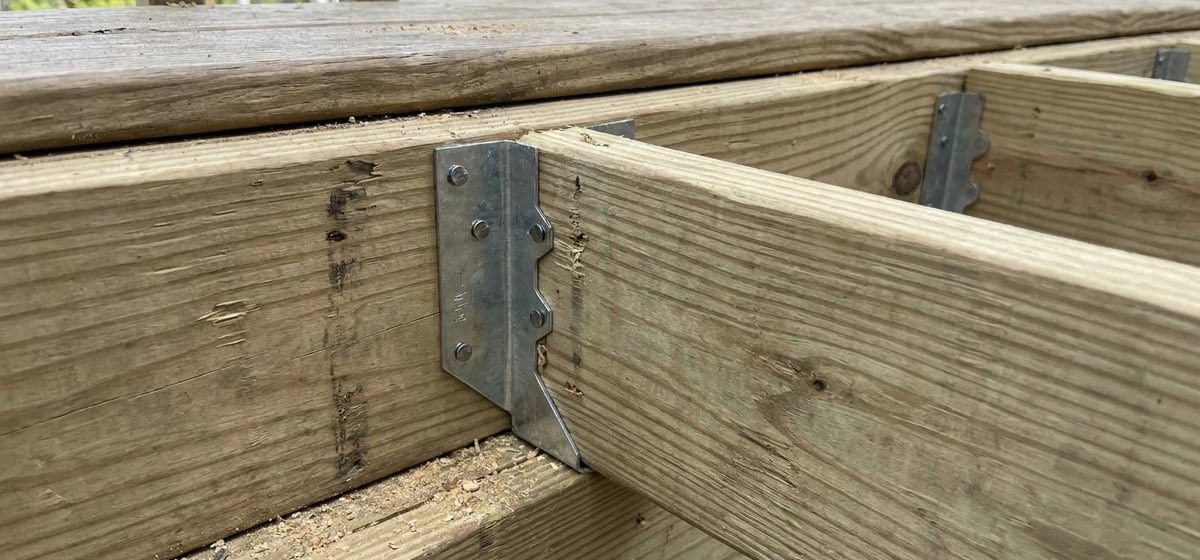
A joist hanger is a piece of metal shaped like the letter U. It holds the heavy wooden beams that support your floors, ceilings, and decks. You attach the bracket to a larger support beam, called a ledger board or rim joist. Then, you sit the end of the floor beam right inside the U shape. You nail the bracket into both pieces of wood to lock them together. This creates a very strong connection that won't easily break.
Before these metal brackets existed, builders had to cut notches into wood or use weaker nailing methods to join beams. Joist hangers completely changed how homes are built. They make the framing much stronger and keep the wood from twisting over time. Today, building codes require them in almost all new home construction.
Why joist hangers matter to you
These small metal brackets do a massive amount of work. They carry the weight of your floor, your heavy furniture, and your family. If you look at the Foundation & Structure of your house, you'll see how important it is to keep things perfectly stable. Joist hangers stop the wooden beams from pulling away from the main support structure.
When wood dries out over the years, it shrinks and twists. A joist hanger holds the beam tight so it stays perfectly upright. This prevents bouncy, squeaky floors inside your house. It also keeps your outdoor deck from pulling away from your house and collapsing under heavy weight. A strong connection here keeps your home safe and solid for decades.
Where you will find them in your home
You won't see joist hangers in your finished living room or bedroom. They hide behind the drywall and under the floorboards. But you can spot them easily in unfinished spaces around your property.
- Basements and crawlspaces: Look up at the ceiling in your unfinished basement. You'll see the metal brackets holding the floor joists to the main center beam of the house.
- Outdoor decks: Walk under your deck and look where the deck connects to your house. You'll see a row of joist hangers holding the deck frame to the ledger board. This is a key part of your Exterior: Siding, Garage & Decks setup.
- Attics and roofs: You might see them holding the ceiling joists in place, especially if your roof has a complex shape with intersecting beams.
What to watch out for
Joist hangers are tough, but they can fail if they're installed wrong or exposed to too much water. You should check your visible hangers once a year.
Look out for rust on your deck brackets. Outdoor hangers must have a special galvanized coating to fight rust. If you see deep, flaky rust, the bracket is losing its strength and needs replacing. You should also check for missing nails. Every single round hole in the metal bracket needs a nail. If a builder skipped holes, the connection is weak. Finally, watch for wood rot around the bracket. If the wood turns soft or crumbly, the hanger has nothing solid to grab onto anymore.
Repair and replacement costs
The metal brackets themselves are very cheap to buy. A standard joist hanger costs between 1 to 5 dollars at the local hardware store. Special sizes for very thick beams might cost 10 to 20 dollars each.
However, paying a professional to replace a bad hanger takes time and hard labor. If you need to fix a rusted hanger on your deck, expect to pay a handyman 75 to 150 dollars per hour. A typical repair job for a few deck hangers will cost 200 to 500 dollars. Prices vary based on where you live and how hard it is to reach the bracket. If you need more details on labor rates, check out our guide on Hiring Contractors & What Things Cost. If the wood beam itself is rotten, the repair will cost much more because the contractor has to temporarily support the floor and replace the heavy timber.