What is a knockout?
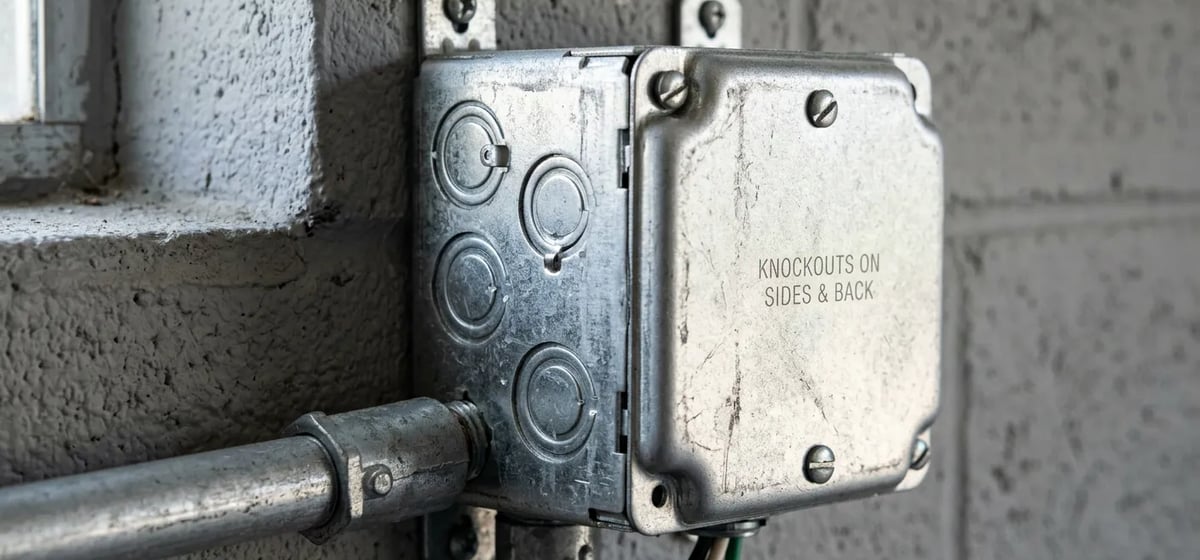
A knockout is a small, partly stamped circle of metal found on the sides, top, or back of an electrical box. You'll also see them on your main breaker panel. They're designed to stay perfectly sealed until you need them. When you want to run a new wire into the box, you simply punch out that small metal circle. This creates a smooth, perfectly sized hole for your new cables.
Electricians started using this term in the early 1900s. Around that time, stamped metal boxes began replacing old wooden enclosures. The name comes from the literal action you take. You use a flathead screwdriver and a hammer to knock the metal piece out of its frame.
Most knockouts come in standard sizes. You'll usually see half inch or three quarter inch circles. Some larger breaker panels have concentric knockouts. These look like a bullseye. You can punch out the center for a small wire, or punch out the outer rings for a thicker cable.
Why knockouts matter
Knockouts keep your home safe from electrical fires. A metal electrical box is designed to contain sparks if a wire shorts out. If the box has open holes, sparks can escape and ignite the wood framing inside your walls. Knockouts keep the box completely closed up until a specific hole is needed.
When you do remove a knockout, you can't just shove a wire through the bare metal hole. The sharp metal edges will slice right through the plastic insulation on your wires. This creates a serious shock and fire hazard. You must install a special fitting called a cable clamp into the knockout hole first. The clamp holds the wire tight and protects it from the sharp metal edge.
When you deal with them
You'll usually deal with knockouts during specific home improvement projects. Some common examples include:
- Adding a new electrical outlet in a bedroom or hallway.
- Wiring a new ceiling fan or overhead light fixture.
- Running a dedicated circuit for a heavy appliance like a microwave.
- Upgrading your main breaker panel to handle more power.
If you hire a professional to run a new circuit from your panel, expect to pay 200 to 500 dollars. Prices vary based on how far the wire has to travel. If you're doing the work yourself, you'll buy blank metal boxes at the hardware store. You'll have to decide which knockouts to remove based on which direction your wires are coming from. Before you start pulling wires, check out our guide on Electrical basics. You might also want to review DIY vs. Hiring a Pro to make sure you're comfortable with the risks.
How to remove a knockout
Removing a knockout requires a little bit of technique. If you hit it too hard, you might bend the whole electrical box. If you don't hit it hard enough, the metal circle will just bend instead of breaking free.
First, you place the tip of a flathead screwdriver against the edge of the knockout circle. Don't place it right in the center. You want to aim for the outer edge, opposite the tiny metal tab that holds the circle in place. Next, you tap the back of the screwdriver firmly with a hammer. The metal circle will bend inward. Once it's bent back, you grab the metal disc with a pair of pliers. You wiggle the disc back and forth a few times until the metal tab snaps off entirely. Finally, you throw the loose metal piece in the trash so no one steps on it.
Missing knockouts and safety
One of the most common issues found during a home inspection is an open knockout. This happens when someone punches out a metal circle but never runs a wire through it. It also happens when an old wire gets removed but the hole is left behind.
An open knockout is a code violation, but it's very easy to fix. You don't have to replace the whole box. You can buy a knockout seal at any hardware store. This is a small metal or plastic plug that snaps right into the empty hole. A pack of knockout seals usually costs 2 to 5 dollars, though prices vary by store and material. You just push the plug into the hole until it clicks into place. This restores the fire rating of the box and keeps pests out.