What It Is
A Lally column is a strong steel pipe filled with concrete. It stands upright in your basement to support the heavy wooden beams above it. These main beams hold up the floors and walls of your house. Irish immigrant and bricklayer John Lally invented this concrete filled pillar in the late 1800s. He wanted a fireproof support column to replace the wooden posts that often failed during house fires. Today, these columns are a standard part of home building. The steel gives the column its outer shape and handles tension. The concrete inside stops the steel pipe from crushing or buckling under heavy weight. Together, they create an incredibly strong pillar.
Why It Matters To You
These columns carry a huge amount of weight from the upper levels of your house. They keep your floors flat and stop your house from sagging in the middle. If a column fails, the floors directly above it will start to dip. This shift can crack your drywall, pop your floor tiles, and jam your doors so they don't close right. The structural health of your home relies on these simple posts. You can learn more about how your home stands up in our guide to Foundation & Structure. A good column does its job quietly for decades. But if you try to remove one or if it rusts away at the bottom, you risk major structural damage to your home.
Where You Will Find Them
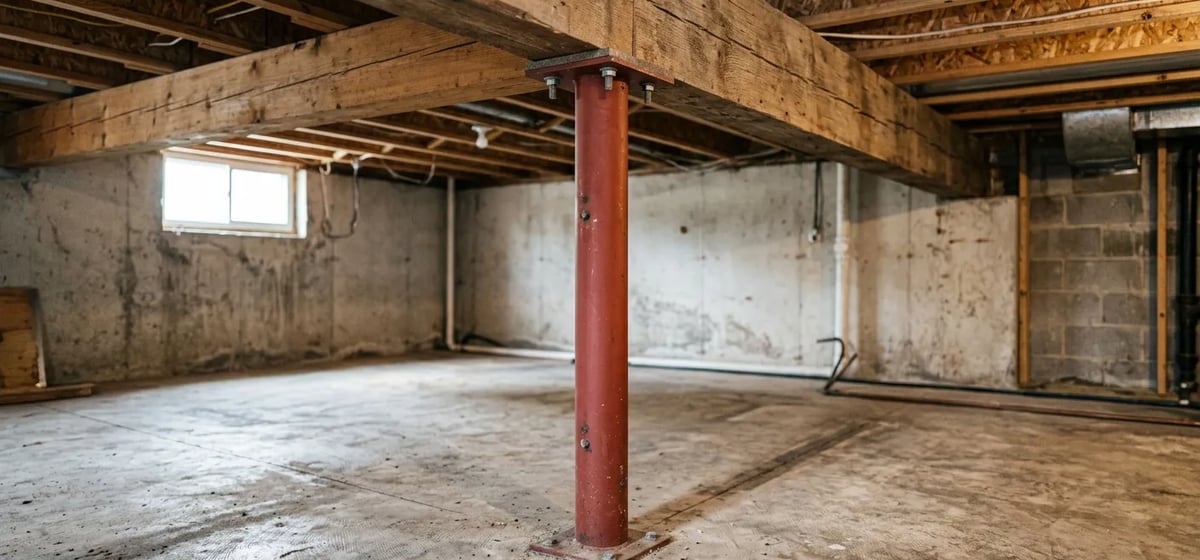
You will almost always find Lally columns in unfinished basements or crawlspaces. They usually run in a straight line down the middle of the space. They sit on a special concrete pad poured deep into the dirt below your basement floor. This pad is called a footing. The footing spreads the weight out so the column doesn't sink into the earth. The top of the column connects to a main wooden or steel beam with a metal plate. Sometimes homeowners build drywall boxes around them to hide them when finishing a basement. If you buy an older home, you might see plain steel pipes painted red or gray. In newer homes, they might have a special coating to prevent rust.
What To Watch For
Lally columns are very tough, but they don't last forever. Moisture is their biggest enemy. You need to check them once a year when you inspect your basement. Look for these common problems:
- Rust at the bottom. Basements get wet from leaks or simple humidity. If the steel rusts through, the column loses a lot of its strength.
- Cracks in the concrete floor around the base. This often means the footing below the column is sinking or cracking.
- Gaps at the top plate. The column must touch the overhead beam tightly. If there is a gap, it is no longer supporting the house.
- Bending or leaning. A column must be perfectly straight to work right. Even a slight lean means it can't hold as much weight.
Repair and Replacement Costs
If you find a badly rusted or leaning column, you need to replace it. This isn't a simple weekend project for a beginner. You should hire a professional contractor to do the work safely. They will use heavy duty temporary jacks to hold up your house while they swap out the old post. You can read more about deciding when to call an expert in our DIY vs. Hiring a Pro guide.
Replacing a single Lally column costs $500 to $1,200. Prices vary based on where you live and how hard it is to reach the spot. If the concrete footing under the floor is cracked or missing, the contractor will need to jackhammer the floor and dig a new footing. Pouring a new concrete footing adds $300 to $800 to the total cost. If you need multiple columns replaced at the same time, the cost per column often drops a little bit. You can find tips on getting good quotes in our guide to Hiring Contractors & What Things Cost.