What is a load calculation?
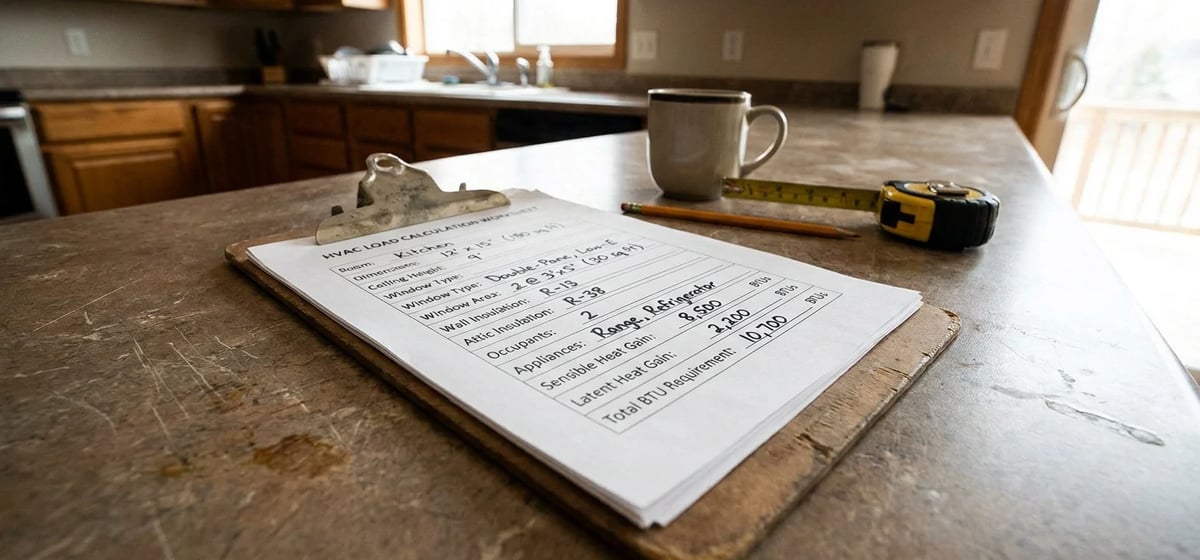
A load calculation is a detailed math formula that tells you exactly how much heating and cooling your home needs. In the HVAC industry, professionals often call this a Manual J calculation. It takes the guesswork out of buying a new furnace or air conditioner. Instead of just looking at your square footage, a contractor measures your entire house to figure out its thermal load. The term comes from the engineering concept of a thermal load. This describes the exact amount of heat energy you must add or remove from a space to keep it comfortable. The air conditioning industry standardized this process in the mid 1900s. Trade groups created specific manuals to make sure every contractor used the same math.
Why it matters to you
Many homeowners think bigger is better when it comes to air conditioning. That is a big mistake. If you buy a system that is too large, it will turn on and off constantly. This short cycling wears out the parts much faster. A massive system also cools the air so quickly that it never runs long enough to remove humidity. You will end up with cold, clammy rooms. On the other hand, a system that is too small will run all day and never reach your target temperature. Your utility bills will skyrocket. A proper load calculation ensures you buy the exact right size for your home. You get better comfort, lower energy bills, and a system that lasts longer. You can learn more about how these systems work in our guide to HVAC & Climate Control.
What goes into the math
Contractors look at many details to get the math right. They do not just measure the size of your rooms. A professional will walk through your house and check several factors.
- The number of windows, their sizes, and which direction they face.
- The type and thickness of the insulation in your attic and walls.
- Your local climate and the amount of shade covering your roof.
- The number of people living in the house.
- The heat generated by appliances and lights.
Upgrading your home changes this math. For example, if you recently installed energy efficient Windows & Doors, your home traps heat better. You will likely need a smaller heating system than you did before the upgrade.
Signs your system is the wrong size
There are a few clear warning signs that the previous owner skipped the load calculation. If your air conditioner runs for only five minutes before shutting off, it is probably too big. If your house feels very dusty or humid in the summer, the system is not running long enough to filter and dry the air. If some rooms are freezing while others are boiling, the equipment size and the ductwork are likely mismatched. Fixing these issues starts with a fresh calculation.
When you need one and what it costs
You should insist on a load calculation anytime you replace your heating or cooling system. Do not let a contractor just swap out your old unit for a new one of the same size. Your old unit might have been the wrong size from the start. You also need a new calculation if you add an extension to your house or finish a basement. Replacing an HVAC system is one of the most expensive home repairs you will face. Spending a few hundred dollars on a proper calculation protects an investment that often costs 5000 to 15000 dollars.
Some HVAC companies include the cost of this calculation in their installation quote for free. If you hire an independent energy auditor to do the math, expect to pay 200 to 500 dollars. Prices vary based on your location and the size of your home. You can read more about hiring good pros in our guide to Hiring Contractors & What Things Cost.