What is a Motorized Damper?
A motorized damper is a metal plate inside your heating and cooling ducts. It opens and closes automatically to control airflow. Your thermostat tells a small electric motor to move the plate. This action blocks air or allows air to flow into specific rooms. You'll see these dampers in homes that use zoned climate control.
The word damper comes from the Middle English word dampen, which means to choke or suffocate. Modern heating and cooling trades added the word motorized to describe the electric actuator. This small motor replaced the manual levers that homeowners used to turn by hand.
Why They Matter for Your Comfort
Most basic heating and cooling systems push the exact same amount of air to every room in the house. This often leaves an upstairs bedroom too hot in the summer while the basement feels freezing. A motorized damper fixes this problem. It lets your system push more cold air upstairs and less downstairs.
This setup is called a zoned system. You get a separate thermostat for different areas of your house. When one zone needs air, the system opens the dampers for that specific area. It closes the dampers for areas that are already at the right temperature. This saves energy and makes your home much more comfortable. You can read more about how this fits into your overall setup in our guide to HVAC & Climate Control.
Where to Find Them in Your Home
You won't see these metal plates from your living room or hallway. They live hidden inside the main metal ductwork. Most of the time, they sit right next to your main blower unit in the attic, basement, or crawlspace.
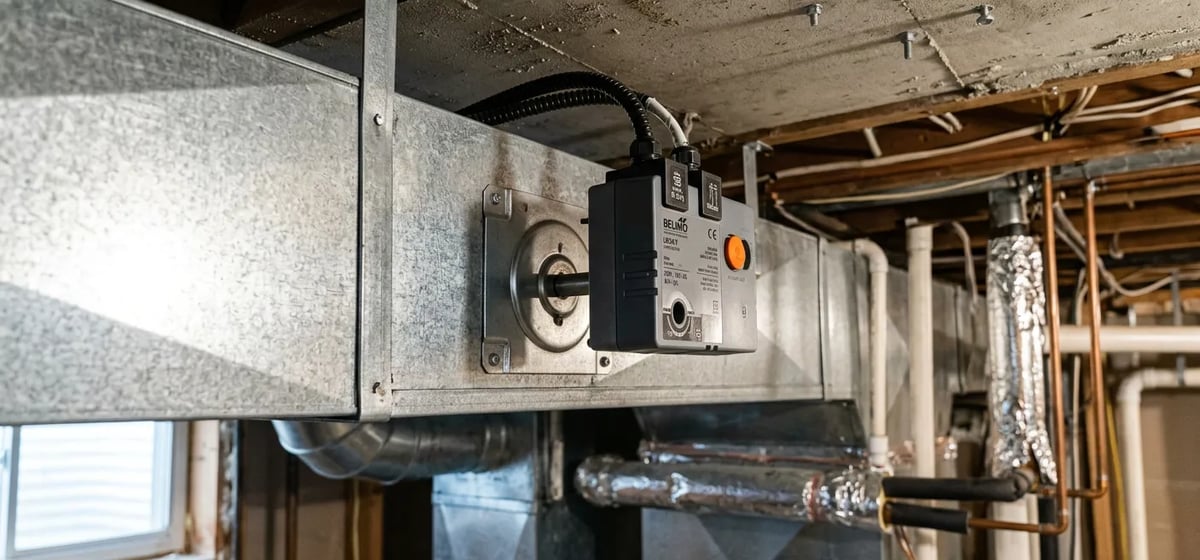
If you want to find them, look for a small metal box or cylinder attached to the outside of the duct. This is the actuator motor. It'll have a few small wires running out of it. These wires connect back to a main control panel and then to your thermostats.
Signs of Trouble and Repair Costs
Like any moving part, these motors and plates can fail over time. Sometimes the electric motor burns out. Other times, the metal plate gets stuck on dust or debris inside the duct. If a damper gets stuck closed, that specific room or zone will get zero air from the vent. If it gets stuck open, a room will get air even when its thermostat is turned off, and you'll waste money heating or cooling an empty space.
Replacing a bad motorized damper usually costs 150 to 400 dollars for the part and the labor. Prices vary based on where you live, the brand of your system, and how hard it is to reach the ductwork. The motor itself is usually cheap, but the labor adds up if the duct is buried in a tight attic.
If you want to replace a broken actuator motor, you might wonder if you can do it yourself. It involves low voltage wiring and some screws. Check out our guide on DIY vs. Hiring a Pro to see if you feel comfortable tackling the job. If the actual metal plate inside the duct is bent, you should definitely hire a professional to cut the duct open and replace the whole assembly.
How to Maintain Your Dampers
You don't need to oil or grease these motors. They are sealed units designed to work without much help. However, you can take a few simple steps to help them last longer:
- Change your air filters regularly. When your filter gets clogged, dust bypasses the filter and builds up inside the ductwork. This sticky dust coats the metal damper plates so they can't swing shut.
- Listen for odd noises. A clicking or grinding sound near your indoor unit often means the plastic gears inside the motor are stripping.
- Watch your utility bills. If your bills seem unusually high, a stuck damper might be pushing air into a zone you rarely use.
Keeping an eye on your system early on is a great habit. You can learn more about what to watch for in Your First Month as a Homeowner.