What is MPPT?
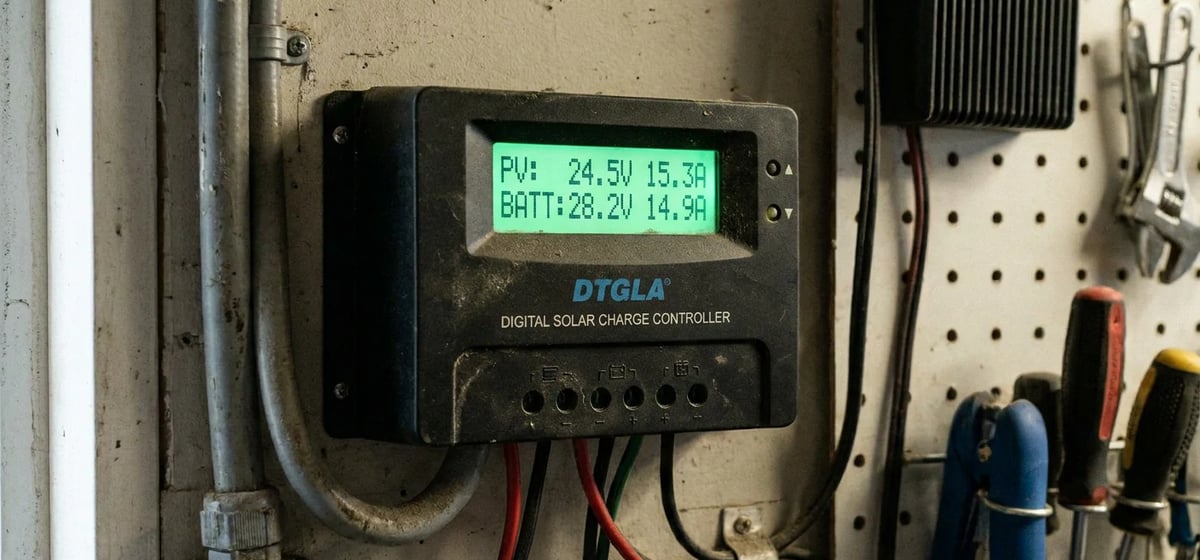
MPPT stands for maximum power point tracking. It is a smart feature inside a solar charge controller. Your charge controller sits between your solar panels and your battery bank. Its main job is to protect the batteries from overcharging. An MPPT controller goes a step further. It constantly adjusts the electrical load to pull the absolute most power possible from your panels. The idea of tracking this maximum power point started in the 1970s. During early solar research, engineers needed a mathematical way to get peak efficiency out of very expensive commercial solar arrays. Today, you will find this exact same technology right in your home solar setup.
How it works in real life
Solar panels do not produce a steady stream of power. The energy they make changes all day long. A passing cloud, a shadow from a nearby tree, or a sudden drop in temperature will change how much electricity your panels produce. An MPPT controller acts like a smart transmission in a car. It shifts gears constantly to match the changing weather conditions.
It takes the high voltage coming from your Solar Panels and converts it into the exact lower voltage your batteries need to charge. Because it tracks the sweet spot of power second by second, no energy gets wasted. When the sun dips behind a thick cloud, the controller instantly recalibrates so your batteries keep charging at top speed.
Why it matters to you
If you rely on solar power, you want every drop of electricity you can get. Older or cheaper controllers just clip off the extra voltage. That means you lose power you actually generated on your roof. An MPPT controller converts that extra voltage into extra charging current instead of throwing it away.
This smart conversion can boost your total solar harvest by 20 to 30 percent. That is a massive difference when you are trying to keep the lights on during a cloudy week. When winter comes and the days get shorter, that extra efficiency is exactly what keeps your home running smoothly. If you are upgrading your home Electrical system to include battery backups, this tracking technology is an absolute must.
Where you will run into it
You will encounter this term in a few common places around your home:
- On written quotes from solar installers bidding on your project.
- Printed directly on the metal box mounted next to your home battery bank.
- On the specification sheet for portable solar generators built for power outages.
Costs and what to watch for
When you shop for a solar charge controller or review a contractor bid, you will usually see two types. The older style is called PWM, and the newer style is MPPT. You always want the MPPT version for a modern home system. They cost a bit more up front, but they pay for themselves by giving you much more usable power over the years.
A good MPPT charge controller for a standard home system usually costs 150 to 600 dollars. Large setups for a whole house might need a heavy duty unit that costs 800 to 1,200 dollars. Keep in mind that ranges vary based on your location, the brand, and the size of your battery bank. Make sure the controller you buy is rated for the total voltage of your solar array. If you wire too many panels into a small controller, you can easily fry the unit.
| Feature | MPPT Controller | PWM Controller |
|---|---|---|
| Efficiency | Very high (up to 99 percent) | Moderate (often wastes power) |
| Weather Performance | Great in clouds and extreme cold | Drops off quickly in bad weather |
| Best Use | Large home solar setups | Small RVs or tiny backyard sheds |