What It Is
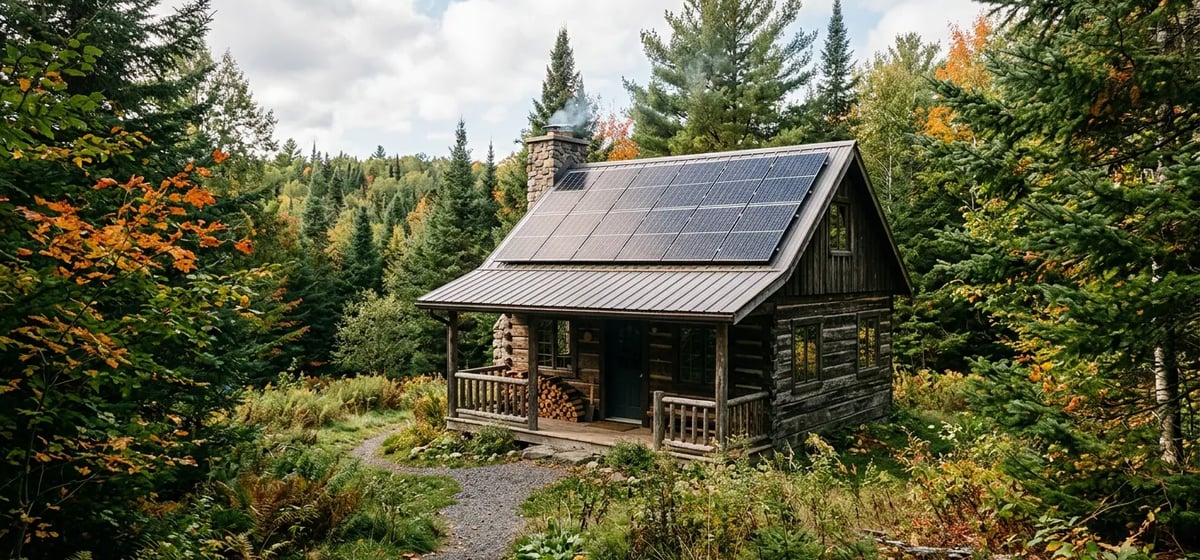
An off-grid system is a solar power setup that is completely disconnected from your local utility company. You generate all your own electricity. The phrase started in the late 1900s to describe living independently from the public electrical grid. Today, it is a popular choice for remote cabins, rural properties, and eco-friendly homes.
When you have an off-grid setup, you don't get a monthly power bill. You're your own power plant. You never have to worry about neighborhood blackouts or downed power lines down the street. But you also don't have a safety net. If your system breaks, you can't just pull power from the public grid to keep your lights on.
How It Works
To make this work, you need several large pieces of equipment to capture and manage the electricity:
- Solar panels: These catch sunlight and turn it into raw electricity on your roof or in your yard.
- Battery bank: This stores your power so you have electricity at night or on cloudy days.
- Charge controller: This device monitors the energy flow and makes sure your batteries don't get overloaded.
- Inverter: This changes the battery power into the standard current your home appliances need.
Once the power passes through the inverter, it flows directly into your home Electrical panel. Keep in mind that winter changes everything. In the winter, the sun sits lower in the sky and days are shorter. This means your panels make much less power. You always have to plan your system size around the darkest month of the year, not the sunniest.
Permits and Zoning
Before you decide to cut the cord with your local utility, you must check your local laws. Not every city or county allows you to build an off-grid system. Many urban and suburban areas actually have laws that require a house to be connected to the local power grid to get a certificate of occupancy. If you disconnect, they might declare your home unfit to live in.
Rural areas are usually much more relaxed. However, you still need to pull permits for the electrical work. You'll need a licensed professional to design the system, install the heavy wiring, and make sure everything meets national safety codes. Never try to build a massive off-grid setup by yourself. The voltage involved is deadly, and a single loose wire can easily start a major house fire.
What It Costs
Going off the grid is a major financial investment. A full system for a standard house usually costs between 30,000 to 65,000 dollars. Keep in mind that these ranges vary widely based on your location, your home size, and how much power you consume.
The biggest expense is the battery bank. High-capacity batteries are incredibly expensive and heavy. You also have to pay for the Solar Panels and the expert labor to install everything safely. Because you rely completely on this equipment, most homeowners also buy a heavy-duty gas or propane generator for emergencies. A reliable backup generator can add 3,000 to 10,000 dollars to your total project cost.
What to Watch For
Living off the grid completely changes how you run your house. You have to pay close attention to the weather and your daily power habits. If you run your air conditioner all day and run the dishwasher at night, you might drain your batteries. If you use up all your stored power, your lights will go out until the sun comes back up or you fire up a gas generator.
You also need to plan for massive replacement costs. The solar panels themselves might last 25 to 30 years. However, the batteries won't last nearly that long. Depending on the exact chemistry of the batteries you buy, you'll need to replace them every 5 to 15 years. This is a huge future cost you must save up for. If you're looking at a rural property, always ask the seller how old the batteries are. This is a crucial detail to uncover during the Buying a Home process.