What is PEX tubing?
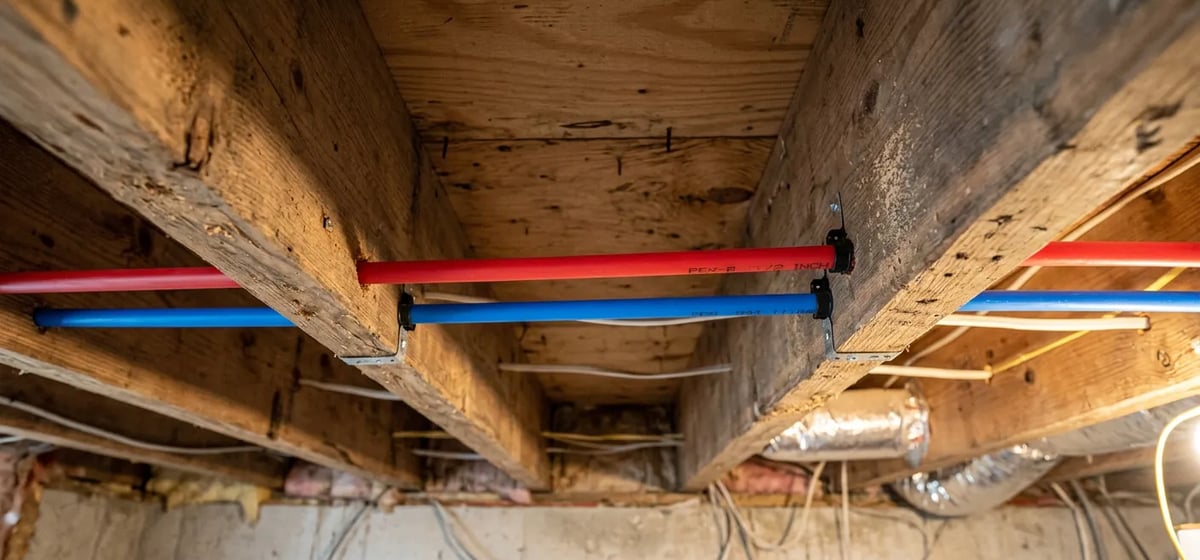
PEX stands for cross linked polyethylene. Scientists developed the chemical process to make this durable plastic in the 1960s. Today, it's the most common material used for water supply lines in modern homes. If you look under your sink or in your basement, you might see long tubes of flexible plastic. You'll often see it color coded. Plumbers use red tubing for hot water and blue tubing for cold water. Sometimes you'll see white or clear tubing, which they can use for either hot or cold lines. PEX is completely different from the thick white PVC pipes that carry dirty drain water out of your house. PEX only carries clean, pressurized water to your faucets and appliances.
Why it matters to you
Older homes usually have rigid copper or galvanized steel pipes. Those metal pipes have a few big problems. They can rust, they get tiny pinhole leaks, and they burst easily if the water inside them freezes. PEX solves a lot of these issues. Because it's flexible, it bends easily around corners. This means plumbers don't need to use as many fittings or joints. Fewer joints mean fewer places for a leak to start. PEX can also expand slightly. If the power goes out in winter and your pipes freeze, PEX is much less likely to split open compared to copper. Upgrading your water lines to PEX is one of the smartest Plumbing upgrades you can make.
Where you run into it
You'll spot PEX in a few common areas. Look near your water heater or where the main water line enters your house. You'll likely see a cluster of red and blue tubes. Many modern homes use a manifold system. This looks like a large breaker box, but for water. A thick main pipe comes in, and dozens of smaller PEX tubes run out to every sink, toilet, and shower in the house. Each tube has its own shutoff valve. If you ever hire a pro to fix a leak or remodel a bathroom, they'll almost always use PEX to run the new water lines.
What to watch for
PEX is incredibly tough, but it isn't perfect. You need to keep an eye out for a few specific problems.
- Sunlight damage: PEX breaks down quickly if sunlight hits it. You should never use it outdoors above ground. Even a few weeks of direct sun can make the plastic brittle.
- Rodent damage: Mice and rats sometimes chew on the plastic tubing. If you have a pest problem, they can chew right through a water line and flood your walls.
- Fittings: The tubing itself rarely fails, but the metal or plastic connection rings can leak if a plumber installs them poorly.
Costs to install or upgrade
If you buy an older home with bad pipes, you might need to replace all the water lines. This job is called a whole house repipe. Plumbers love using PEX for this because they can snake the flexible tubes behind walls without tearing down all your drywall. A full PEX repipe usually costs 4,000 to 8,000 dollars for an average house. Prices depend on your location and the size of your home, so ranges vary. It's much cheaper than repiping with copper, which can easily cost 10,000 to 15,000 dollars. If you're just paying a plumber to add a new sink or fix a small leak with PEX, expect to pay 200 to 500 dollars for the visit. You can read more about planning these jobs in our guide on Hiring Contractors & What Things Cost.