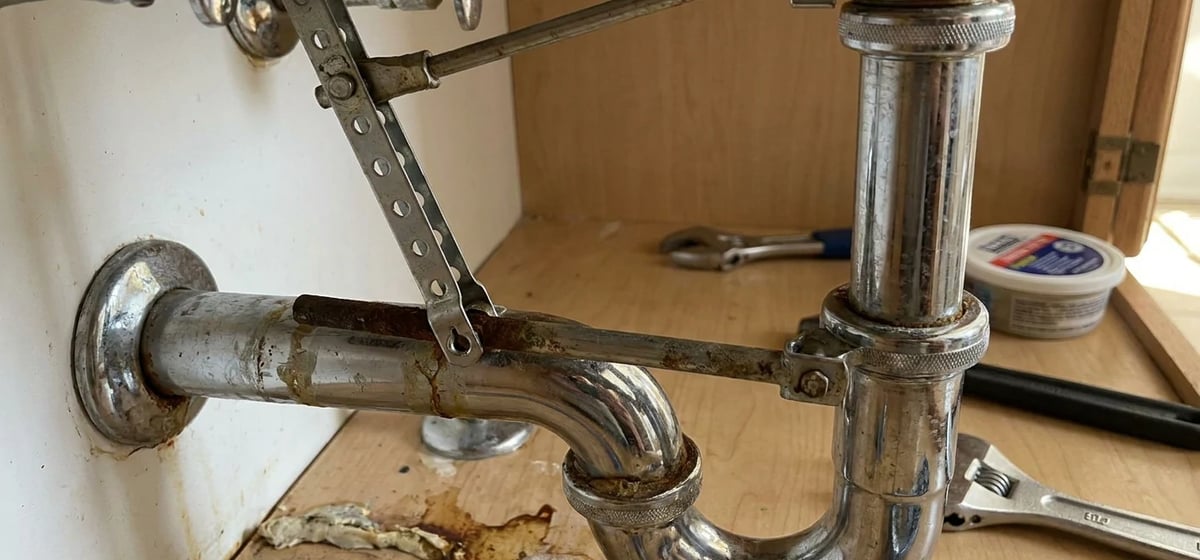
What is a pivot rod?
A pivot rod is a small metal or plastic wand that controls the drain stopper in your bathroom sink. When you pull up on the knob behind your faucet, this rod moves. It connects the lift rod assembly above the sink to the stopper down inside the drain. The word pivot comes from Old French for a hinge pin or turning point. Plumbers use this term because the rod tilts on a small plastic ball to move your stopper up and down.
This simple part does a lot of work. Without it, you could not plug your sink to wash your face or shave. You will see a small knob behind your faucet. When you pull that knob up, a long vertical metal piece called a lift rod goes up. The pivot rod connects to this vertical piece. It translates that upward pull into a downward push inside the pipe. The rod acts like a seesaw. When the outside end goes up, the inside end goes down. This drops the stopper into place and seals the drain.
Where to find it
You will find the pivot rod right under your bathroom vanity. Open the cabinet doors and look at the main drainpipe coming down from the sink. Stick your head under there with a flashlight. You will see a horizontal rod sticking out of the back of the tailpiece pipe. It goes into a flat metal piece with several holes in it. That flat piece is called a clevis strap.
A small metal spring clip holds the rod and the strap together. You can pinch this clip to slide the rod out of the strap. This lets you adjust how high your sink stopper opens. If your sink drains too slowly, you can move the rod to a different hole on the strap to make the stopper open wider.
The rod is held into the drainpipe by a small retaining nut. Inside that nut sits the pivot ball. This ball creates a tight seal so water does not leak out of the pipe while still letting the rod move freely. If you ever drop a ring down the sink, you will need to know where this rod is. Taking it out lets you pull the stopper completely out of the drain to retrieve your lost item.
Common problems to watch for
Because the pivot rod sits partially inside a wet drainpipe, it takes a lot of abuse. Over time, metal rods can rust and snap in half. Pouring harsh liquid drain cleaners down your sink can speed up this rusting process. These chemicals eat away at the metal rod over time. If you pull your faucet knob and nothing happens, a broken pivot rod is usually the culprit. Plastic rods do not rust, but they can become brittle and break after years of use.
Leaks are another common issue. The retaining nut that holds the pivot ball in place can loosen over time. When this happens, you will notice small drips of water under your sink. You can usually fix this by tightening the nut by hand. If the plastic pivot ball wears out, tightening the nut will not stop the leak. You will need to replace the rod and ball assembly.
Hair and soap scum also love to tangle around the part of the rod that sits inside the pipe. This can cause a slow drain. To fix it, you have to unscrew the nut, pull the rod out, and clean off the gunk.
Repair costs and replacement
Fixing a broken pivot rod is one of the cheapest home repairs you can make. A replacement rod kit costs between 5 to 15 dollars at most hardware stores. The kit usually includes a new rod, a plastic pivot ball, and a retaining nut. It is a very simple task. You can learn more about tackling basic pipe repairs in our guide to Plumbing.
If you prefer not to crawl under the sink, you can hire a plumber. A professional will typically charge between 100 to 250 dollars to replace the rod or the entire pop up drain assembly. Prices vary based on where you live and the plumber minimum service fee. You can weigh the pros and cons of doing this yourself in our DIY vs. Hiring a Pro guide.
Sometimes the pivot rod rusts so badly that it fuses to the drain stopper inside the pipe. When this happens, you might need to replace the whole drain tailpiece. A new standard pop up drain assembly costs 15 to 40 dollars for the parts. A plumber will charge 150 to 300 dollars for the total job. You can read more about typical repair pricing in our guide on What Home Repairs Cost.