What It Is
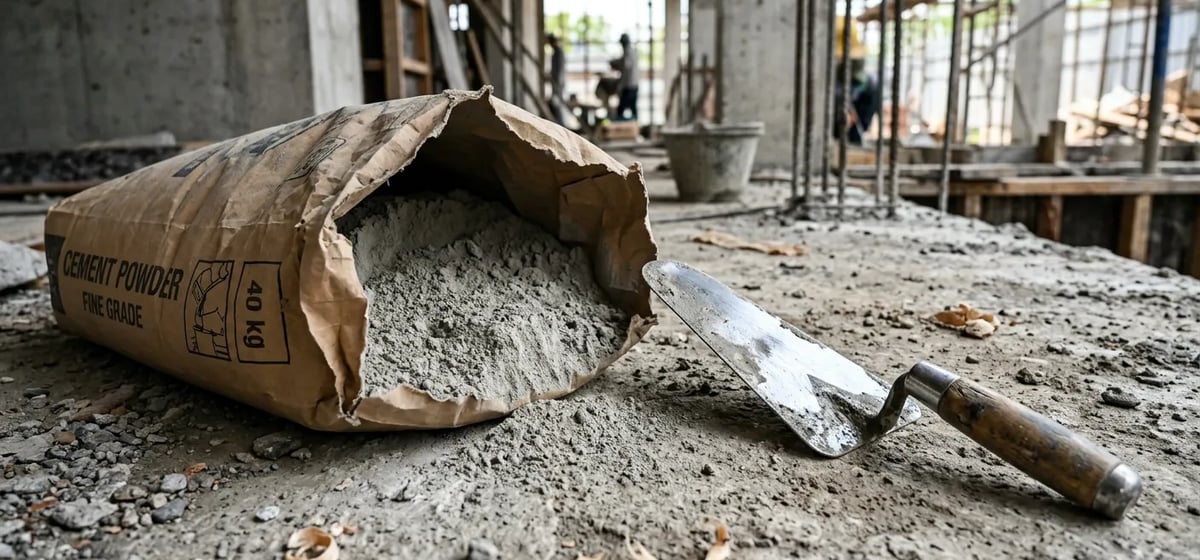
Portland cement is the fine gray powder that acts as the main binding ingredient in concrete and mortar. It isn't the same thing as concrete. Cement is just one part of the recipe. When you mix this powder with water, sand, and gravel, it cures into a rock solid building material. An English bricklayer named Joseph Aspdin invented it in 1824. He named it after a type of building stone from the Isle of Portland because the cured cement looked just like it. Today, it forms the base of almost every driveway, sidewalk, and Foundation & Structure in the country.
Factories make Portland cement by heating limestone and clay in massive kilns. They heat these rocks to nearly 2700 degrees. This extreme heat changes the chemistry of the rocks. The factory then grinds the burned rocks down into the fine gray powder you buy in stores. There are a few different types of Portland cement. Type I is the normal cement used for most home projects. Type III cures very fast, which is helpful if you need to fix a sidewalk in cold weather.
Why It Matters to You
As a homeowner, you rely on Portland cement every day. It holds your house up and keeps your brick walls standing. You'll also need it for small repairs around your property. If you have a loose brick, you mix mortar using this cement. If you need to set a new mailbox post, you will use a bag of concrete mix that relies on this exact powder.
Understanding how it works helps you make better choices for your home. You'll know that cement needs water to cure properly. It doesn't just dry out in the air. A chemical reaction happens when water hits the powder. This reaction creates the hard bonds that make concrete so strong. This curing process takes time. Concrete feels hard after a day, but it takes 28 days to reach its full strength. If the weather is hot, the water might evaporate too fast. This stops the chemical reaction and leaves the concrete weak. You have to keep new concrete damp for a few days to get the best results. You can spray it with a hose or cover it with plastic sheets.
Where You Will See It
You'll find Portland cement in a few different forms at your local hardware store. Most of the time, you buy it already mixed with sand and gravel in heavy paper bags. These are ready to use. You just add water. You can also buy pure Portland cement by itself. A 94 pound bag of pure cement costs about 15 to 25 dollars, though prices vary by location. You might buy the pure powder if you want to mix your own custom mortar or patch a crumbling step.
It is important to know the difference between concrete and mortar mixes. Concrete uses Portland cement, sand, and large rocks. You use it for thick slabs and footings. Mortar uses Portland cement, sand, and lime. It has no large rocks. You use mortar to stick bricks and concrete blocks together. You'll also hear contractors talk about Portland cement when they bid on a new patio or when you are planning an upgrade to your Exterior: Siding, Garage & Decks.
What to Watch For
Working with Portland cement requires some basic care. The dry powder is very fine and dusty, so you should wear a dust mask when you handle it. You also need to protect the bags from moisture.
- Keep the bags completely dry until you are ready to use them.
- Store bags off the ground on a wooden pallet or a shelf.
- Cover stored bags with a plastic tarp to block humidity in the air.
- If a bag gets hard chunks in it, throw it away because the chemical reaction has already started.
If you hire someone to pour a large driveway, they will order ready mix concrete from a truck. The truck brings a wet mix made with Portland cement right to your house. A typical concrete truck delivery costs 120 to 160 dollars per cubic yard, depending on where you live. For big jobs like this, it is often best to look into Hiring Contractors & What Things Cost instead of mixing hundreds of bags yourself.