What Is a Post Base?
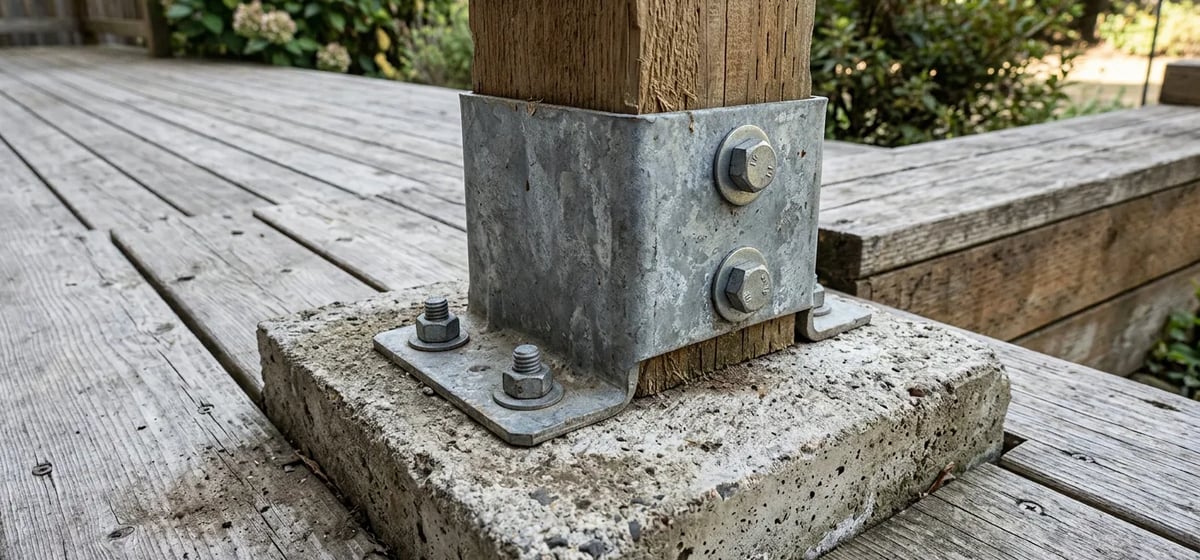
A post base is a sturdy metal bracket that connects a vertical wooden post to a concrete floor or footing. It acts as an anchor for your outdoor structures. The word post comes from the Latin word postis, meaning a doorpost. Hardware manufacturers created the modern metal post base in the 20th century to prevent wood rot and improve structural safety.
Before these metal brackets existed, builders often buried wooden posts directly in the dirt or set them flat on top of concrete. That method caused huge problems because wood acts like a sponge. Concrete absorbs moisture from the ground. When wood sits right on top of wet concrete, it sucks up that water and eventually rots. A modern post base solves this problem. It features a built-in metal plate that lifts the bottom of the wooden post about one inch off the concrete. This small gap keeps the wood completely dry.
Why It Matters to You
The main job of a post base is to protect your investment and keep your family safe. If the posts holding up your deck or patio cover rot at the bottom, the entire structure becomes dangerous. It could collapse under heavy snow or strong winds. By keeping the wood elevated and dry, a post base adds decades of life to your outdoor spaces. You can learn more about maintaining these outdoor structures in our guide to Exterior: Siding, Garage & Decks.
A post base also ties the wooden structure firmly to the earth. When a contractor pours a concrete footing, they usually push a thick metal bolt into the wet concrete. Once the concrete dries, they bolt the post base to that metal anchor. Finally, they slide the wooden post into the bracket and secure it with special structural screws or heavy nails. This solid connection ensures your porch or pergola stays exactly where it belongs during a heavy storm.
Types and Typical Costs
You'll find two main types of post bases at the hardware store. The first type is a cast-in-place base. Builders set this bracket directly into wet concrete while they are building a brand new structure. The second type is a retrofit base. You use this type when you need to attach a new post to an old, existing concrete slab. To install a retrofit base, you have to drill a hole in the hard concrete and insert a wedge anchor bolt.
If you're buying the parts yourself, a standard galvanized steel post base costs between 15 to 30 dollars. These are plain silver brackets that you usually hide behind decorative trim. If you want a stylish look for a visible pergola, you can buy heavy-duty, black powder-coated brackets. These decorative versions cost 40 to 80 dollars each.
If you have an old, rotted deck post that needs replacing, you should probably hire a professional. A contractor will need to jack up the roof or deck, remove the bad wood, and install a brand new post and base. You can expect to pay 200 to 500 dollars per post for this repair, though local labor rates vary. For more tips on pricing out home repairs, check out our guide on Hiring Contractors & What Things Cost.
What to Watch For
You should inspect the post bases around your home once a year. Walk under your deck or look at the bottom of your porch columns. You want to make sure the connection remains strong and secure.
- Check the gap: Look closely at the bottom of the wood. Make sure there is a clear space between the wood and the concrete. Sometimes dirt or dead leaves pile up around the base. This debris traps moisture against the wood and defeats the purpose of the bracket. Sweep the area clean.
- Look for rust: Most brackets are galvanized to prevent rust. However, constant exposure to lawn sprinklers or pool water can eventually cause the metal to corrode. If the metal flakes away or looks heavily rusted, you might need to replace it.
- Inspect the fasteners: The bracket should be secured to the wood with thick structural screws or heavy nails. If you see regular drywall screws, you have a problem. Drywall screws are brittle and will snap under the heavy weight of a deck.