What is a ridge vent?
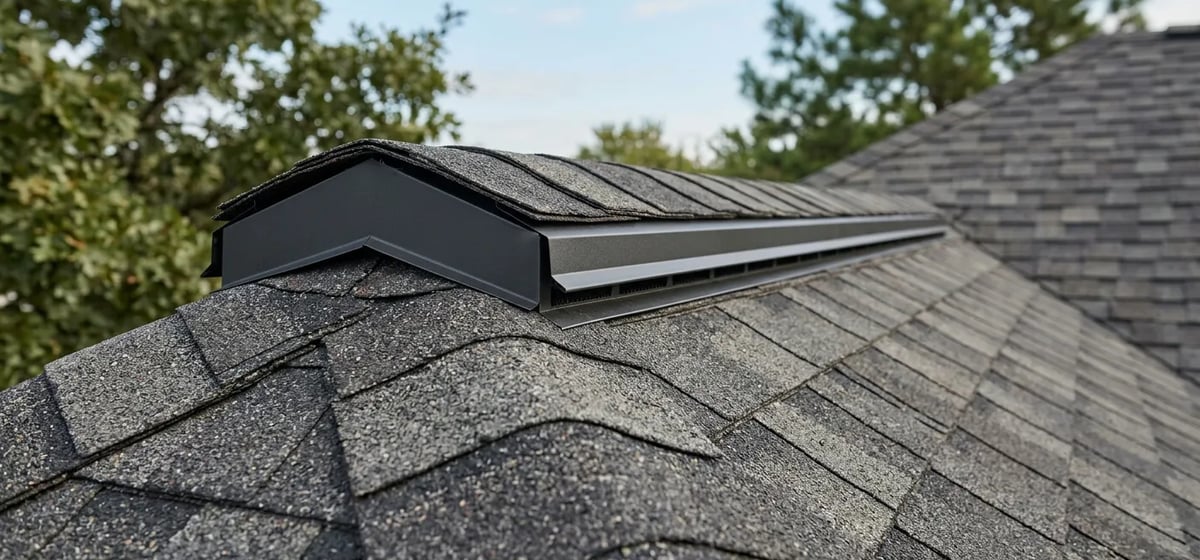
A ridge vent is a long opening built right into the very top peak of your roof. It lets hot, moist air escape from your attic. This helps prevent mold and stops your roof from getting damaged from the inside out. The word ridge comes from the Old English word hrycg, which means the back of a man or beast. Vent comes from the Latin word ventus, meaning wind. Together, they describe exactly what this part does. It sits on the spine of your house and lets the wind carry old air away.
You might not even notice your ridge vent when you look up at your house. Roofers usually cover the vent with a special layer of shingles. These are called ridge cap shingles. They bend over the top of the vent to hide the plastic or metal structure underneath. This keeps bugs, rain, and snow out while still leaving a small gap for air to flow through.
Why it matters for your home
Your attic gets incredibly hot during the summer. The sun beats down on your roof all day. If that heat can't escape, it bakes your shingles from the inside. This cuts the life of your roof short. In the winter, the problem changes to moisture. Heat from your living space rises into the cold attic. When warm air meets a cold roof deck, it turns into water droplets. Over time, this condensation causes wood rot and grows mold.
A ridge vent solves both of these problems. It gives that trapped air a clear path out of the house. Good airflow also stops ice dams in cold climates. Ice dams happen when trapped attic heat melts snow on the top of the roof. The water runs down and freezes at the colder edges. Proper venting keeps the whole roof a steady, cold temperature in winter.
How it works with the rest of your house
A ridge vent doesn't work alone. It's just one half of your attic ventilation system. For air to blow out the top, fresh air must come in at the bottom. This fresh air enters through soffit vents. Soffit vents are the little grilles under the overhangs of your roof. Cool air comes in at the bottom edges, heats up in the attic, and rises to escape out the ridge vent at the top.
If your soffit vents get blocked by insulation, your ridge vent can't do its job. It's like trying to drink from a straw with your finger over the bottom hole. Everything must work together to protect your roofing materials. This steady airflow also takes some pressure off your HVAC & Climate Control system. A cooler attic means your air conditioner doesn't have to fight as hard to cool the rooms downstairs.
What to watch for and what it costs
Ridge vents are simple, but they can still have issues. You should look out for a few common problems as your home gets older.
- Missing shingles on the very peak of your roof.
- Leaves, pine needles, or dirt clogging the vent openings.
- Nails popping up along the ridge line.
- Water stains on the ceiling in your top floor rooms.
If you need to replace a ridge vent, a professional roofer can handle the job easily. The project involves pulling up the old ridge cap shingles, removing the old vent material, putting down new vent strips, and nailing new shingles over the top. The cost usually ranges from 400 to 700 dollars for an average home. Keep in mind that prices vary based on where you live and the steepness of your roof. If you are replacing your entire roof, the cost of the new vent is usually rolled into the total price. You can learn more about finding good help in our guide to Hiring Contractors & What Things Cost.