What It Is
Rigid foam insulation is a solid panel made of plastic foam. Builders use these boards to keep heat from moving in and out of your house. You'll usually see them sold in large sheets that measure 4 feet wide and 8 feet long. They come in different thicknesses ranging from half an inch up to several inches. Unlike fluffy pink fiberglass rolls that you can squish with your hands, these panels are completely stiff and hold their shape. They also do a very good job of blocking moisture. This makes them a top choice for wet areas like basements and crawl spaces where fiberglass would just soak up water and grow mold.
Why It Matters To You
A well-insulated home keeps your family comfortable and lowers your monthly energy bills. Rigid foam is special because it stops heat from traveling right through the solid wood framing of your house. Builders call this heat transfer thermal bridging. When wood studs touch both the inside drywall and the outside siding, heat leaks right through the wood. Wrapping the outside of your home in rigid foam stops this leak completely. This takes a lot of stress off your HVAC & Climate Control system. The boards also act as a strong barrier against wind and rain. If you want a dry and warm basement, this material is a huge help. It even helps block outside noise from entering your living space.
Types Of Rigid Foam
You'll see three main types of rigid foam at the local hardware store. They each have different colors, price points, and specific uses around the house.
- EPS (Expanded Polystyrene): This is the cheapest option available. It looks exactly like the white foam used in cheap disposable coolers. It works well for basic projects but can absorb a little bit of water over a long period of time.
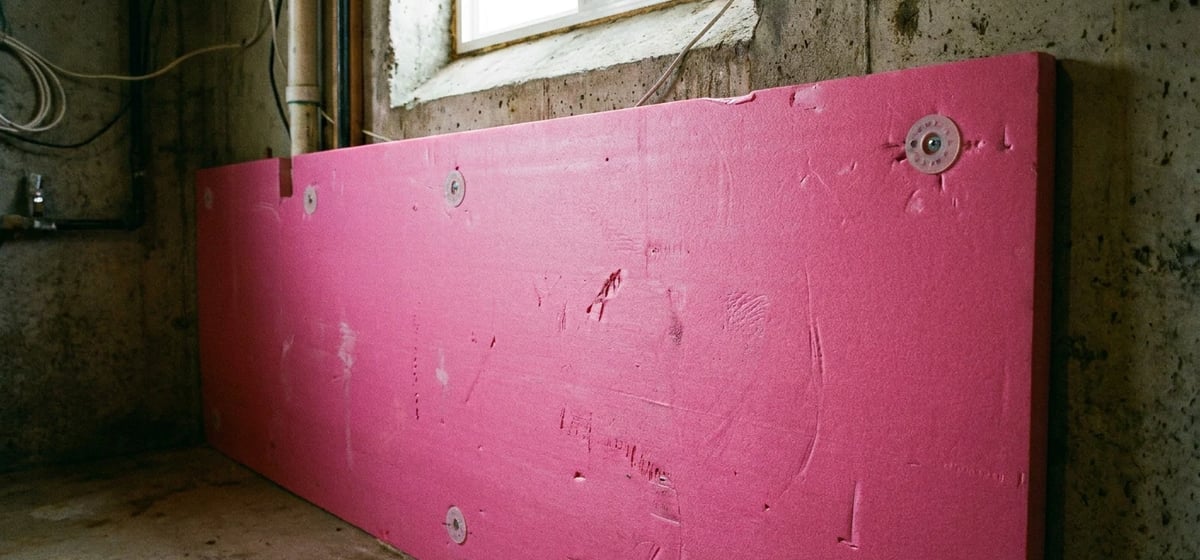
- XPS (Extruded Polystyrene): You'll easily recognize this type as the smooth pink or blue boards in the lumber aisle. It stops water much better than EPS and offers more insulation power per inch of thickness.
- Polyiso (Polyisocyanurate): This foam usually has a shiny foil face on both sides. It gives you the highest amount of insulation power but it also costs the most money. It's very popular for roofing projects and attic walls.
Where You Run Into It
You might spot rigid foam during a major home remodel or when you are looking closely at your Foundation & Structure. Contractors often glue XPS panels directly to bare concrete basement walls before putting up the interior wood framing. You'll also find it on the outside of your house. Builders frequently nail it to the outside of the wood studs right before they install new siding. Sometimes, roofers lay thick sheets of Polyiso on flat roofs to keep the top of the house warm. Plumbers even use it under concrete slabs when installing heated floors. If you're planning a big exterior upgrade, you can read more about wall layers in our guide to Exterior: Siding, Garage & Decks.
What It Costs
Pricing depends heavily on the type and thickness of the foam board you choose. Keep in mind that material and labor prices vary based on where you live and the season. For the bare boards alone, expect to pay between 15 and 40 dollars for a standard 4 foot by 8 foot sheet. The white EPS foam sits on the lower end of that price range. The foil-faced Polyiso foam sits at the high end. If you hire a professional contractor to insulate your basement walls with rigid foam, the total cost usually runs from 1,000 to 3,000 dollars. This final price includes the special foam tape to seal the seams, the construction glue, and the labor required to cut and fit the boards perfectly.