What Is A Roof Square?
A roof square is a standard unit of measurement equal to exactly 100 square feet of roof area. If you look at a patch of your roof that is 10 feet wide and 10 feet long, you're looking at one square. The term square comes from the Old French word esquare, which means a four sided shape. Builders in the early 1900s started using this word as a quick trade term. It made it much easier to order bulk materials for large flat surfaces. Today, it's the standard way the roofing industry measures your home.
Why Roofers Use This Measurement
Roofers talk in squares because it keeps the math simple. A typical house might have 2500 square feet of roof space. Saying 25 squares is much faster. It also matches how manufacturers package roofing materials. If a roofer tried to order 2500 square feet of shingles, the supply yard would have to do extra math. Ordering 25 squares keeps everyone on the same page and prevents ordering mistakes.
When a contractor orders supplies, they don't buy individual shingles. They buy bundles. For standard asphalt shingles, three bundles usually make up one roof square. Underlayment paper also comes in rolls that cover exactly one, two, or four squares. Using this measurement helps your roofer know exactly how many pallets of material to bring to your house. You'll see this term all over your quotes when you're looking into Roofing repairs or replacements.
How To Calculate Your Roof Squares
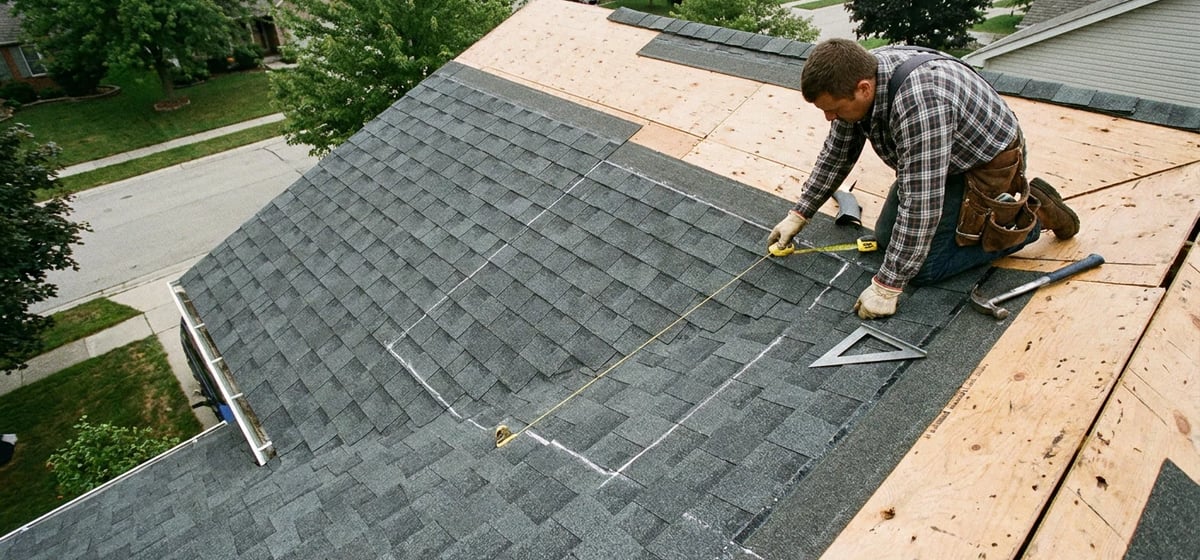
You might wonder how many squares your own roof has. You can estimate it by looking at the square footage of your home. A common mistake is thinking your roof is the exact same size as your house floor plan. Your roof is always bigger. It hangs over the edges of your house. It also slopes up to a peak. A roof with a very steep pitch will have more surface area than a flatter roof on the exact same house. A house with multiple levels or a complex layout will also change the math. That's why contractors get up on a ladder to measure it exactly or use satellite imaging software.
To get a rough idea, you can multiply your home square footage by 1.5. If your house is 2000 square feet, your roof is likely around 3000 square feet. You then divide that number by 100. That gives you 30 roof squares.
Keep in mind that roofers always order extra material. They call this a waste factor. They usually add 10 to 15 percent more squares to the order. This extra material covers the shingles they have to cut to fit around your chimneys, vents, and roof valleys.
What It Means For Your Wallet
When you hire a pro, they price the job per square. Your final bill is directly tied to this number. If you have a 30 square roof and the roofer charges 400 dollars a square, your total bill will be 12,000 dollars. This price per square usually covers a few different things:
- The cost of the shingles and ridge caps.
- The underlayment paper and ice shields.
- The nails and flashing materials.
- The labor to tear off the old roof and install the new one.
For a standard asphalt shingle roof in the US, you can expect to pay 350 to 700 dollars per square. If you pick high end materials like metal or slate, that price jumps to 800 to 1500 dollars per square. Keep in mind that prices and ranges vary based on where you live and the steepness of your roof.
Understanding this math helps you spot bad quotes. If one roofer says you need 25 squares and another says you need 35 squares, you know to ask questions. You can learn more about comparing bids in our guide to Hiring Contractors & What Things Cost.