What is a sill sealer?
Your home rests on a concrete foundation. The rest of your house is built out of wood. When builders place the bottom wooden boards on top of the concrete, those two materials don't fit together perfectly. Concrete is rough and bumpy. Wood is stiff and straight. This mismatch leaves a tiny, uneven gap running all the way around the bottom of your house.
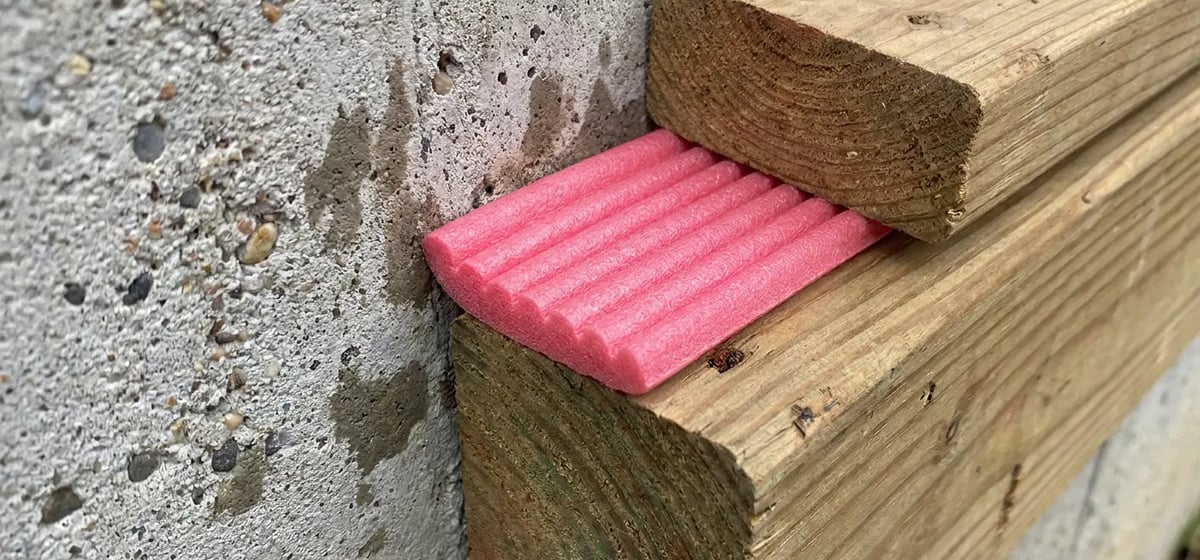
A sill sealer is a thin strip of ribbed foam that fills this gap. Builders unroll it along the top of the concrete wall before they bolt down the bottom framing boards. The heavy weight of your house squishes the foam completely flat. This creates a tight seal between the rough concrete and the smooth wood.
You might hear contractors call this material a sill gasket. The word sill comes from an old English term meaning a large timber base. In older homes, builders sometimes used strips of fiberglass insulation to fill the gap. That was a bad idea because fiberglass traps water like a sponge. Modern foam sealers became popular in the late 1900s because foam ignores water completely.
Why it matters for your home
That tiny gap at the bottom of your house might not look like a big deal. But if you leave it open, it causes major headaches. A sill sealer works as a silent shield to protect your home from three big threats.
- Cold drafts: An unsealed gap lets winter winds blow right into your basement or crawlspace. This makes your floors cold and forces your heating system to work overtime. A good seal makes your HVAC & Climate Control system much more efficient.
- Water damage: Concrete acts like a giant wick. It pulls moisture up from the wet dirt outside. If untreated wood touches that damp concrete directly, the wood sucks up the water and rots. The foam creates a waterproof barrier to protect your Foundation & Structure.
- Creepy crawlers: Spiders, ants, and mice love squeezing through tiny cracks to get out of the cold. A tight foam gasket blocks their favorite entrance and helps with your overall Pest Control efforts.
Spotting problems in your basement
You can usually spot your sill sealer if you have an unfinished basement or a crawlspace. Grab a flashlight and look at the top edge of your concrete wall. You should see a thin line of pink or blue foam peeking out from under the bottom wooden board.
If you live in a much older home, you might not have a sill sealer at all. Builders didn't always use them. You might notice dark water stains on the wood, little piles of sawdust from bugs, or a literal breeze hitting your face when you stand near the wall on a windy day.
Costs and repairs
If you're building a new shed, a garage, or a home addition, buying a sill sealer is very cheap. A standard 50 foot roll of foam gasket costs 10 to 20 dollars at any local hardware store. It takes just a few minutes to unroll it and staple it down before you build your walls.
Fixing a missing sill sealer on an existing house is a different story. You can't jack up your entire house to slide a new piece of foam underneath. Instead, you have to seal the gap from the inside. Contractors usually do this by running a thick bead of heavy duty caulk or expanding spray foam along the seam where the wood meets the concrete.
If you hire a professional to air seal your basement rim joist and sill plate area, expect to pay 150 to 400 dollars. Prices depend heavily on the size of your basement and your local labor rates, so keep in mind that ranges vary. It's usually a quick job, and the energy savings on your winter heating bill will often pay for the repair in just a few years.