What is sistering?
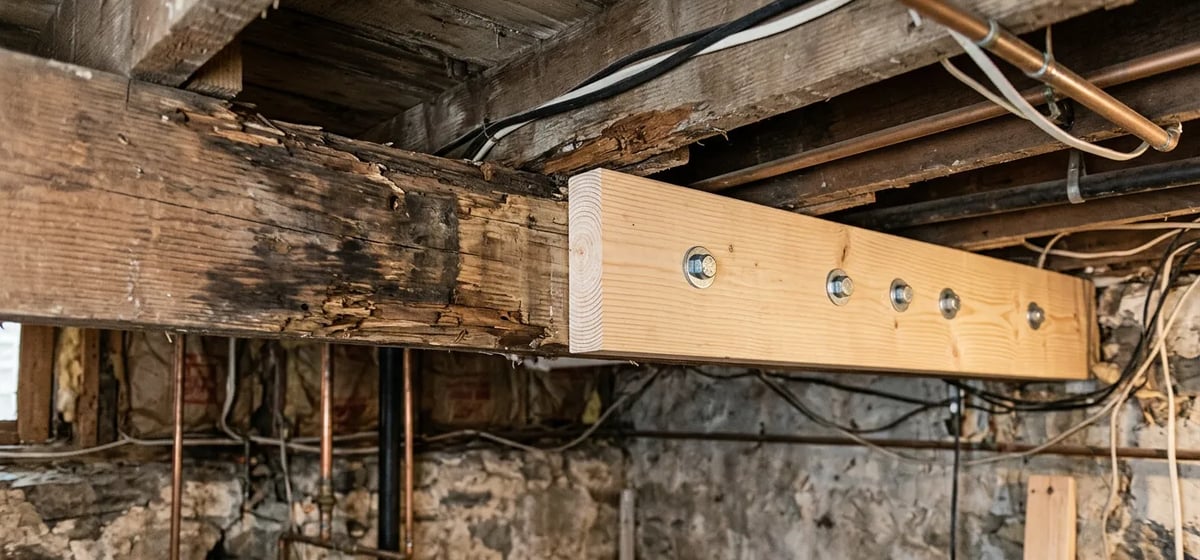
Sistering is a common carpentry trick used to fix weak or damaged wood framing. When a floor joist or roof rafter loses its strength, you do not always have to remove it. Instead, a carpenter will take a brand new piece of lumber and attach it directly alongside the old one.
To do this correctly, the carpenter will cut the new board to match the length of the damaged area. They will usually make the new board span at least three feet past the damage on both sides. Then, they use heavy hydraulic jacks to lift the sagging floor or roof back into a perfectly level and flat position. Once everything is straight, they apply strong construction adhesive between the two pieces of wood. Finally, they bolt, nail, or screw the two boards tightly together in a zigzag pattern. This creates a single, highly durable support beam.
The term comes from the idea of pairing two identical things side by side, much like siblings. Carpenters have used this method for hundreds of years. It is a reliable way to reinforce old timber frames without tearing your house apart.
Why it matters to you
Replacing a main structural beam is a massive and messy job. If a builder has to fully remove an old floor joist, they might have to rip up your finished flooring from above. They might also need to move plumbing pipes, reroute electrical wires, or tear down basement ceilings. That takes a lot of time, creates huge piles of dust, and costs a fortune in labor.
Sistering skips the demolition. By leaving the original wood in place and adding a new board next to it, you get the same structural strength for a fraction of the cost. This repair keeps your floors from sagging and stops your roof from bowing. It is an essential part of maintaining your Foundation & Structure over the years.
Where you run into it
You will usually hear about sistering when you buy an older house or plan a major remodel. Home inspectors often recommend this fix when they find issues in unfinished spaces. Here are the most common places you will see sistered wood in a home:
- Basements and crawlspaces: Floor joists can crack under heavy weight. They can also rot from moisture or suffer termite damage. A sistered joist restores the floor strength.
- Attics: Roof rafters can sag if a heavy snow load pushes down on them. Sistering a new board to the sagging rafter straightens out the roofline.
- Decks: Outdoor wood is exposed to rain and sun. If a deck support starts to rot, a contractor might sister a new treated board to it to keep the deck safe.
What to watch for
Sistering is a great solution, but it is not a magic cure for everything. You have to fix the root problem first. If a pipe is leaking onto a floor joist and causing it to rot, you must stop the leak before you add new wood. Otherwise, the new board will just rot too.
Also, make sure your contractor uses the right materials. The new board needs to be the exact same size as the old one. They must use heavy duty structural fasteners. Standard drywall screws will snap under the heavy pressure of a house.
What it costs
Prices depend heavily on how easy it is to reach the damaged wood. If the joist is wide open in a clean basement, the job is fast. If the wood is hidden behind drywall or tangled in wires, the labor goes up.
As a rough estimate, a professional might charge 150 to 300 dollars per joist. If you have extensive damage across a whole room, the total bill can range from 1000 to 3000 dollars. Keep in mind that material costs and labor rates vary widely by region. If you are unsure about a quote, review our guide on Hiring Contractors & What Things Cost to help you compare bids.
While some handy homeowners might try this repair themselves, it involves lifting heavy weights and understanding structural loads. It is usually best to hire a licensed professional for this type of work. If you are deciding whether to tackle it, check out our advice on DIY vs. Hiring a Pro before you start buying lumber.