What Is a Slab Foundation?
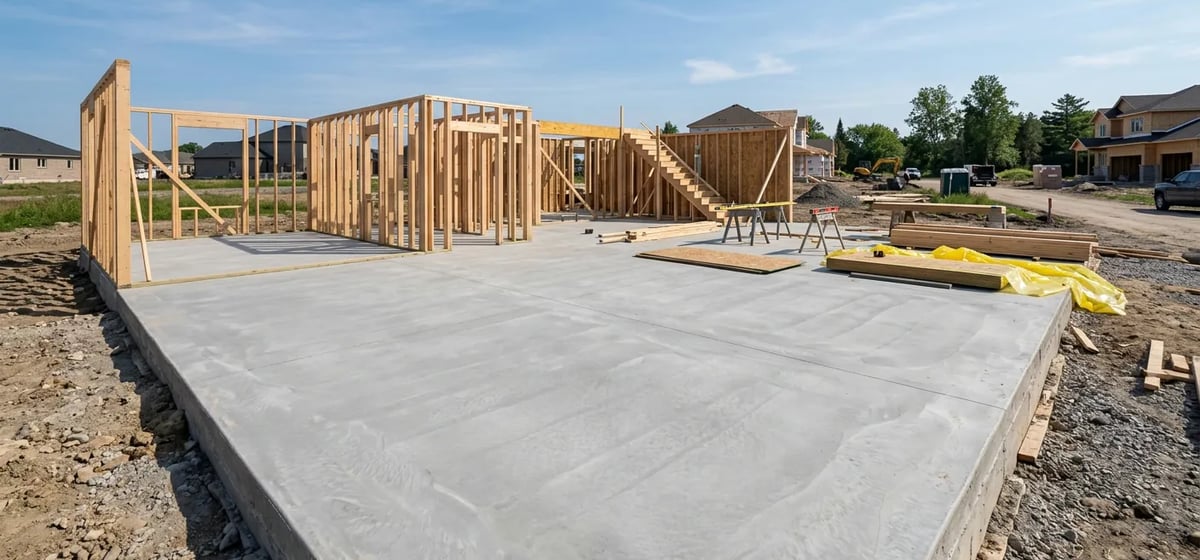
A slab foundation is exactly what it sounds like. It's a solid, thick pad of concrete poured directly onto the ground to support a house. Builders set the walls of your house right on top of this flat pad. Homes built this way don't have a basement or a crawlspace underneath them. The word slab comes from the Middle English word slabbe, which means a large flat piece of stone. Builders made this foundation style very popular in the 1950s. It allowed for quick and affordable suburban housing construction. Today, you see this style a lot in warm climates. It's very common in states where the ground doesn't freeze hard in winter. Freezing dirt expands and pushes up, which can crack a shallow concrete pad.
How Your Home Systems Work
Living on a slab changes how your home works behind the scenes. The biggest difference involves your Plumbing. The pipes that bring fresh water in and take dirty water out are usually buried right inside the concrete. Builders lay the pipes in the dirt, cover them with gravel, and pour the wet concrete over them. Because you don't have a basement, your heating and cooling ducts usually run through the attic or the ceiling. Your Electrical wires mostly run through the walls and attic space. A slab means you don't have to worry about a damp crawlspace or a flooded basement. Bugs and rodents also have a much harder time getting under your house.
What to Watch For
Concrete is very strong, but it can crack over time. Tiny hairline cracks are normal as a new house settles into the dirt. However, large cracks that are wider than a quarter inch mean trouble. You also need to watch for signs of shifting inside the house. If your doors suddenly start sticking or your floors feel uneven, the dirt under your slab might be washing away.
- Look for cracks in the brick or siding on the outside of your house.
- Check your tile floors for sudden cracks that run in a straight line.
- Listen for water running when all your faucets are turned off. This can mean a pipe is leaking inside the concrete.
- Watch out for warm spots on your floor. This is a common sign of a hot water leak under the slab.
Water is the biggest enemy of your Foundation & Structure. Make sure the dirt around your house slopes away from the walls. Your gutters should dump rainwater far from the concrete edge. Tree roots can also cause big problems if they grow too close and lift the concrete pad.
Maintenance and Repair Costs
Most slabs need very little maintenance. You just need to keep water away from the edges and monitor the soil. If things go wrong, repairs require heavy equipment. Keep in mind that prices vary a lot based on where you live and how bad the damage is. Fixing a simple slab leak usually costs 500 to 4000 dollars. The plumber has to break through the concrete floor, fix the pipe, and pour new concrete.
If the foundation itself sinks or cracks badly, contractors use special methods to lift it back up. Mudjacking is a process where they pump a dirt mixture under the slab to raise a sunken section. This might cost 500 to 1500 dollars. For worse problems, they install steel piers deep into the ground to support the failing concrete. Installing these piers can run 5000 to 15000 dollars or more. It's an expensive fix, but it saves the whole house from falling apart.