What is a snow load?
Every roof has a limit to how much weight it can hold. Snow load is the maximum amount of snow and ice your roof can safely support before it starts to bend or break. Builders calculate this number in pounds per square foot. They base it on historical weather data for your specific town. If you live in a place with heavy winters, your local building codes require a much higher rating than a house in a warmer climate.
When winter storms hit, the snow piles up and gets heavy quickly. Fresh, fluffy snow might only weigh a few pounds per cubic foot. But wet, packed snow can weigh over 20 pounds for that same amount of space. If rain falls on top of the snow, or if ice forms underneath it, that weight shoots up even faster. Your roofing system must carry all of this extra weight without failing.
Why your roof weight limit matters
If the weight passes your roof limit, the wood framing underneath can snap. A collapsed roof is a massive disaster. It destroys the inside of your home and costs tens of thousands of dollars to fix. Even if the roof doesn't cave in completely, too much weight can cause permanent damage to your rafters and trusses. This puts extra stress on your foundation and walls.
How to estimate the weight on your roof
You don't need to be an engineer to guess how much weight is sitting on your house. A good rule of thumb is that one inch of water or ice weighs about five pounds per square foot. Twelve inches of light, fluffy snow equals about one inch of water. Six inches of wet, heavy snow equals about one inch of water. Just one inch of solid ice equals one inch of water. If you have two feet of old, packed snow and an inch of ice on the bottom, your roof is carrying a massive amount of weight.
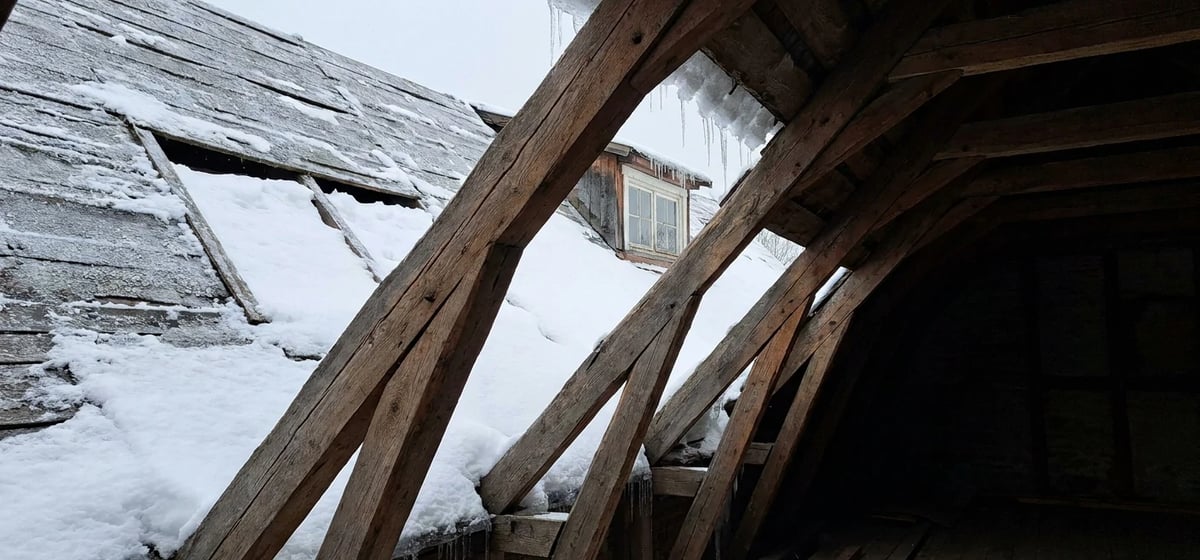
Watch out for ice dams. When heat escapes your attic, it melts the snow on your roof. The water runs down to the cold edge and freezes into a solid block of ice. This ice dam traps more water behind it, adding extreme weight to your roof edge and forcing water under your shingles.
Signs your roof has too much weight
You need to know the warning signs that your roof is holding too much weight. The sounds and sights inside your house will usually tell you when trouble is brewing. Look and listen for these common red flags:
- Loud popping, cracking, or creaking noises coming from your attic.
- Drywall on your top floor ceilings that starts to sag or bow downward.
- Interior doors that suddenly stick or refuse to close because the heavy weight is shifting the door frames.
- Severe leaks coming through your ceiling during a winter storm.
How to protect your home
If you see these signs, you must act fast to remove the snow. Don't climb up on a snowy roof yourself. It is incredibly dangerous. Instead, use a long roof rake from the ground to pull snow off the edges. This relieves a lot of the pressure. If the snow is too high or covered in thick ice, you need to hire a professional snow removal crew. Paying a pro to clear your roof usually costs 200 to 500 dollars, though ranges vary based on your location and roof size.
Adding an addition or a sunroom means you must check local weight requirements. Your town building inspector will check your blueprints to ensure the new roof framing meets the code. If you ever plan to install solar panels, the installer will also calculate your current roof strength. The panels add permanent weight, which means your roof has less capacity left over for winter weather. If a storm does cause damage, you will need to contact your home insurance company right away to file a claim.