What Is a Soffit Vent?
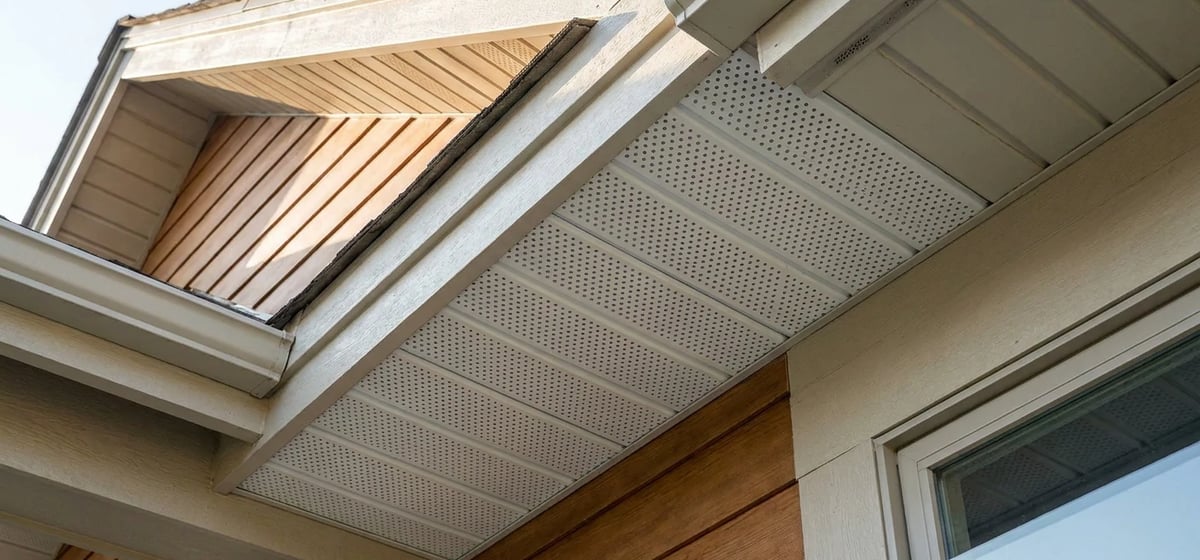
A soffit vent is a screen or slotted cover installed under the overhang of your roof. It allows fresh outside air to flow into your attic space. This continuous airflow pushes hot air and moisture out through the exhaust vents at the very top of your roof.
The word soffit comes from the Latin word suffixus, which means fastened below. Builders added the word vent from the Latin ventus, meaning wind, to describe how it moves air. Together, they create a simple system that lets your roof breathe.
You will usually find these vents running along the entire edge of your roofline. Some look like continuous strips of perforated metal. Others are small rectangular grilles placed every few feet between the rafters.
Why Soffit Vents Matter
Your attic needs to stay close to the outside temperature. If your attic gets too hot, it bakes your shingles from the inside out. This shortens the life of your roof and forces your air conditioner to work much harder in the summer.
In the winter, a warm attic causes snow on your roof to melt and refreeze at the edges. This creates heavy ice dams that can push water under your shingles and into your walls. Proper airflow from your soffit vents keeps the roof deck cold and prevents this damage. You can learn more about protecting your shingles in our guide to Roofing.
Moisture is another big problem. Showers, cooking, and laundry create humidity that rises into your attic. Without soffit vents to bring in dry outside air, that trapped moisture turns into mold and rots your wood framing.
What to Watch For
Soffit vents only work if air can actually get through them. The most common problem is blocked airflow. Homeowners or sloppy contractors often shove fluffy fiberglass insulation all the way to the edge of the attic, completely covering the vents.
Paint is another hidden enemy. When painting the exterior of a house, it is very easy to accidentally spray or roll thick paint over the tiny vent holes. A painted over vent is a useless vent, so you might need to replace the covers if this happens.
Finally, keep an eye out for unwanted guests. The screens inside the vents can tear or rust over time. When this happens, wasps, bats, and mice will use the opening to move into your warm attic. Check out our Pest Control guide for tips on keeping critters out.
Maintenance and Costs
You should clean your soffit vents once a year. Dust, dirt, and spider webs easily clog the small holes. You can clear them out quickly using a shop vacuum with a brush attachment or a blast of compressed air from a ladder.
If your vents are damaged or rusted, replacing them is a fairly standard job. Materials are cheap, but labor adds up since it requires working on ladders. You can expect to pay $15 to $30 per linear foot for professional installation, though ranges vary based on your location and roof height.
If you need to add brand new soffit vents to an older home that never had them, the price goes up. Cutting new holes into the wood overhang takes time and precision. For help hiring someone to do this work, read our guide on Hiring Contractors & What Things Cost.