What Is Static Pressure?
Static pressure is the resistance to airflow in your heating and cooling ducts. You can think of it like high blood pressure for your home air system. Your blower motor pushes air through the house to keep you comfortable. At the exact same time, the ducts, filters, and vents push back against that air. This resistance is what professionals call static pressure.
The word static comes from a Greek word meaning to cause to stand. Engineers started using the phrase in the early 1900s. They used it to describe air pushing against duct walls without actually moving. Today, it is a critical measurement for any modern HVAC & Climate Control setup. If the pressure is perfectly balanced, your home stays comfortable and your equipment lasts a long time.
Why High Static Pressure Matters to You
When your static pressure gets too high, your system works much harder than it should. The blower motor struggles to push air through the house. This extra work causes a lot of expensive problems for a homeowner.
- Higher utility bills: The motor has to run longer and use more electricity just to do its normal job.
- Uneven room temperatures: Some rooms will feel freezing cold while others stay hot and stuffy. The air simply can't reach the end of the duct line.
- Broken equipment: A struggling motor gets hot and eventually burns out. Replacing a blower motor costs 400 to 1,200 dollars, though ranges vary depending on your specific unit.
- Frozen evaporator coils: If air moves too slowly across the indoor cooling coil, the coil can freeze solid into a block of ice during the summer.
Common Causes in Your Home
Most static pressure problems happen because the air can't flow freely. Sometimes the issue is built right into the house. Other times, it happens because of routine maintenance mistakes.
- Thick air filters: This is the single most common cause. Dense allergy filters block dust, but they also block the air. If your system wasn't designed for a thick filter, it will choke the blower.
- Dirty air filters: A standard filter clogged with dog hair and dust acts like a brick wall in your ductwork.
- Crushed or bent ducts: Flexible plastic ducts in your attic or crawlspace can easily get stepped on, pinched, or torn by workers.
- Undersized ductwork: Sometimes the home builder installed ducts that are simply too small for the size of your air conditioner.
- Not enough return vents: Your system needs to breathe in as much air as it breathes out. If you don't have enough large return grilles in the house, the system starves for air.
What to Listen and Look For
You don't always need a tool to know something is wrong. Your house will often give you clues. Listen to your return vents when the air conditioner kicks on. If you hear a loud whistling or sucking sound, the system is gasping for air. You might also notice that your interior doors slam shut on their own when the air kicks on. This happens because the pressure in the hallway is vastly different from the pressure in the bedroom.
You can also look at your air filter. When you pull it out to change it, look at the cardboard frame. If the frame is bent or bowed inward, the blower motor is pulling too hard. The high static pressure is literally trying to suck the filter up into the machine.
How a Pro Tests and Fixes It
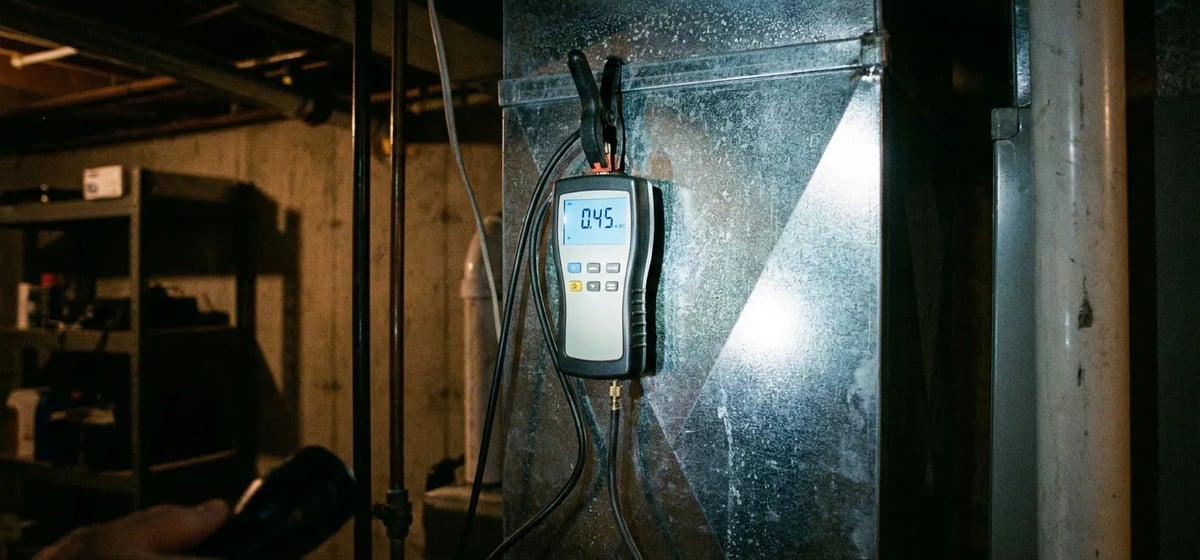
You can't measure static pressure by just feeling the air coming out of a ceiling vent. An HVAC technician must test it using a special digital tool called a manometer. They drill tiny holes in the metal ductwork near the furnace. Then they insert small tubes to measure the pressure on both sides of the blower motor.
This quick test is usually part of a standard seasonal maintenance visit. A routine tune up costs 100 to 200 dollars. If the pressure is too high, the fix depends on the cause. You might just need to buy a cheaper, thinner air filter at the hardware store. If the problem is the ductwork, the technician might need to add a new return vent or replace a crushed pipe in the attic. Minor duct modifications typically cost 300 to 1,500 dollars. Prices always depend on your local market, so review our guide on Hiring Contractors & What Things Cost before you agree to major duct repairs.