What is a stem wall?
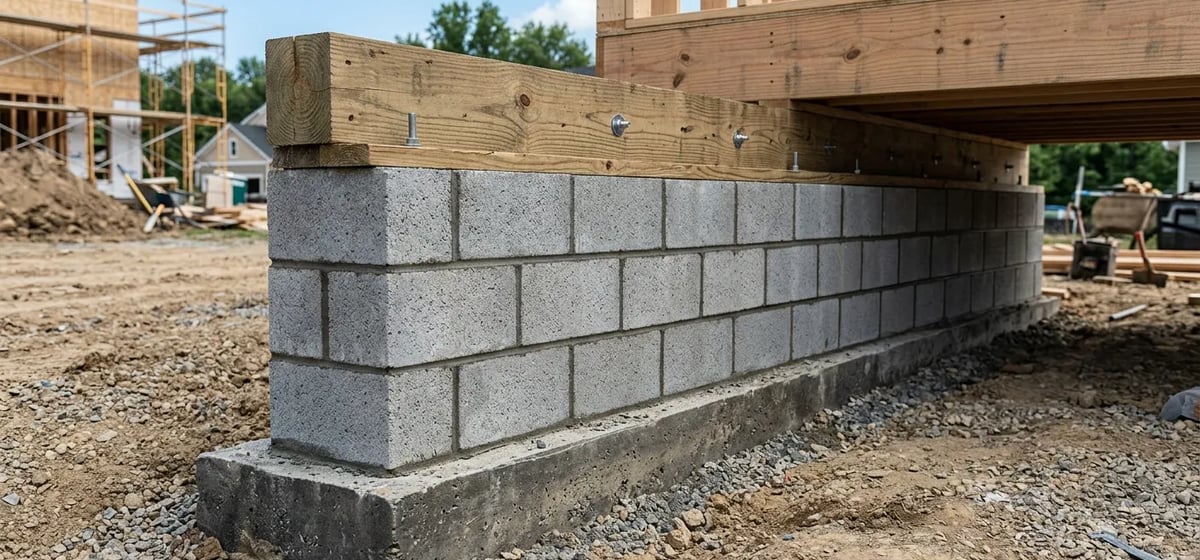
A stem wall is a short, sturdy wall built right on top of your underground foundation footing. It connects the footing to the wooden frame of your house. Builders usually make it out of poured concrete or cinder blocks. You can think of it like a plant stem. The footing acts as the roots, the stem wall is the main stalk, and your house is the flower on top. Builders have used this term since modern concrete foundations became standard.
You will mostly see stem walls in homes built with a crawlspace. They lift the bottom floor of your house a few feet above the dirt. If your home sits on a solid, flat slab of concrete, you likely do not have a standard stem wall. But if you have space to crawl under your home, a stem wall surrounds that open area.
Why it matters to you
Your house needs a strong base. The stem wall transfers the heavy weight of your home down to the footing. The footing then spreads that weight into the ground. But a stem wall does much more than carry weight. It protects your expensive wooden framing from the damp soil.
Wood rots when it stays wet. If your wooden floor joists touched the dirt, they would soak up water and decay quickly. The stem wall lifts the wood high enough to keep it dry. It also makes it harder for termites and carpenter ants to reach your home. If bugs want to eat your wood, they have to climb up the concrete first. This gives you a chance to spot their mud tubes during routine Pest Control checks.
What to watch for
Concrete is tough, but it does not last forever without care. You should walk around the outside of your house a few times a year. Look at the exposed concrete just below your siding. You want to catch small problems before they turn into major structural issues.
- Vertical cracks: Tiny hairline cracks going straight up and down are usually normal. Concrete shrinks as it cures. But if a crack is wider than a dime, you should have a pro look at it.
- Horizontal cracks: A crack running sideways is a red flag. This often means the soil outside is pushing too hard against the wall. It can also mean the steel rebar inside the concrete is rusting and expanding.
- Flaking or crumbling: If the surface of the concrete is peeling off, moisture is getting inside. Water freezes and expands in the winter, which breaks the concrete apart.
- White powder: You might see a chalky white stain on the wall. This happens when water moves through the concrete and leaves minerals behind. It means you have a moisture problem nearby.
Good drainage is the best way to protect your stem wall. Make sure your gutters push water far away from your house. You can read more about keeping water away in our Landscaping, Drainage & Outdoor guide.
Repair costs and upkeep
Fixing a stem wall is not a simple weekend project. You will need to hire a specialist if the wall starts to fail. Catching issues early keeps the costs down.
Minor repairs are fairly cheap. If you just need to seal a few small, non-structural cracks with epoxy, expect to pay 300 to 800 dollars. This stops water from getting inside and causing more damage.
Major repairs cost much more. If a section of the wall is crumbling or bowing inward, a contractor might need to rebuild it or install steel braces. These large jobs usually cost between 2000 and 6000 dollars. If your entire Foundation & Structure needs lifting or deep piering, the price can easily jump to 10000 to 15000 dollars. Keep in mind that exact prices depend heavily on your location and the size of your home, so ranges vary.