What It Is
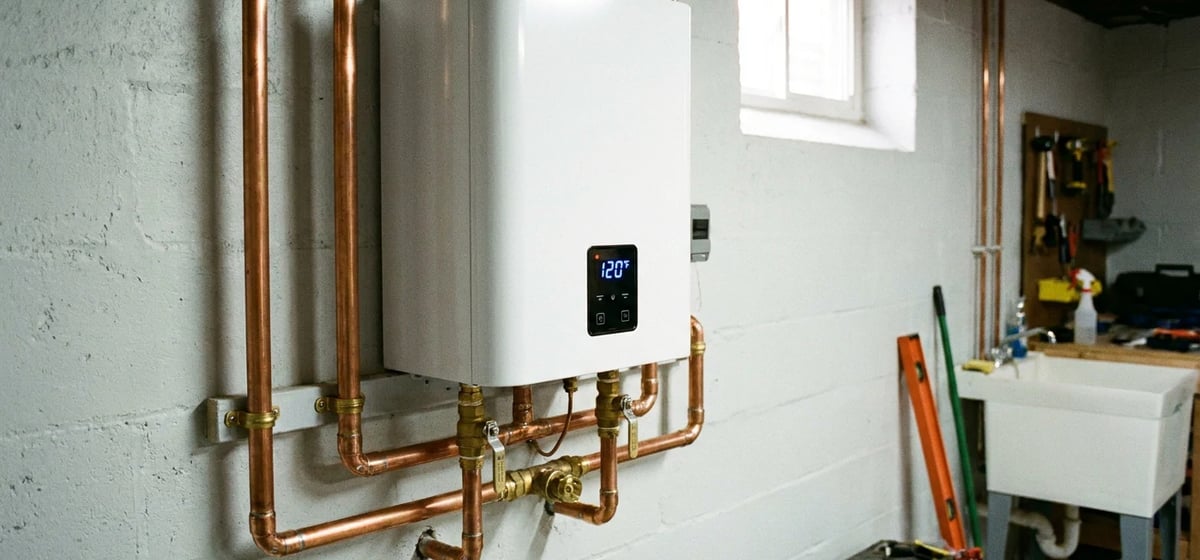
A tankless water heater is a compact metal box that mounts on your wall and heats your water entirely on demand. Cold water travels through a pipe into the bottom of the unit. A high powered gas burner or electric element heats the water instantly as it flows through the internal heat exchanger. Hot water then exits the top of the unit and travels to your faucet. This means you don't have a large metal tank holding 40 to 60 gallons of hot water in your basement or garage. You get a constant supply of hot water without paying to keep a standby tank warm all day. This device is a major part of your home Plumbing system.
Why It Matters to You
The biggest benefit is an endless supply of hot water. You can run the dishwasher, wash a load of laundry, and take a long shower without ever running out. You also save a significant amount of floor space. The unit mounts directly on a wall and is about the size of a small suitcase. It fits easily in tight closets or utility rooms.
You also save money on your monthly energy bills. A standard tank heats water all day and night so it's ready when you need it. A tankless unit only consumes energy when you actually turn on a hot water tap. The initial purchase and installation cost is higher than a traditional tank. You can expect to pay 1,500 to 3,500 dollars to buy and install a new gas or electric unit. These ranges vary widely based on your location and the required plumbing changes. However, these units often last 15 to 20 years. That is roughly double the lifespan of standard water heating Appliances.
Gas vs. Electric Models
You have two main choices when you buy a tankless water heater. Both types have specific installation requirements for your home.
- Gas models: These units use natural gas or liquid propane to heat the water. They heat water very fast and are excellent for whole house use. They require special PVC or stainless steel exhaust vents to push dangerous gases outside safely. You might also need a plumber to install a larger gas pipe to handle the high fuel demand.
- Electric models: These units use heavy duty metal heating elements. They don't need exhaust vents, which makes them easier to install in small spaces. However, they draw a massive amount of power to heat water quickly. You will likely need to upgrade your home Electrical panel and run thick copper wires to support an electric model.
Sizing Your Unit
You don't size a tankless heater by how many gallons it holds. Instead, you size it by its flow rate. This is measured in gallons per minute. You need to know how many hot water fixtures you plan to run at the exact same time. A standard shower head uses about 2 gallons per minute. A bathroom sink uses about 1 gallon per minute. If you want to run two showers and a sink at once, you need a unit that can deliver at least 5 gallons per minute of hot water.
What to Watch For
Tankless water heaters need regular maintenance to work properly. Hard water is their biggest enemy. Minerals like calcium and magnesium build up inside the narrow heating chamber over time. This scale blocks the water flow and forces the burner to work much harder to heat the water.
You also need to think about your local groundwater temperature. If you live in a cold northern climate, the water coming into your house from the city is very cold in the winter. The heater has to work much harder to raise the temperature from 40 degrees to 120 degrees. This heavy lifting can slow down the flow rate at your shower head. Always hire a licensed professional to size the unit correctly for your specific climate.