What is a Three-Way Switch?
A three-way switch lets you control a single light fixture from two different places. You usually find them at the top and bottom of a staircase. You'll also see them at opposite ends of a long hallway. They make it easy to turn off the lights without walking back across a dark room.
Electricians named this part for the three wire connections on the back of the switch. The design dates back to the early days of indoor wiring in the 1920s. Today, it's a standard feature in modern homes. Getting to know your switches is a big part of understanding your home Electrical system.
How It Works Inside the Wall
A standard light switch is simple. It has an incoming power wire and an outgoing power wire. When you flip the switch up, it connects the wires and turns the light on. When you flip it down, it breaks the connection.
A three-way switch is a bit more complex. It doesn't have a simple on or off position. Instead, it works as a team with a second switch. The two switches connect to each other using two special wires called travelers. The electricity can flow down either traveler wire to reach the light. When you flip either switch, you redirect the electricity to the other traveler wire. If both switches align on the same path, the light turns on. If they point to different paths, the connection breaks and the light turns off.
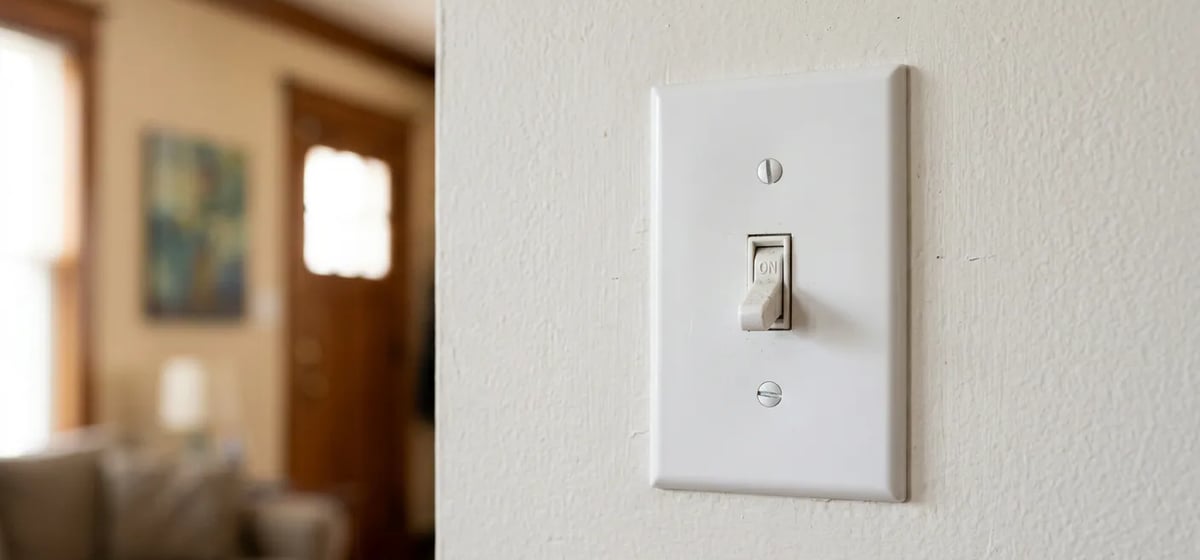
Because the switch positions constantly change, three-way switches don't have the words "on" and "off" printed on the toggle.
Where You Need Them
You'll find these switches anywhere you need convenience and safety. Walking through a dark space to find a switch is dangerous. Builders install them in specific spots to prevent trips and falls.
- Staircases: You need a switch at the top and the bottom so you never walk up or down in the dark.
- Long hallways: You can turn the light on when you leave your bedroom and turn it off when you reach the living room.
- Large rooms: Rooms with two or more entryways often have a switch at each door.
- Garages: You might have one switch by the door into the house and another by the main garage door.
Troubleshooting Common Problems
Three-way switches generally last for decades. However, they can fail over time. The internal metal parts wear out from constant flipping. When a switch starts to fail, you might notice a few warning signs. The light might flicker when you touch the toggle. The switch might feel loose or spongy. Sometimes, the light will only turn on if the other switch is in a specific position.
If you replace a light fixture and the switches suddenly stop working right, you likely mixed up the wires. Three-way wiring is confusing. It's very easy to connect the wrong wire to the wrong screw. If you feel unsure, it's always best to look at our guide on DIY vs. Hiring a Pro to decide your next steps.
Another common issue happens when people try to install smart switches. Many smart switches require a neutral wire to power the small computer inside the switch. Older homes built before the 1980s often don't have a neutral wire in the switch box. If you open the wall and only see three wires with no white neutral bundle tucked in the back, you'll need to buy a specific no-neutral smart switch or hire a pro to run new wire.
Costs and Replacement
Replacing a broken switch is a fast job. If you just need to buy the part at a hardware store, a new basic switch costs 5 to 20 dollars. A smart switch that connects to your phone will cost 30 to 60 dollars.
If you hire an electrician to swap out a broken switch, expect to pay 75 to 150 dollars for the labor and the part. If you want to add brand new three-way switches to a room that doesn't have them, the price goes up. The electrician has to cut holes in your drywall and run new wires. This bigger job typically costs 300 to 800 dollars. Keep in mind that these ranges vary based on where you live and how hard it is to reach the wires inside your walls. You can read more about typical labor rates in our guide to Hiring Contractors & What Things Cost.