Are Gutter Guards Worth It? Costs, Pros, and Cons Explained
Gutter guards promise a maintenance-free future, but do they actually work? We break down the costs, types, and the truth about eliminating seasonal gutter cleaning.
Full guide Roofing Learn how long shingles last, how to spot leaks early, and how to decide between a quick repair and a full roof replacement.Scooping wet, decaying leaves out of your gutters while balancing on a wobbly aluminum ladder is a miserable seasonal chore. It is messy, time-consuming, and genuinely dangerous. Gutter protection companies promise a future where you never have to drag that ladder out again, but are gutter guards worth it in the long run? The short answer is yes, but in our experience, only if you adjust your expectations about what "maintenance-free" actually means.
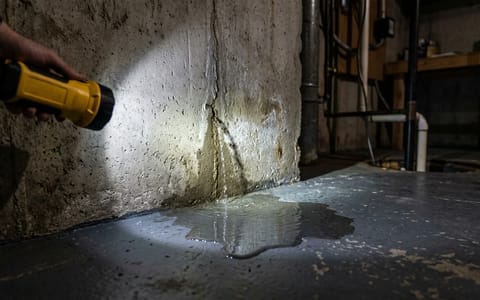
Homeowners spend thousands of dollars trying to protect their foundations and siding from water damage. Gutters are your first line of defense. When they clog, water spills over the sides, pooling around your foundation, rotting your wood fascia, and flooding your basement. Gutter guards are designed to solve this problem by acting as a filter. They let the water flow through while keeping the organic debris out.
However, the industry is filled with aggressive sales tactics and exaggerated claims. To make an informed decision, you need to look past the marketing. We are going to break down the actual costs, compare the different materials available, and help you calculate whether the investment makes sense for your specific property and tree coverage.
Do Gutter Guards Actually Work?
The most persistent myth in the home improvement world is the idea of a zero-maintenance gutter system. No gutter guard on the market will completely eliminate the need for occasional upkeep. If a salesperson tells you that you will never have to think about your gutters again, they are not being honest.
What gutter guards actually do is change the type of maintenance you perform. Instead of digging handfuls of rotting black sludge out of a metal trough twice a year, you will likely just need to brush dry leaves off the top of a metal screen. They drastically reduce the frequency of clogs, often cutting cleaning needs by 75% or more, and keep water flowing away from your house.
Last fall, we inspected a reverse-curve system installed five years prior on a home surrounded by mature oak trees. While the main trough was completely clear of large leaves, a thick sludge of asphalt shingle grit and oak pollen had formed a concrete-like layer in the bottom of the gutter. Because the system was fully enclosed, cleaning that grit out required unscrewing the panels. This proved that while the guards kept the leaves out perfectly, fine particulates still found their way in.
Your roof sheds thousands of tiny asphalt granules every year. These granules act like 120-grit sandpaper, washing down into your gutters during heavy rains. Depending on the type of guard you choose, this grit will either wash completely through the system, get trapped inside, or sit on top of the mesh.
What Are the Best Gutter Guards? (Comparing Types)
Not all gutter guards are created equal. The market is flooded with options ranging from cheap hardware store inserts to premium surgical-steel systems. Choosing the right one depends heavily on the types of trees in your yard.
Micro-Mesh Guards
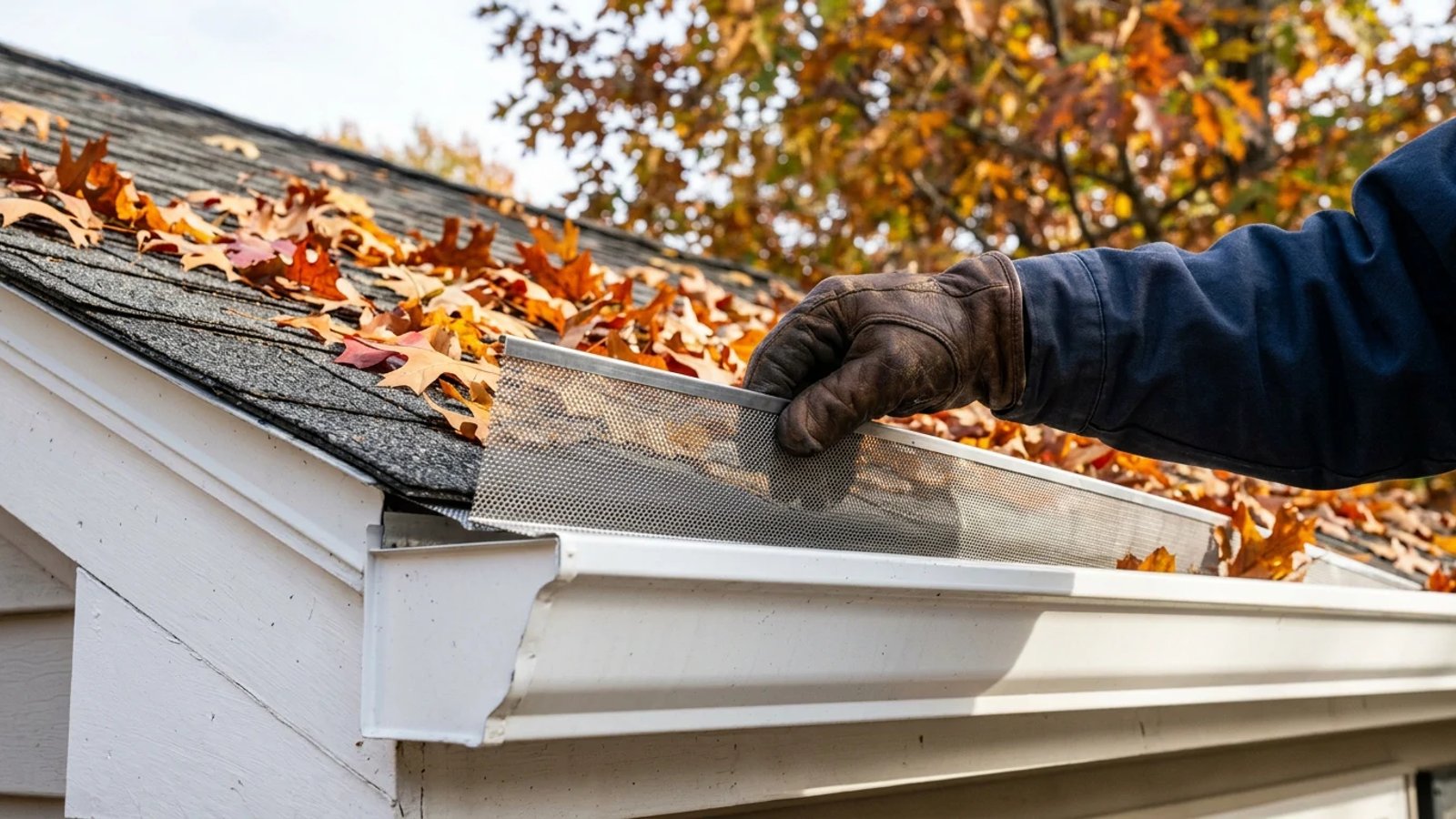
Micro-mesh is widely considered the gold standard for gutter protection. These guards feature a frame made of aluminum or PVC, covered in a fine stainless steel mesh. The holes in the mesh are incredibly small—often around 50 microns—which means they block almost everything except water.
If you have pine trees, micro-mesh is the only system that will reliably keep pine needles out of your gutters. Other systems allow the needles to slip through or get stuck halfway, creating a prickly dam that catches other leaves. The downside to micro-mesh is that fine dust and pollen can occasionally form a film over the tiny holes, requiring you to spray them down with a hose every couple of years.
Reverse-Curve (Surface Tension) Guards
Reverse-curve guards look like a solid piece of metal that curves downward into the gutter. They rely on liquid surface tension. As rainwater runs down your roof, it clings to the curved metal and flows backward into a narrow slit, while solid leaves fall straight off the edge to the ground below.
These systems are excellent at handling massive downpours and keeping large deciduous leaves out. However, they have a few distinct drawbacks. The opening is usually wide enough for wasps and hornets to enter and build nests. Additionally, they are highly visible from the ground, which can alter the aesthetic of your roofline.
Perforated Metal Screens
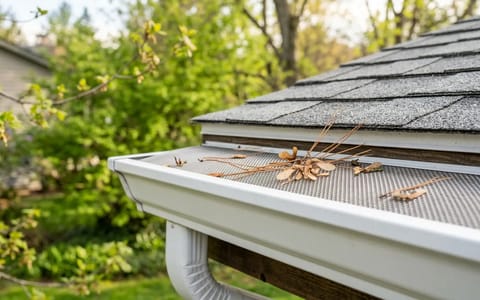
Metal screens are the most common DIY option. They are flat sheets of aluminum or steel with holes punched through them. They are affordable and relatively easy to install by sliding them under the first row of shingles and snapping them onto the gutter lip.
While they keep large leaves out, the holes are usually 1/4-inch to 3/8-inch wide. This allows small seed pods, pine needles, and roof grit to pass through. Over time, stems and twigs can get lodged perfectly in the holes, sticking straight up and trapping other leaves passing by.
Foam and Brush Inserts
Foam inserts are triangular pieces of porous foam that sit entirely inside the gutter. Brush inserts look like giant pipe cleaners. Both are extremely cheap and require zero tools to install—you just shove them into the gutter trough.
How Much Do Gutter Guards Cost?
The cost of gutter guards varies wildly depending on whether you install them yourself or hire a professional company. A standard American home has roughly 200 linear feet of gutters. Using that baseline, we can calculate typical project costs.
Professional installations are expensive because you are paying for labor, insurance, warranties, and often proprietary materials that are not sold in retail stores. Many high-end companies also include a complete gutter realignment and resealing as part of the installation package. If your existing gutters are sagging or leaking at the seams, paying a professional to fix the whole system while adding guards is a smart move.
If you decide to go the DIY route, you can save thousands of dollars. Buying rolls of stainless steel micro-mesh online or at a local hardware store will cost you between $2 and $4 per linear foot. If you own a good ladder, tin snips, and a cordless drill, you can outfit a single-story home in a single weekend.
The Hidden Benefit of Gutter Guards: Ladder Safety
When calculating whether gutter guards are worth the money, you have to factor in the physical risk of cleaning gutters manually. According to the Centers for Disease Control and Prevention (CDC), falls are a leading cause of unintentional injury and death in the home, and ladder falls make up a massive percentage of those statistics.
The true return on investment for gutter guards is not just financial; it is the peace of keeping your feet firmly planted on the ground.
Reaching out too far to grab a handful of wet leaves shifts your center of gravity, making it incredibly easy to tip an extension ladder. If you are over the age of 60, or if your property requires a 30-foot ladder to reach the second story, the safety benefit of gutter guards far outweighs the financial cost of installation.
How to Maintain Gutters with Guards Installed
Even with the best micro-mesh system on the market, you still need to perform a light visual inspection and cleaning once a year. Leaves can occasionally pile up in roof valleys or rest flat on top of the mesh during a dry autumn.
Fortunately, maintaining guarded gutters is much easier and safer than cleaning open troughs. You rarely even need a ladder.
- Attach a brush to an extension pole. Buy a telescoping aluminum pole and attach a soft-bristled brush or a specialized gutter-sweeping hook to the end.
- Sweep the top of the guards. Walk along the perimeter of your house, reaching up with the pole to gently sweep any dry, resting leaves off the surface of the mesh.
- Inspect the downspouts. Check the bottom of your downspouts to ensure water is flowing freely. If a downspout is clogged, the issue is likely underground or at the elbow joint.
- Flush with a hose (if necessary). If you notice a film of dirt or pollen clogging the micro-mesh, use a garden hose with a high-pressure nozzle to spray the guards clean from the ground.
Watch Your Roof Warranty
Before you purchase any gutter guard, you need to understand how it attaches to your home. Many screen and mesh systems are designed to slide under the bottom row of your asphalt roof shingles. The guard is then secured by driving screws through the front lip of the gutter.
Lifting the bottom row of shingles breaks the factory adhesive seal that protects your roof from wind uplift. Some roofing manufacturers will void your shingle warranty if you slide aftermarket products underneath them or drive nails through the drip edge. Always check your specific roof warranty documents. If you are concerned, look for fascia-mounted guards or systems that attach entirely inside the gutter trough without touching the roof.
The Final Verdict: When to Invest and When to Skip
So, are gutter guards worth it? The answer comes down to simple math and your local environment.
If you live on a lot with zero mature trees, or if your only trees are small ornamental varieties, gutter guards are likely a waste of money. A quick flush with a hose every two years is all you need to wash away shingle grit.
However, if your home is surrounded by towering pines, maples, or oaks, you are probably cleaning your gutters two or three times a year. If you hire a professional service, you might be paying $200 per cleaning. At $400 a year in maintenance costs, a $3,000 professional micro-mesh installation will pay for itself in about seven and a half years. Given that high-quality aluminum and stainless steel guards last 15 to 20 years, the long-term math works heavily in your favor.
Take a walk around your property this week and look at the tree canopy hanging over your roofline. If you see branches dropping heavy loads of debris onto your shingles, investing in a high-quality micro-mesh or reverse-curve system is a smart financial move that protects your foundation and keeps you safely off the ladder.
- Avoid cheap foam gutter inserts, as they degrade quickly and act as sponges that hold moisture against your roof fascia.
- Check your roof warranty before installing any guard that slides under the bottom row of asphalt shingles.
- Plan to sweep the top of your gutter guards with an extension brush once a year to keep the mesh or perforations clear.
- Calculate your break-even point by comparing the cost of professional installation against your current annual gutter cleaning bills.