How Much Can You Really Save by Monitoring Your Utility Bills? (State by State)
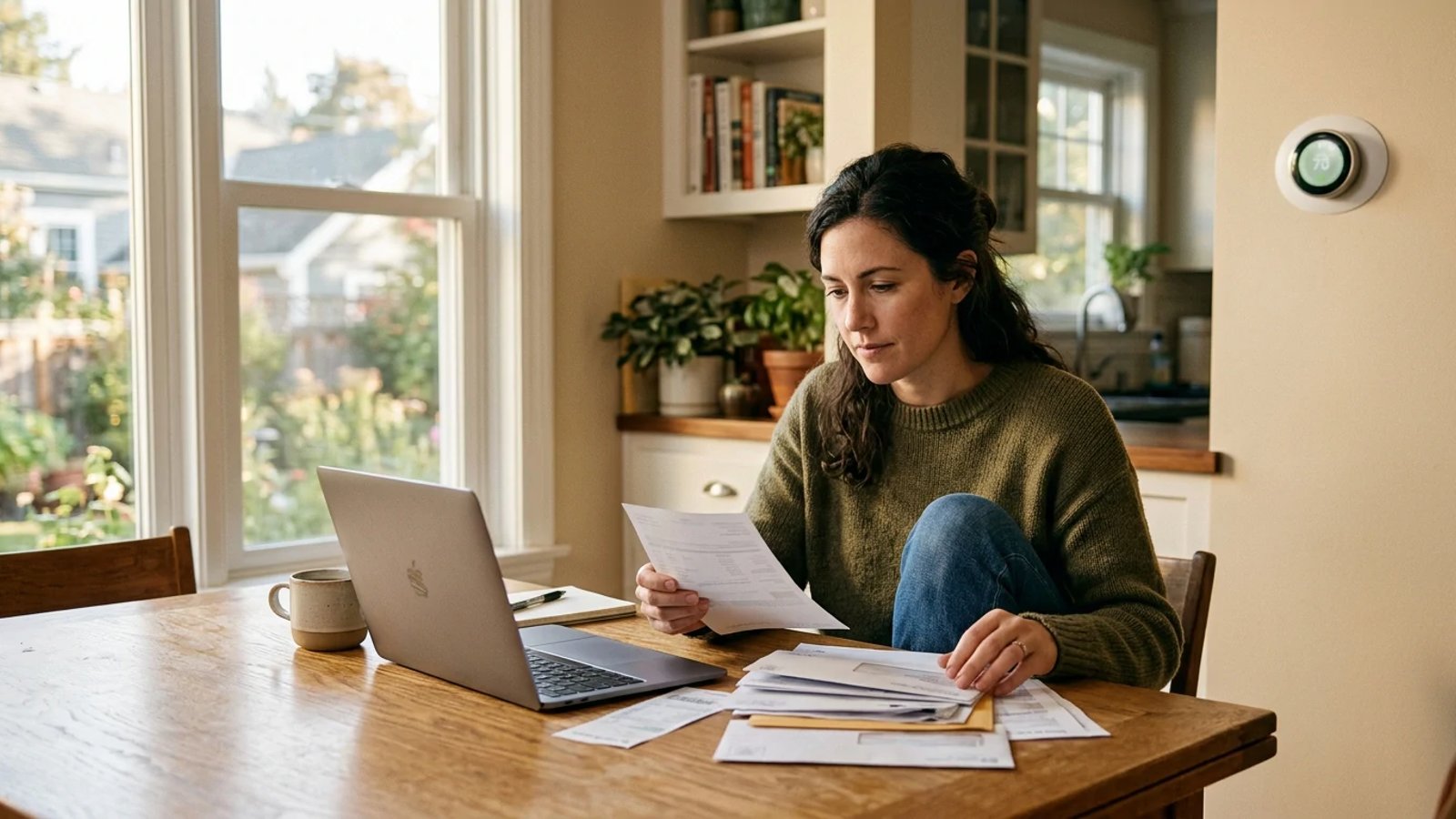
A bill you only look at saves nothing. Here is what the evidence says each fix is worth, state by state, and how to make the follow-through automatic.
Utility bills are one of the few recurring costs you can shrink without earning a dollar more. The average American home pays roughly $144 a month on electricity, several hundred more a year for natural gas, and over $1,000 a year on water, with sewer and trash stacked on top. Some of that money buys warm rooms and hot showers. A surprising slice of it buys nothing at all.
One caveat shapes every number that follows, so let's put it first: watching the numbers does not save money by itself. Study after study finds that a bill, a chart, even a smart meter changes almost nothing on its own. The savings arrive when information becomes a specific action at the right moment. You fix the running toilet. You set the thermostat back for the season. When the old showerhead finally dies, you buy the efficient one instead of whatever sits at eye level in the hardware store.
The short answer, in one table
If you read nothing else, read this. The top half is what watching your bills saves every year. The bottom half is the far bigger money: the repairs you head off by keeping up. Figures are typical, drawn from EPA, ENERGY STAR, Angi, insurance data, and utility studies. They overlap, so resist the urge to add them all up.
| If you… | Typical saving |
|---|---|
| Lower your bills, every year | |
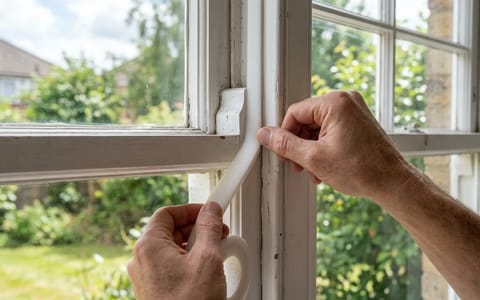
| Fix an easy leak (running toilet, dripping valve) | ~10% of the water bill · $100+/yr |
| Add or properly tune a smart thermostat | ~8% of heating & cooling · $50–$100/yr |
| Set the thermostat back 7–10°F while out/asleep | up to 10% of heating & cooling |
| Act on a usage or neighbor-comparison report | ~2–7% of the electric bill · $35–$200/yr |
| Choose WaterSense fixtures at replacement time | $70–$380/yr |
| Prevent a repair, where the real money is | |
| Change the HVAC filter on schedule (~$15) | avoid a $300–$600 call, or thousands to replace early |
| Flush the water heater once a year | avoid a $1,200–$2,000 replacement |
| Keep the gutters clear and treat for pests | avoid four- and five-figure water and pest damage |
Stay on top of your home and a typical household comes out ahead by roughly
And that is before a single disaster you head off. The average water-damage claim alone runs about $12,500.
Two things decide where you land in that range. The first is the size of your bill: the savings scale with what you already pay. The same percentage is worth far more in Connecticut ($200/mo) or Hawaii ($212/mo) than in New Mexico ($93/mo) or Utah ($95/mo), so an engaged household saves nearer $80–$120 a year where bills run low and $200–$300+ where they run high, before any single big fix. The second: the money is in the doing, not the watching. The households that save are the ones something reminds to act. The rest of this piece is the detail behind those numbers, state by state.
What the average home actually spends
Space heating and cooling alone account for about half of a home's energy use, according to the U.S. Energy Information Administration's Residential Energy Consumption Survey. If you want to know where the big energy dollars hide, start at the thermostat. On the water side, the EPA reports that the average family spends more than $1,000 a year on water, each person running through about 82 gallons a day at home.
Baselines swing wildly by state with climate, local rates, and whether electricity does the heating. Pick your state below to see the full monthly picture (electricity, gas, water, sewer, trash) and roughly what staying on top of it is worth. Flip on the comparison to set two states side by side.
See the full table: all 51 states and DC
| State | Electricity ($/mo) | Natural gas ($/yr) |
|---|---|---|
| United States (average) | $144 | $863 |
| Alabama | $174 | $687 |
| Alaska | $144 | $1,740 |
| Arizona | $160 | $606 |
| Arkansas | $129 | $780 |
| California | $161 | $703 |
| Colorado | $101 | $703 |
| Connecticut | $200 | $1,342 |
| Delaware | $151 | $803 |
| District of Columbia | $113 | $1,104 |
| Florida | $156 | $545 |
| Georgia | $151 | $1,249 |
| Hawaii | $212 | $1,052 |
| Idaho | $109 | $594 |
| Illinois | $110 | $956 |
| Indiana | $133 | $679 |
| Iowa | $112 | $594 |
| Kansas | $124 | $791 |
| Kentucky | $134 | $714 |
| Louisiana | $141 | $560 |
| Maine | $134 | $1,305 |
| Maryland | $166 | $980 |
| Massachusetts | $167 | $1,532 |
| Michigan | $119 | $856 |
| Minnesota | $110 | $762 |
| Mississippi | $155 | $701 |
| Missouri | $129 | $984 |
| Montana | $108 | $585 |
| Nebraska | $110 | $635 |
| Nevada | $139 | $852 |
| New Hampshire | $145 | $1,110 |
| New Jersey | $128 | $1,023 |
| New Mexico | $93 | $523 |
| New York | $140 | $1,438 |
| North Carolina | $143 | $782 |
| North Dakota | $118 | $659 |
| Ohio | $135 | $972 |
| Oklahoma | $132 | $756 |
| Oregon | $130 | $871 |
| Pennsylvania | $145 | $996 |
| Rhode Island | $162 | $1,509 |
| South Carolina | $150 | $674 |
| South Dakota | $128 | $538 |
| Tennessee | $143 | $570 |
| Texas | $164 | $668 |
| Utah | $95 | $884 |
| Vermont | $126 | $1,243 |
| Virginia | $149 | $889 |
| Washington | $114 | $835 |
| West Virginia | $155 | $950 |
| Wisconsin | $111 | $661 |
| Wyoming | $108 | $861 |
What about water, sewer, and trash?
They are in the tool above, but they behave differently from electricity and gas for one honest reason: no federal agency tracks them state by state. Water and sewer come from your local utility, and a typical household pays about $120 to $140 a month for the pair (Bluefield Research, 2024); the EPA puts the average family over $1,000 a year on water alone. Trash usually runs $12 to $25 a month, often buried in municipal taxes or an HOA fee. Because those are national averages, the tool holds them steady for every state while your electricity and gas move with your location.
The water line rewards attention twice over, because your sewer bill is usually calculated from your water use. Every gallon you save cuts two charges at once: fix a running toilet or drop in a WaterSense showerhead and the water bill and the sewer bill both fall. Trash is the least controllable of the group, though plenty of towns quietly discount a smaller cart or offer a pay-as-you-throw plan. Worth one phone call, once.
Electricity: a ladder from gentle nudges to autopilot
The electricity research stacks neatly into a ladder. Each rung asks a little more of you and pays a little more back.
The bottom rung: neighbor-comparison reports
The gentlest tool is a report comparing your usage to similar homes nearby. Across a landmark study of about 600,000 households served by a dozen utilities, those reports cut electricity use by 1.4% to 3.3%, averaging around 2% (summarized by J-PAL). Modest. But it costs the household nothing, and it sticks: people kept saving even after the reports stopped. On a $144 monthly bill, 2% is about $35 a year for doing almost nothing.
Look more often, save more
Make the feedback immediate, say a portal or an in-home display showing usage as it happens, and the effect grows. Reviews of information-based programs commonly find 4% to 12% reductions, with one meta-analysis landing near 7.4% on average. Call it $70 to $200 a year on the national bill, more for heavy users. The pattern underneath is consistency: the households that save look often and act on what they see.
Smart thermostats: automating the biggest line
Heating and cooling is the largest line on the bill, which makes it the first thing worth automating. ENERGY STAR estimates a certified smart thermostat saves about 8% of heating and cooling costs, or roughly $50 a year, closer to $100 when the home sits empty much of the day. Utility field studies have measured more where the old habits were sloppy: one Indiana pilot found roughly 12.5% heating and 13.9% cooling savings after a smart thermostat replaced manual control. Run a disciplined schedule already and you will see less. Set it and forget it, and you will see more.
The free version: a manual setback
You do not need a gadget to capture much of this. The U.S. Department of Energy notes that turning your thermostat back 7 to 10°F for 8 hours a day can save as much as 10% a year on heating and cooling. The catch, as always, is remembering to actually do it, day after day.
Water: the leaks and habits that quietly drain money
Water is where monitoring pays off most reliably, because what it finds is usually pure waste: gallons nobody used, or even noticed.
- Fix the easy leaks: about 10% of the bill. The EPA's Fix a Leak Week data says fixing easily corrected household leaks saves homeowners around 10% on their water bills. One in ten homes has leaks wasting 90+ gallons a day, and the culprit is often a worn toilet flapper that costs a few dollars to replace.
- Home water reports: about 5%. Neighbor-comparison water reports cut usage roughly 4.4% to 5% in utility pilots (a $45–$50 a year effect on a $1,000 bill), and they nudge people toward deeper fixes and audits.
- Leak alerts from smart meters. Where utilities send proactive leak notifications, mean leak volume per meter fell 29% to 50% across studies compiled by the Alliance for Water Efficiency. The reason is speed: a silent leak that would have run for months gets caught in days.
- WaterSense fixtures, at replacement time. Swapping old toilets for WaterSense models saves the average family about 13,000 gallons and $130 a year; efficient showerheads save around 2,700 gallons and $70 a year in water and water-heating energy. A full WaterSense retrofit saves more than $380 a year, and a bathroom makeover can pay for itself in about a year.
- Smart irrigation. A weather-based irrigation controller trims outdoor watering by roughly 15%, around 7,600 gallons a year. That matters most in hot, dry regions where the lawn is the summer bill.
Where the savings run big, and where they don't
Averages hide a lot. A few factors decide whether your own number is closer to $80 or $800.
Home type
The EIA finds single-family detached homes use nearly three times the energy of apartments in larger buildings. The same 8% simply buys more dollars in a big detached house with central air or electric heat than it ever will in a one-bedroom walk-up.
Climate and region
In the cold Northeast and Midwest, the money is in heating control. In hot, dry country it is in cooling, irrigation, and leak-hunting. The two bills even tangle: a California water-report pilot cut peak summer electricity use by 1.5 to 2.5%, because hot water and outdoor habits tie water to power.
Rate structure
On time-of-use or tiered rates, a kilowatt-hour or gallon saved during a peak period or a high tier is worth more than one saved off-peak. If your utility prices this way, shifting or trimming usage at the expensive hours multiplies the payoff.
Who actually has the gear
There is a real gap here. Only about 16% of U.S. homes use a programmable or smart thermostat to control heating automatically, and adoption skews wealthy: roughly 36% of households earning $150,000+ versus under 5% of the lowest earners. Meanwhile the DOE notes lower-income households carry an energy burden about three times higher. The homes with the most to gain from a well-timed nudge are the least likely to own a device that provides one.
Why the meter alone never saves a dime
Put the studies side by side and one pattern repeats. The EPA likes to say "you can't manage what you don't measure," and that is true as far as it goes. But roughly three-quarters of U.S. electric meters are already "smart," and the savings plainly do not come from the meter. They come from what happens next, when the data turns into an alert and the alert turns into a specific action taken on time. A behavioral report has never fixed a toilet. It works by getting a person to fix one.
From that, the order of operations for a household almost writes itself:
- Look and flag. Skim your bill history each season. Anything that jumps for no reason deserves a closer look.
- Fix and tune. Chase down leaks, and set up or adjust the thermostat schedule for the season. Cheapest money first.
- Replace the worst offenders. When a toilet, showerhead, or appliance is due, choose the efficient model.
- Then automate. Only after the obvious waste is gone does more expensive gear earn its keep.
Nearly every step on that list is a maintenance action with a due date. And the reason most of us leave money on the table is not ignorance. It is that nobody reminds us to do the thing this month instead of "someday."
The cheapest repair is the one you never make
Everything so far has been about the meter. For most homeowners, the bigger money sits one step earlier, in the small, dull maintenance that keeps an expensive failure from ever happening. The logic is the same as watching your bills, just aimed at the repair bill instead: a little, on time, beats a lot, too late. A clogged filter wastes energy right up until the day it burns out the blower. A water heater nobody flushes dies years early, and the bugs nobody treats for settle into the wall.
None of these is hard. They are just easy to forget, which is exactly why they get skipped until they turn into a bill with a comma in it. The fix is the same one that turns bill-watching into savings: the right reminder at the right time.
The numbers on this are not close:
Notice which way those numbers lean. Scheduled work is cheap and predictable; the repairs you buy by skipping it are neither. So the honest tally for a homeowner runs on two levels. Watching your bills saves hundreds of dollars a year. Staying ahead of maintenance protects thousands: the emergencies that never happen, and the furnace and water heater that serve their full lives instead of dying young. The catastrophic loss deserves its own line, because insurance may not cover it at all if it traces back to neglect, and avoiding one water-damage claim can be worth more than a decade of everything else on this page.
Where I am Home comes in: making the habit stick
Both threads, acting on the bill and heading off the repair, come down to the same missing piece: something that prompts you at the right moment. That is the gap I am Home exists to close. It is not a smart meter and it will not read your utility account; nothing on your phone needs to. It runs the action layer the research keeps pointing at: it maps your specific home into Care Points, builds a recurring schedule of the maintenance that keeps bills down, reminds you when each task comes due, and lets you ask Hank, the built-in assistant, "should I fix this, and how?"
Set against the evidence above, that looks like:
- Keeping the biggest bill line efficient. Timely HVAC filter changes and seasonal thermostat reminders protect the heating-and-cooling spend that is half your energy bill, the same lever ENERGY STAR and the DOE value at up to 10%.
- Catching the silent water waste. Scheduled leak checks and water-heater maintenance surface the running toilet or dripping valve while it is still a 10% problem, not a burst-pipe emergency.
- Choosing efficient at replacement time. When a fixture or appliance is on its last legs, Hank can point you to the WaterSense or high-efficiency option that quietly saves $70–$380 a year afterward.
- Handling the seasonal stuff you forget. Winterizing, adjusting irrigation for the season, clearing the dryer vent: the small jobs that each shave a little off the bill and are so easy to skip without a nudge.
In short, it plays the part the studies keep finding vacant: the thing that gets you to act while the saving is still on the table.
Does the app pay for itself?
Be skeptical of any tool that promises to slash your bills, this one included. The honest figure runs on two levels. On the utility side, an engaged household saves roughly $80 to $300 a year from behavior and automation, and single actions can clear that bar on their own: one caught leak is worth $100+ a year, a tuned thermostat and a clean filter protect $50 to $200 of the heating bill, and a WaterSense bathroom retrofit runs about $380 a year. Any one of those covers a year of most subscriptions.
The bigger return is the repairs you never make. Preventive upkeep converts expensive emergencies into cheap scheduled work, and heading off one common failure dwarfs everything else on this page: the average water-damage claim runs about $12,500, and insurers can refuse it if it came from skipped maintenance. Add it up and staying on top of your home is worth well into four figures a year for a typical household, before counting one prevented disaster that can cost five.
I am Home Premium costs $14.99 a month, or $149.99 a year. The app does not save that money for you; your home and your habits do. What it does is make the habits happen: the leak check you would have skipped, the filter you would have left in for another two months. If it nudges even a couple of those into reality each year, it pays for itself many times over. That is the whole case, really. Treat your home less like a dashboard you glance at and more like a routine that gets things done.
- Heating and cooling account for about half of home energy use, so the thermostat and HVAC are where the biggest dollars hide.
- Fixing easily corrected leaks trims about 10% off the water bill (EPA); a full WaterSense retrofit saves $380+/yr.
- Smart thermostats save ~8% of heating and cooling ($50/yr) on average, and more where the old habits were sloppy.
- The dashboard is not the saving; the action is. A maintenance schedule with reminders is what turns awareness into money.
- The bigger money is preventive: corrective, after-it-breaks repairs eat 70–90% of maintenance cost, and the average water-damage claim (~$12,500) can be denied if it traces back to neglect.