Garbage Disposal Reset Switch: How to Fix a Jam Fast
Is your garbage disposal humming or completely dead? Learn how to locate the reset switch and unjam the motor in under 5 minutes without calling a plumber.
Full guide Appliances Learn how long your home appliances will last and when to repair or replace them.Standing in the kitchen with a sink full of dirty water because the disposal just hummed and died is a stressful moment. You might be frantically searching for a quick fix, worried you will have to shell out $150 or more for a plumber. Take a deep breath. Finding the garbage disposal reset switch and clearing the jam is usually a five-minute, zero-cost repair.
In my experience managing rental properties, a jammed disposal accounts for about half of all kitchen plumbing calls. Most of the time, the fix requires no specialized skills and only one basic tool. I once spent an hour disassembling a sink drain only to realize the disposal's internal breaker had simply popped. Always check the red button first.
Do Garbage Disposals Have a Reset Button?
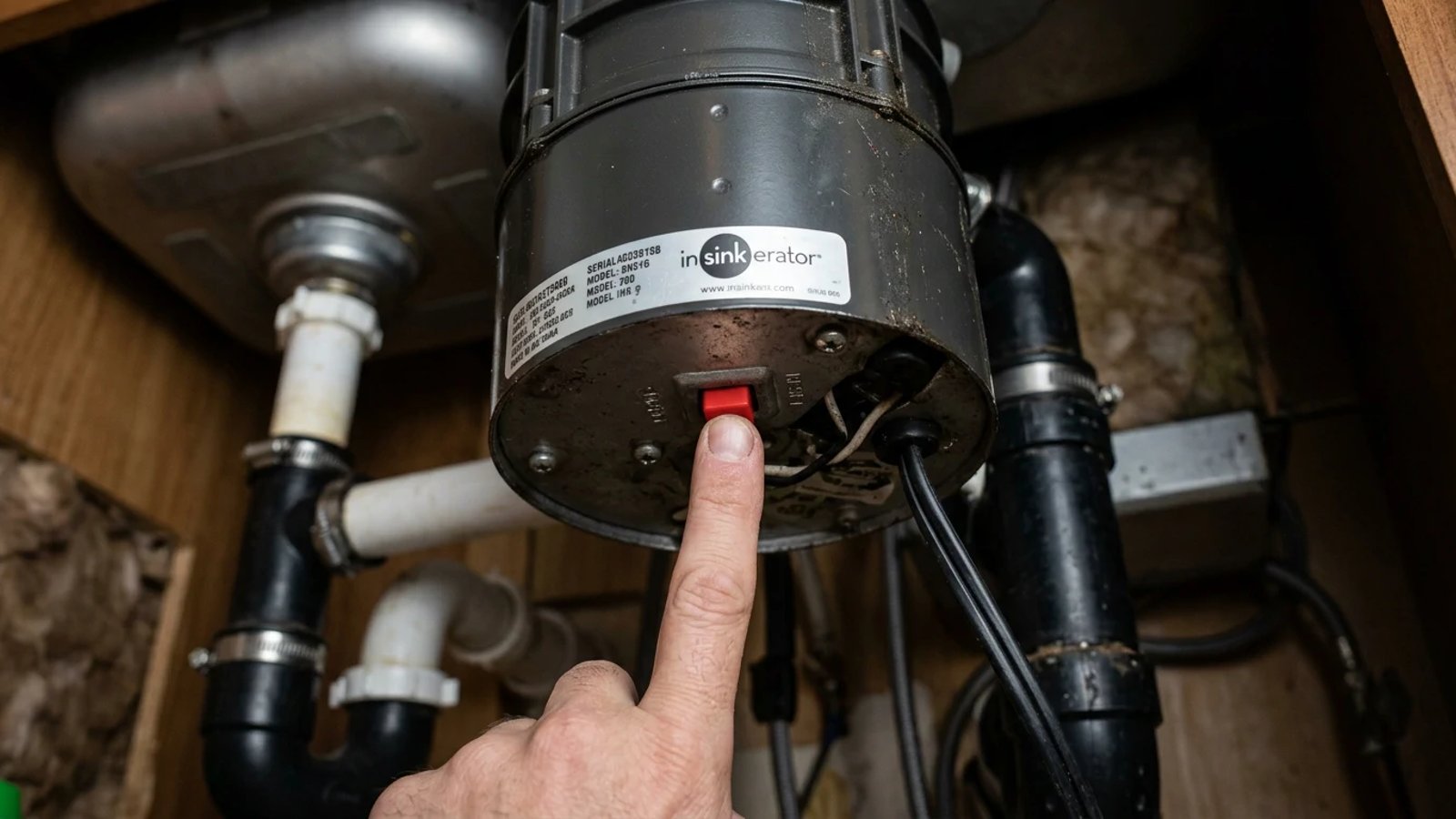
Yes, nearly all modern units have one. This small, red button, typically found on the bottom of the unit, is a built-in safety feature—technically called a thermal overload protector. When the disposal motor works too hard because something is stuck in the grinding chamber, it draws excess electricity and begins to overheat.
The reset switch is your disposal's built-in defense mechanism against burning out its own motor.
Rather than catching fire or destroying the motor wiring, the unit shuts itself off. This is why a disposal will often hum loudly for a few seconds before going completely dead. The humming is the sound of a stalled motor; the sudden silence is the reset switch doing its job.
How to Find the Garbage Disposal Reset Switch
Locating the switch is straightforward, though you will need to get down on the floor and look under your kitchen sink. Grab a flashlight and look directly at the bottom face of the disposal cylinder.
You are looking for a small, square red button. On most major brands, it sits slightly off-center on the underside of the housing.
- If the button is flush: The internal breaker has not tripped. The issue is likely a lack of power from the wall outlet or the main electrical panel.
- If the button is popped out: It will protrude about a quarter of an inch. This confirms the unit overloaded and shut itself down.
How to Fix a Jammed Garbage Disposal Fast
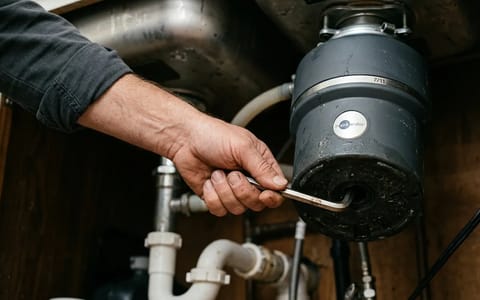
If your unit hummed before dying, or if it is currently humming when you flip the switch, the grinding flywheel is physically wedged. Pushing the reset button won't help until you clear the physical obstruction. To do this, you need the specific tool for a garbage disposal: a 1/4-inch Allen wrench (also known as a hex key).
Here is how to safely unjam the unit and get the water draining again:
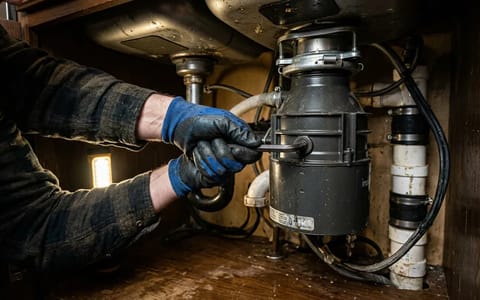
- Disconnect the power. Unplug the disposal's power cord from the wall outlet under the sink. If your unit is hardwired, go to your main electrical panel and flip the 15-amp kitchen breaker to the "off" position.
- Insert the Allen wrench. Look at the very bottom center of the disposal. You will see a small, hexagonal hole. Insert your 1/4-inch Allen wrench into this slot.
- Manually crank the flywheel. Turn the wrench back and forth clockwise and counterclockwise. It will likely feel very stiff at first. Keep working it back and forth until the wrench turns freely in a full circle.
- Extract the debris. Go back up to the sink and shine a flashlight down the drain. Use long tongs or needle-nose pliers to pull out whatever was causing the jam (often a fruit pit, a bone fragment, or a piece of glass).
- Reset and test. Plug the unit back in (or turn the breaker back on). Press the red garbage disposal reset switch on the bottom until it clicks into place. Turn on the cold water, then flip the wall switch to test the unit.
What if the Garbage Disposal Reset Switch Won't Stay In?
Sometimes you press the red button, and it immediately pops right back out. Other times, it stays in, but the moment you flip the wall switch, the unit hums for a split second and the button pops out again.
If the button refuses to stay seated while the power is off, the internal thermal protector hasn't cooled down yet. Wait 10 to 15 minutes and try again. If it still won't stay in, or if it trips the moment you apply power despite the flywheel spinning freely with the Allen wrench, you are likely dealing with a hard electrical short or a burned-out motor.
In rare cases, you might need to know how to reset a garbage disposal without a button. If your older model lacks a red switch, or if the red switch is pushed in but the unit remains dead, check your home's main electrical breaker panel. Following standard NFPA electrical safety guidelines, verify the circuit hasn't tripped at the source. A tripped breaker handle will rest in the middle position; push it firmly to "off" before snapping it back to "on".
What NOT to Put Down Your Garbage Disposal
While garbage disposals are incredibly convenient, they aren't designed to handle every type of food waste. In my experience, sending the wrong items down the drain is the quickest way to cause a jam, a leak, or even burn out the motor. Knowing what to avoid can save you a lot of hassle and extend the life of your appliance.
Here are the most common culprits for disposal problems:
- Fibrous Foods: Celery stalks, asparagus, onion skins, corn husks, and artichoke leaves are notorious for wrapping around the impellers and jamming the motor. Their long, stringy fibers don't break down easily.
- Coffee Grounds: While they seem fine, coffee grounds are dense and can accumulate in the drain pipes, forming a thick sludge that leads to clogs further down the line, not necessarily in the disposal itself.
- Grease, Fats, and Oils: Never pour liquid fats or oils down the drain. They solidify as they cool, coating your pipes and the inside of the disposal, leading to clogs and inefficient grinding. Scrape them into the trash instead.
- Pasta, Rice, and Bread: These items expand when they absorb water, turning into a sticky, starchy mass that can quickly clog the drain and hinder the disposal's grinding action.
- Large Bones and Pits: Small, soft bones from fish or poultry are usually fine, but large bones from beef, pork, or fruit pits (like avocado or peach) are too hard for most disposals. They'll just spin around, making noise, and can dull the grinding elements or jam the motor.
- Non-Food Items: This might seem obvious, but utensils, sponges, plastic wrappers, twist ties, and even cleaning wipes sometimes accidentally fall into the disposal. Always check the drain before turning the unit on!
- Eggshells: There's an old myth that eggshells sharpen disposal blades. This is false. The membrane on the inside of the shell can stick to the grinding chamber walls and pipes, contributing to clogs.
By being mindful of what goes down the drain, you can significantly reduce the frequency of jams and keep your disposal running smoothly for years to come. When in doubt, throw it out!
Troubleshooting Basic Garbage Disposal Leaks
Sometimes the issue isn't a jam, but a puddle of water forming inside your cabinet. A leaking garbage disposal is a common nuisance, but identifying the source of the drip will tell you if it's a quick DIY fix or time for a replacement.
- Leaks from the top flange: If water is dripping from the very top where the unit meets the sink, the plumber's putty has likely failed, or the mounting ring has vibrated loose. You can often fix this by using a flathead screwdriver to firmly tighten the metal locking ring.
- Leaks from the side pipe: Disposals usually have a side inlet where the dishwasher drain hose connects. If it leaks here, check the metal hose clamp. Tightening the clamp with a screwdriver or replacing the rubber drain gasket inside the main waste pipe connection takes only a few minutes.
- Leaks from the bottom: If water is seeping out of the bottom of the unit—especially near the reset button—the internal water seals have failed. Unfortunately, internal seals cannot be replaced. A bottom leak means the disposal has reached the end of its lifespan and must be swapped out.
Taking care of your disposal extends its life and prevents these frantic troubleshooting moments. Always run cold water for 15 seconds before, during, and after grinding food, and avoid sending fibrous materials like celery or onion skins down the drain. Keeping that 1/4-inch Allen wrench taped to the inside of your sink cabinet ensures you will always be ready for the next jam.
- Always cut power to the disposal before attempting any repairs or clearing jams.
- A tripped reset button usually means a physical jam, not an electrical failure.
- Keep a 1/4-inch Allen wrench under your sink so you can fix jams in minutes.
- Minor disposal leaks can often be fixed simply by tightening the mounting ring or replacing a worn rubber gasket.