Got Bats in Attic? The Safe and Legal Way to Evict Them

Finding a bat inside your home or hearing scratching overhead can be terrifying. Learn how to safely handle an indoor bat and legally evict a colony from your attic.
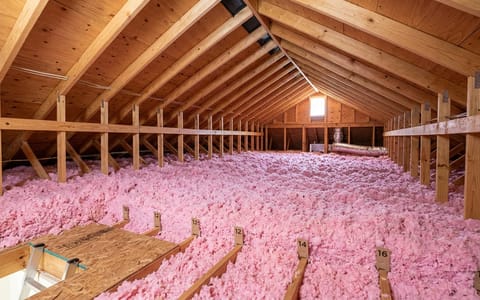
Full guide Pest Control Learn how to stop ants, mice, termites, and wasps from invading your home and know when to hire a pro.It usually happens late at night. You are reading on the couch when a dark shape suddenly starts swooping in frantic circles around your living room ceiling. Or perhaps you have been lying awake, listening to a distinct, localized scratching sound coming from right above your bedroom ceiling. Discovering you have bats in attic is a highly stressful experience, especially when dealing with bats in attic areas.
Your first instinct might be to grab a broom or search for pest control sprays. Put both down. Bats are not like mice or roaches. They are legally protected, highly beneficial to the local ecosystem, and carry serious health risks if mishandled. Getting rid of them requires a specific, humane approach known as exclusion.
Here is exactly how to handle an immediate indoor encounter, identify a colony in your roof, and safely evict them for good.
What should I do if a bat is in my house right now?
If there is a bat currently flying inside your living space, stay calm. The bat is not trying to attack you; it is terrified, disoriented, and desperately looking for a draft of fresh air to find its way back outside. Your first priority is safety and containment.
If you are certain no one in the house has been bitten or scratched, you can help the bat escape. Close all interior doors leading to other rooms so the bat is confined to one space. Turn off the ceiling fans and the lights. Open an exterior door or a large window (at least 2-3 feet wide is ideal), and stand quietly in the corner. In most cases, the bat will detect the fresh air currents and fly out on its own within ten to twenty minutes.
If the bat lands on a wall or curtain and refuses to leave, put on thick leather work gloves. Wait for it to settle completely. Take a plastic Tupperware container or a small cardboard box and gently place it over the resting bat. Slide a stiff piece of cardboard flat against the wall to cover the opening, trapping the bat inside. You can then release it outdoors by placing the box on an elevated surface (like a deck rail) and removing the cardboard.
Identifying the Signs of bats in attic
Finding one bat in the house usually means it took a wrong turn down a wall cavity from the attic. If you suspect a colony is living upstairs, you need to confirm it before attempting any repairs. You rarely see them during the day, so you have to look for the evidence they leave behind.
The most obvious sign is guano (droppings). At first glance, bat guano looks identical to mouse droppings—dark, grain-sized pellets. However, if you crush a dry mouse dropping (wearing a respirator mask, of course), it turns into a powdery dirt. If you crush bat guano, it crumbles and glitters slightly under a flashlight. That sparkle comes from the undigested wings and shells of the thousands of mosquitoes and moths the bats eat every night.
You will typically find piles of guano concentrated directly beneath their roosting spots, rather than scattered along baseboards like mouse droppings. You might also notice a strong, pungent odor of ammonia, which comes from their urine soaking into your attic insulation or drywall.
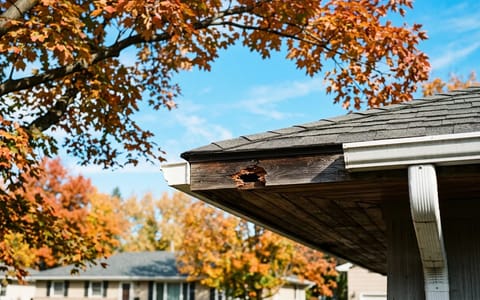
Listen closely at dusk and dawn. Bats chitter and squeak as they wake up and prepare to leave for their nightly hunt. About fifteen minutes after sunset, go outside and watch your roofline. Pay close attention to gable vents, chimney flashing, and the spots where the soffit meets the siding. If you have a colony, you will see them dropping out of these gaps and taking flight.
The Legal Rules of Bat Removal
Before you take any action to remove a colony, you must understand the law. In almost every state, bats are a protected species. They are critical for pest control and agriculture. Because of this, it is strictly illegal to use poisons, fumigants, or traps that kill them.
Moreover, you cannot perform an exclusion during the summer maternity season. From roughly May through mid-August, female bats give birth to pups that cannot fly. If you seal the exits during this window, the mothers will be locked out, and the flightless pups will be trapped inside your attic. The pups will die, creating a severe odor issue and a massive fly infestation, and the desperate mothers will often force their way down into your living room trying to get back to their young.
You can only evict a bat colony when you are absolutely certain there are no flightless pups left inside.
Because of this, late fall is the perfect time for bat exclusion. The pups are fully grown and flying, but the colony has not yet migrated or gone into deep winter hibernation depending on your climate.
How to Evict the Colony (The Exclusion Method)
The only effective, legal way to get bats out of an attic is by installing a one-way exclusion device. This allows the bats to leave at night to feed, but prevents them from getting back in. Here is how the process works:
- Locate the primary entry points. Watch the house at dusk to see exactly where the bats are exiting. Look for dark, greasy smudge marks around holes in the siding or vents, caused by the oils on their fur.
- Seal all secondary holes. Bats can squeeze through a gap as small as 3/8 of an inch. Leave the main entry point open, but seal every other potential crack on the house so they cannot simply move three feet over and re-enter.
- Install the one-way door. Over the primary exit hole, mount a bat cone or exclusion tube. These are smooth plastic tubes or mesh funnels that point downward. When a bat slides down the tube and drops out, it cannot grip the smooth interior to climb back up.
- Wait up to seven days. Leave the exclusion device in place for at least a week, ensuring a few days of good weather. Bats will not fly out during heavy rain or extreme cold drops.
- Remove the tube and seal the hole. Once you are confident all the bats have left, take down the exclusion device and permanently patch the final entry point.
Sealing the House Permanently
When I helped seal up a 1970s split-level last November, we found that the original builders had left a massive gap behind the chimney flashing. We spent a full afternoon on ladders making sure every single vulnerability was closed off. If you miss one hole, the bats will find it.
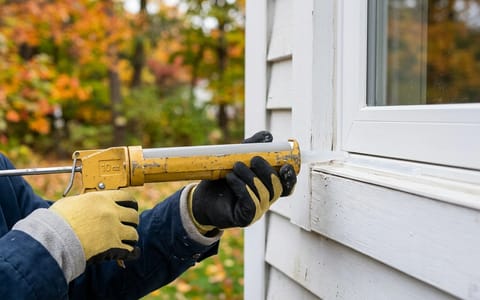
For permanent sealing, do not use standard expanding spray foam on the exterior. Bats have sharp claws and can eventually scratch through soft foam, and sunlight degrades it quickly. Instead, use high-quality 100% silicone caulk for narrow cracks along fascia boards and window trims.
For larger gaps around gable vents or soffit returns, use 1/4-inch galvanized hardware cloth. Cut the mesh to size and staple it securely over the opening, then trim it out or paint it to match the house. Standard aluminum window screening is too weak and will easily tear if raccoons or squirrels decide to investigate the hole later.
Dealing with bats requires patience and a strict adherence to timing. By respecting the maternity season and using the proper exclusion methods, you can secure your roofline, protect your family from health risks, and ensure the local bat population continues safely eating mosquitoes in your neighborhood, rather than sleeping in your attic.
- If a bat is found in a room with a sleeping person, a child, or an intoxicated adult, safely trap it and contact your local health department for rabies testing.
- Bat guano looks like mouse droppings but crumbles into a sparkly dust because of the insect wings they eat.
- Exclusion can only be done outside of the summer maternity season (typically May through August) to avoid trapping flightless pups inside your walls.
- Bats can squeeze through a gap as small as 3/8 of an inch, so meticulous exterior sealing is required.