Do You Need a Chimney Cap? How to Stop Leaks and Animals
Hearing scratches in the flue or finding puddles in your firebox? A missing chimney cap causes thousands in damage. Here is how to measure, choose, and install the right one.
Full guide Roofing Learn how long shingles last, how to spot leaks early, and how to decide between a quick repair and a full roof replacement.Finding a puddle of water in your firebox after a heavy rainstorm is an unsettling discovery. Hearing the frantic scratching of an animal inside your walls is even worse. Homeowners often ask if a chimney cap is strictly necessary, especially if their house has survived for decades without one.
The short answer is yes. An uncapped chimney is essentially an 8-by-12-inch hole in your roof that remains open 24 hours a day. You would never leave a skyllight permanently open to the elements, but many houses sit for years with wide-open flues.
Installing a chimney cap is the cheapest, most effective insurance policy you can buy for your masonry and fireplace. It acts as an umbrella, a pest screen, and a spark arrestor all in one.
Why Do I Need a Chimney Cap?
Leaving a flue open invites three specific types of damage into your home: water intrusion, animal infestation, and wind-induced downdrafts. Each of these problems costs significantly more to fix than the price of a standard cap, which typically runs between $70 and $150.
Stopping Water Damage
Beyond the flue liner itself, water also wreaks havoc on your chimney crown. The crown is the concrete slab that covers the top of your chimney, sloping slightly to shed water. Over time, cracks can form in the crown due to constant exposure to the elements and thermal expansion. These cracks allow water to seep directly into the masonry below, leading to spalling bricks, deteriorating mortar joints, and eventually, structural instability of the chimney stack.
Regular inspections can catch minor crown cracks early, allowing for simple sealing. However, a severely damaged crown may require partial or full replacement, a far more extensive and costly repair than simply installing a cap. A properly sized chimney cap extends beyond the flue tile, offering an extra layer of protection for the crown by reducing direct rainfall impact.
Rain and snow are the natural enemies of masonry. When water pours down an open flue, it soaks into the porous mortar joints and the terracotta clay liner. In colder climates, this trapped moisture freezes and expands, causing the clay tiles to crack and flake apart—a process called spalling.
Water also travels down to the smoke shelf and the metal damper. A rusted damper will seize up, failing to open or close properly, which forces you to pay for a difficult, messy replacement. According to the NFPA 211 standard, chimneys require regular inspection to ensure they are free of this exact type of structural deterioration.
Blocking Pests and Debris
The warmth radiating from a chimney makes it an irresistible nesting spot for raccoons, squirrels, and birds. Once an animal builds a nest inside the flue, the blockage creates an immediate carbon monoxide hazard the next time you light a fire or run your furnace.
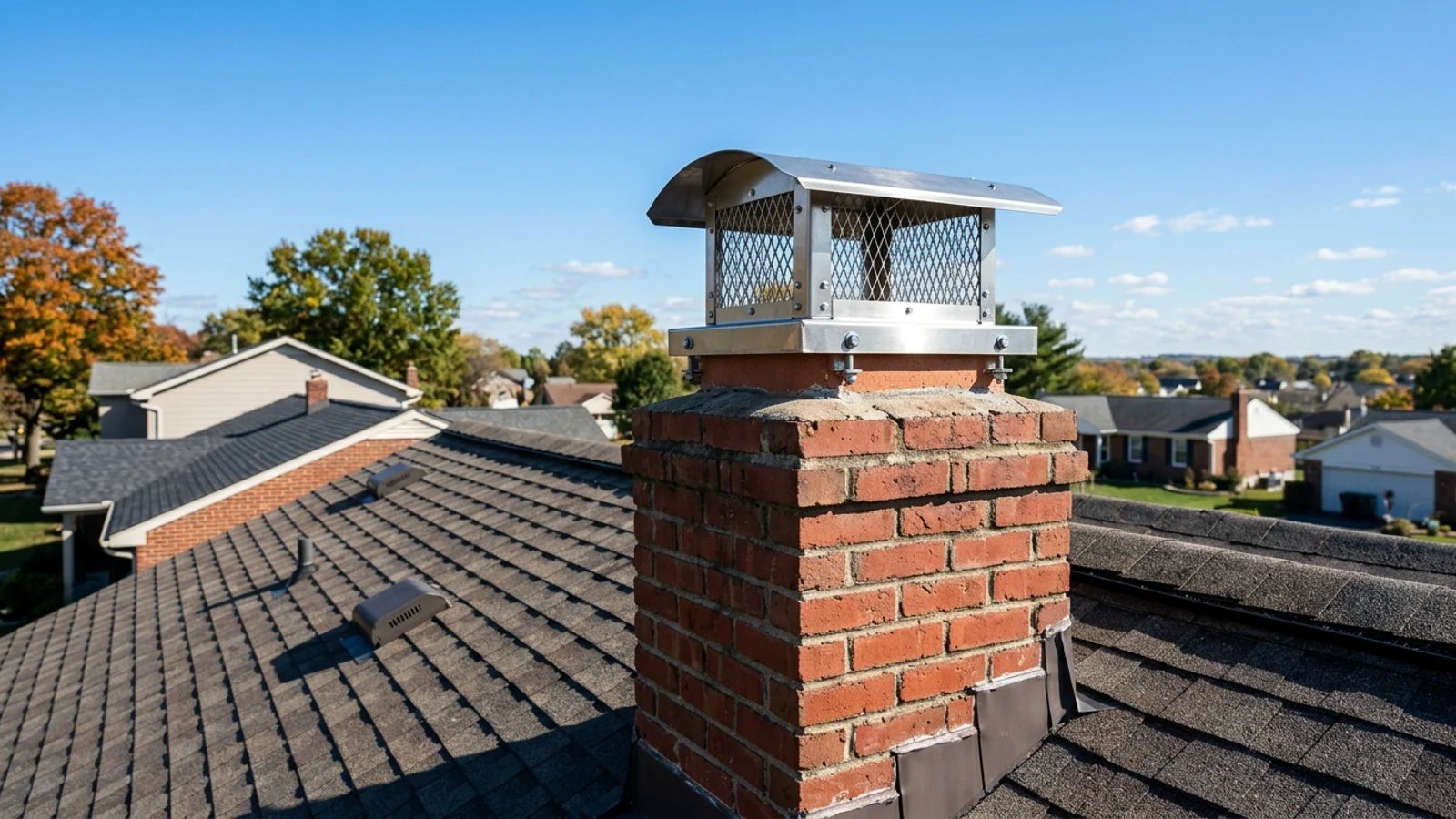
A cap equipped with heavy-duty metal mesh keeps animals and blowing leaves out of the chimney entirely.
Beyond the carbon monoxide risk, animal nests can also pose a significant fire hazard. Birds, squirrels, and raccoons often use flammable materials like twigs, leaves, and insulation to build their nests. If these nests are located too close to the firebox or furnace flue, they can easily ignite from stray sparks or high temperatures, leading to a chimney fire. Even if a fire doesn't occur, the blockage created by a nest can restrict airflow, causing smoke to back up into your home and leading to a buildup of creosote, which is itself a highly flammable substance.
Regular chimney inspections are crucial, especially if you suspect animal activity. A professional sweep can safely remove nests and ensure your flue is clear, but a cap prevents the problem from starting in the first place.
Preventing Downdrafts
If you frequently smell a campfire odor in your living room, or if smoke puffs back into the house when you light a fire, wind is likely blowing straight down the flue. A cap features a solid metal lid that deflects wind gusts, stabilizing the draft and keeping cold air from forcing its way down into your home.
An uncapped chimney is essentially an open window on your roof that you can never close.
Choosing the Right Cap: Materials and Sizing
When shopping for a chimney cap, you will find three main materials on the shelf at the hardware store. Picking the wrong one guarantees you will be back up on the roof in a few years to do the job again.
Galvanized Steel: These are the cheapest caps available, typically costing around $40. Do not buy them. Galvanized steel rusts quickly when exposed to corrosive flue gases and rain. Within three to five years, the cap will fail, sending streaks of rust down your brickwork.
Stainless Steel: This is the standard recommendation for any residential chimney. A 304-grade stainless steel cap costs between $70 and $150, will not rust, and usually comes with a lifetime warranty.
Copper: Copper caps are premium, aesthetic upgrades that cost $200 or more. They are incredibly durable and will eventually oxidize into a classic green patina, but they offer no functional advantage over stainless steel.
When I replaced the rusted galvanized cap on my 1950s brick chimney last year, I spent the extra $60 for a heavy-duty stainless steel model. It took 15 minutes to install, looks brand new after a brutal winter, and spared me the hassle of scrubbing rust stains off my roof.
Beyond the Basics: Specialized Chimney Caps
While single-flue, slip-over caps are common, not all chimneys are created equal. Many homes, especially older ones, may feature a masonry chimney that contains multiple flues for a furnace, water heater, and fireplace. For these, a custom multi-flue cap is essential. These larger caps cover the entire top of the chimney crown, protecting all flues and the crown itself from water intrusion.
Another specialized type is the top-mount cap. These are used when the clay flue tile does not protrude enough for a standard slip-over cap, or when the tile is damaged or missing. Top-mount caps bolt directly to the chimney crown using masonry anchors, providing a secure and durable solution. They often feature larger mesh screens and a more robust construction.
For homes experiencing persistent downdrafts even with a standard cap, or those in very windy areas, draft-enhancing caps (sometimes called "vacu-stack" or "wind-directional" caps) can be considered. These caps are designed with unique shapes or rotating mechanisms to create a positive draft, pulling smoke and gases up and out of the chimney more effectively. While more expensive, they can solve frustrating draft problems.
When considering any specialized cap, accurate measurements of your entire chimney crown (length, width, and flue openings) are critical. Consulting with a certified chimney sweep can help determine the best specialized cap for your specific needs and ensure proper installation.
How to Measure Your Flue
Standard chimney caps attach directly to the terracotta clay flue tile protruding from the top of the chimney crown. To buy the correct size, you need exact measurements.
Use a tape measure to determine the outside length and outside width of the clay tile. Common sizes are 8x8, 8x12, and 12x12 inches. Most caps are designed with a slight tolerance to slip over these standard dimensions.
Also measure the height of the protruding tile. You need at least 1 to 1.5 inches of exposed clay tile for the cap's mounting screws to grab onto safely.
How Do I Install a Chimney Cap?
If you have a walkable, low-slope roof and a single-flue chimney, installing a standard slip-over cap is a fast project requiring minimal tools. Grab a tape measure, heavy work gloves, and a 5/16-inch nut driver or wrench.
- Clean the flue exterior. Use a stiff wire brush to knock away any loose mortar, soot, or moss from the outside of the clay tile so the cap sits flush.
- Perform a dry fit. Slide the base of the chimney cap over the clay tile to ensure it drops down evenly without binding.
- Hand-thread the screws. Insert the provided mounting screws into the base of the cap and turn them by hand until they just make contact with the clay tile.
- Tighten in an alternating pattern. Use your nut driver to tighten the screws firmly against the tile. Alternate sides as you tighten so the cap remains centered.
- Check for stability. Give the cap a firm shake. It should not wobble or slide up the tile.
When to Call a Professional
While the physical act of turning four screws is simple, the environment where you do it is dangerous. Falls from roofs cause severe injuries every year. If your roof has a steep pitch, is more than one story off the ground, or requires walking on slippery slate or wood shakes, stay on the ground.
You should also hire a professional if you have a multi-flue chimney requiring a large, custom-fabricated cover. These heavy covers must be sized perfectly and sealed with specialized masonry caulk to prevent water pooling on the crown.
Protecting Your Masonry
A chimney without a cap is a slow-motion disaster waiting to happen. The combination of freeze-thaw cycles, rusting cast-iron parts, and nesting wildlife can quickly turn into a repair bill exceeding two thousand dollars.
Taking an hour on a dry afternoon to measure your flue and bolt on a high-quality stainless steel cap stops that damage in its tracks. It secures your home against the elements, keeps pests outside where they belong, and ensures your fireplace is ready to use safely whenever you need it.
- Measure the outside length and width of your clay flue tile before buying a cap.
- Avoid cheap galvanized steel caps; they rust within a few years and stain your roof.
- Ensure your cap includes a 5/8-inch or 3/4-inch spark arrestor mesh to catch stray embers.
- Call a professional chimney sweep if you have a steeply pitched roof, a multi-flue setup, or no protruding clay liner.