How to Clean Algae Off Vinyl Siding (Without a Pressure Washer)
Learn how to safely clean green algae off vinyl siding without a pressure washer. This easy soft-wash method protects your siding from hidden water damage.
Full guide Exterior: Siding, Garage & Decks Learn how to maintain your siding, garage doors, and decks to protect your home from the weather.During the humid summer months, many homeowners walk outside to find an unsightly layer of green fuzz creeping up the side of their house. This green film is a mix of algae and mildew, and it loves to cling to the textured surface of vinyl siding. If you want to clean algae off vinyl siding, your first instinct might be to drag out a heavy-duty pressure washer and blast it away.
A few years ago, I made the exact same mistake. I borrowed a neighbor's 3100 PSI gas pressure washer to clean the north wall of my house. Within ten minutes, I managed to blow a piece of J-channel trim completely off the wall and forced a gallon of water directly into my garage insulation. It was an expensive lesson in exterior maintenance. The truth is, you do not need high pressure to get your siding looking brand new again.
Why You Should Never Pressure Wash Vinyl Siding
Vinyl siding is not completely waterproof. It is designed as a water-shedding system. The panels overlap each other, allowing rain to cascade down the exterior while leaving small gaps at the bottom of each panel so the house can breathe.
When you aim a high-pressure stream of water—even as low as 1200 PSI—at vinyl siding—especially if you point the wand upward—you force water right past those overlapping seams. That water gets trapped between the vinyl and your home's wood sheathing. Over time, this trapped moisture leads to hidden mold growth, rotting wood, and ruined fiberglass insulation inside your wall cavities.
What Causes Green Algae on Siding?
Algae requires three things to thrive: moisture, warmth, and shade. In the Northern Hemisphere, the north-facing side of your home receives the least amount of direct sunlight. When morning dew settles or a summer rainstorm passes through, the sun never directly hits that wall to dry it out quickly.
Airborne algae spores stick to the damp, slightly textured surface of the vinyl. Over a few weeks of humid weather, those spores multiply into the green, powdery patches you see spreading across your exterior walls. Nearby trees or tall bushes that block airflow and cast additional shade will only accelerate this growth.
While often called "algae," that green film can also be a mix of mildew and even some mold. Algae is typically green and slimy, thriving on moisture and light (even indirect light). Mildew often appears as powdery or downy patches, which can be white, gray, or yellowish, and thrives in damp, warm, poorly ventilated areas. Mold, on the other hand, can be black, brown, green, or even orange, and often has a fuzzy or slimy texture, growing deep into surfaces if left unchecked.
The good news is that the oxygen bleach solution effectively tackles all these organic growths. Oxygen bleach works by releasing oxygen when mixed with water, which breaks down the cellular structure of algae, mildew, and mold, killing them at the root. This is why it's such a versatile and powerful cleaner for exterior surfaces.
The Soft-Wash Solution: Tools You Need
Instead of high pressure, professionals use a technique called "soft washing." This method relies on a cleaning solution to kill the algae down to its roots, followed by a gentle rinse. You can easily replicate this at home for under $50.
Here is exactly what you need to gather:
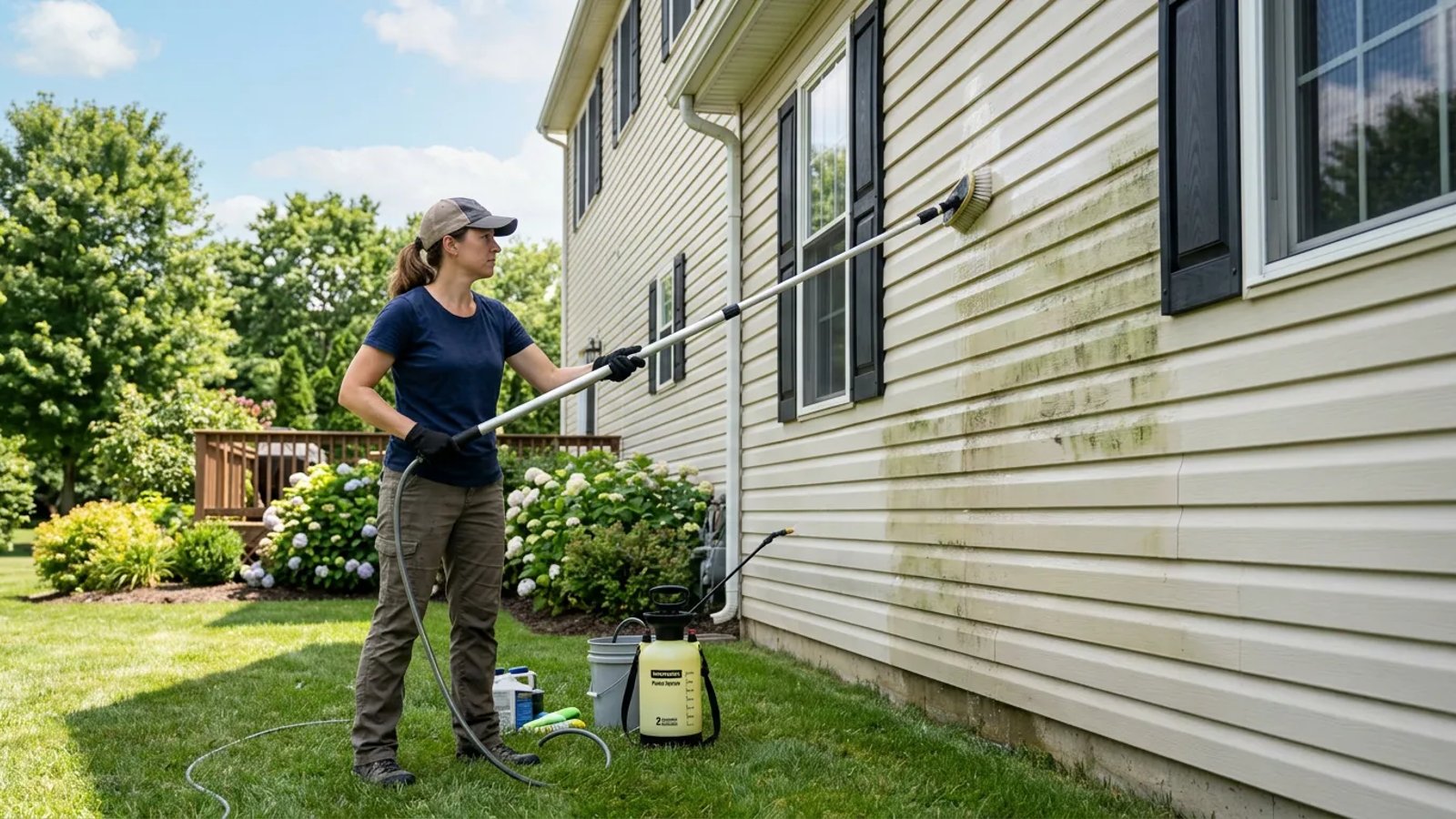
- A 2-gallon garden pump sprayer: The kind you use for weed killer ($15-$25 at any hardware store).
- A soft-bristle brush on an extension pole: A standard car-wash brush works perfectly because the bristles are designed not to scratch clear-coat paint ($20-$30).
- Oxygen bleach powder: Look for sodium percarbonate (like OxiClean Versatile Free). It is recognized by the EPA Safer Choice program as an environmentally friendly alternative to harsh chlorine bleach.
- Liquid dish soap: Just a few drops to help the solution cling to the siding.
- A standard garden hose: With an adjustable spray nozzle.
Safety First: Essential Precautions
Before you even think about mixing your cleaning solution, take a moment to consider your safety and the safety of your property. While soft washing is much safer than pressure washing, it still involves chemicals and working at heights.
- Eye Protection: Always wear safety glasses or goggles to protect your eyes from splashes of the cleaning solution. Oxygen bleach, while milder than chlorine bleach, can still cause irritation.
- Gloves: Wear chemical-resistant gloves to protect your skin. Prolonged contact with the cleaning solution can dry out or irritate your hands.
- Footwear: Choose non-slip shoes, especially if you'll be walking on wet grass or a wet patio. The ground around your house will become damp during the process.
- Ladder Safety: If you need to reach higher areas, use a sturdy ladder and follow all ladder safety guidelines. Ensure it's on a stable, level surface, and have someone spot you if possible. Never overreach; move the ladder frequently.
- Test a Small Area: Before applying the solution to a large section of your siding, test it in an inconspicuous spot. This ensures there's no discoloration or unexpected reaction with your specific vinyl siding.
- Protect Electrical Outlets: Cover any exterior electrical outlets or light fixtures with painter's tape and plastic sheeting to prevent water intrusion.
Taking these simple precautions will make your cleaning project much safer and more enjoyable, preventing any mishaps along the way.
How to Clean Algae Off Vinyl Siding Safely
Pick a cloudy day or wait until the sun is not beating directly on the side of the house you plan to clean. If the siding is too hot, your cleaning solution will evaporate before it has time to kill the algae.
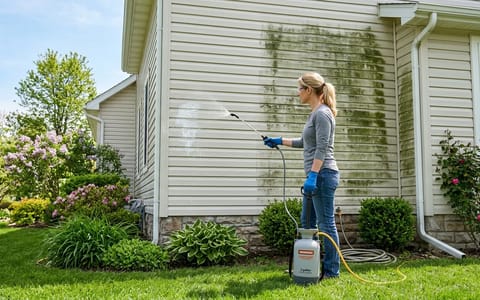
- Mix your cleaning solution. Fill your pump sprayer with 2 gallons of warm water. Add 2 cups of oxygen bleach powder (1 cup per gallon) and two squirts of liquid dish soap. Swirl it gently until the powder dissolves.
- Pre-wet your landscaping. Spray down any bushes, flowers, or grass directly below your work area with plain water. This ensures that if any cleaning solution drips down, the plants are already saturated and won't absorb the soap.
- Apply the solution from bottom to top. Pump up your sprayer and coat the siding with the mixture. Working from the bottom up prevents the dirty water from running down dry siding, which can leave permanent clean streaks.
- Let it dwell. Allow the oxygen bleach solution to sit on the siding for 10 to 15 minutes. You will actually see the green algae start to turn brown or disappear as the oxygen bubbles break down the organic matter. Do not let the solution dry on the wall; mist it with more cleaner if it starts to evaporate.
- Scrub lightly. Dip your soft-bristle brush in a bucket of plain water and lightly agitate the siding. You do not need to scrub hard. The chemical has already done the heavy lifting; you are just loosening the dead algae from the vinyl texture.
- Rinse from top to bottom. Grab your garden hose and rinse the wall thoroughly, starting at the top panel and working your way down. Keep the hose nozzle pointed slightly downward to mimic falling rain.
Protecting Your Home Long-Term
Once you wash the algae away, you want to keep it from coming back too quickly. Take a walk around your house and look at the vegetation near the affected walls.
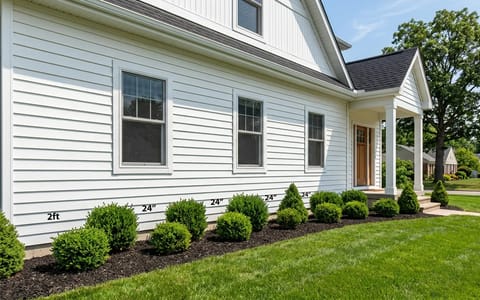
Trimming back bushes and tree branches just 12 to 18 inches from your siding drastically improves airflow and allows the wall to dry faster after a rainstorm.
If you have gutters directly above the algae-prone wall, check them for clogs. Overflowing gutters spill dirty, organic-rich water straight down the side of your house, practically feeding the algae.
Beyond trimming vegetation and clearing gutters, consider these additional steps to minimize future growth:
- Extend Downspouts: Ensure your downspouts direct water at least 5-10 feet away from your home's foundation. If water pools near the house, it contributes to overall humidity and dampness around the siding. Downspout extensions are inexpensive and easy to install.
- Improve Drainage: If you notice standing water near your foundation after rain, consider improving your yard's drainage. This might involve grading the soil away from the house or installing French drains.
- Consider Permeable Landscaping: Replace dense, moisture-retaining shrubs with gravel beds or other permeable landscaping materials directly adjacent to the house. This reduces moisture trapped against the siding.
- Regular Inspections: Make it a habit to inspect your siding annually, especially after heavy rain seasons. Catching small patches of algae early makes them much easier to clean before they spread.
- Address Leaks Promptly: Fix any leaky outdoor faucets, sprinkler heads, or roof issues immediately. Constant drips provide a perfect breeding ground for organic growth.
By implementing a few of these preventative measures, you can significantly reduce the frequency and severity of algae, mildew, and mold growth on your vinyl siding, keeping your home looking pristine with less effort in the long run.
Taking an hour or two once a year to soft-wash your siding keeps the plastic looking fresh and protects your home's structural integrity. By keeping the high-pressure tools in the garage, you ensure the water stays exactly where it belongs—on the outside of your house.
- Skip the pressure washer to avoid forcing water behind your siding panels.
- Mix 1 cup of oxygen bleach powder per gallon of warm water for a safe, plant-friendly cleaner.
- Always wet nearby plants before and after cleaning to protect them from runoff.
- Apply the cleaning solution from bottom to top to prevent streaks, but rinse from top to bottom.