Roof Leak Repair Cost: The Honest Guide for Homeowners
A growing brown water stain on your ceiling is stressful enough without worrying about the bill. Here is an honest breakdown of what roof leak repairs actually cost and why.
Full guide Roofing Learn how long shingles last, how to spot leaks early, and how to decide between a quick repair and a full roof replacement.You are sitting in your living room when you look up and spot it: a faint, brown-ringed water stain spreading across the white ceiling drywall. A roof leak is a homeowner's quickest path to panic. Your mind immediately jumps to the worst-case scenario—a total roof replacement and drained savings.
Take a breath. Most roof leaks are highly localized and do not require tearing off your entire roof. However, you need to understand the baseline roof leak repair cost before you start dialing local contractors. Getting a fair deal means knowing exactly what drives the price up, what materials cost, and what a realistic labor charge looks like.
How much does it cost to repair a roof leak?
When quoting a fix, contractors factor in the cost of materials, the time it takes to track down the source, and the labor to tear out and replace the damaged section. A typical repair for a small leak, for instance, might involve replacing just a few square feet of damaged underlayment. The national average to fix a standard roof leak falls between $400 and $1,500.
If you catch the problem early, minor repairs—like sealing a few loose shingles or swapping out a degraded plumbing vent boot—often land on the lower end, costing $150 to $400. Major structural fixes, such as replacing rotted plywood decking or rebuilding a rusted chimney flashing system, push the bill past $1,000. The exact price you pay comes down to what is leaking and how long the water has been finding its way inside.
Common Roof Leak Repair Costs by Leak Source
Water is lazy. It takes the path of least resistance, which usually means it enters through the penetrations and seams in your roof rather than straight through a solid shingle. Here is what you can expect to pay based on the culprit.
Plumbing Vent Boots ($150 – $300)
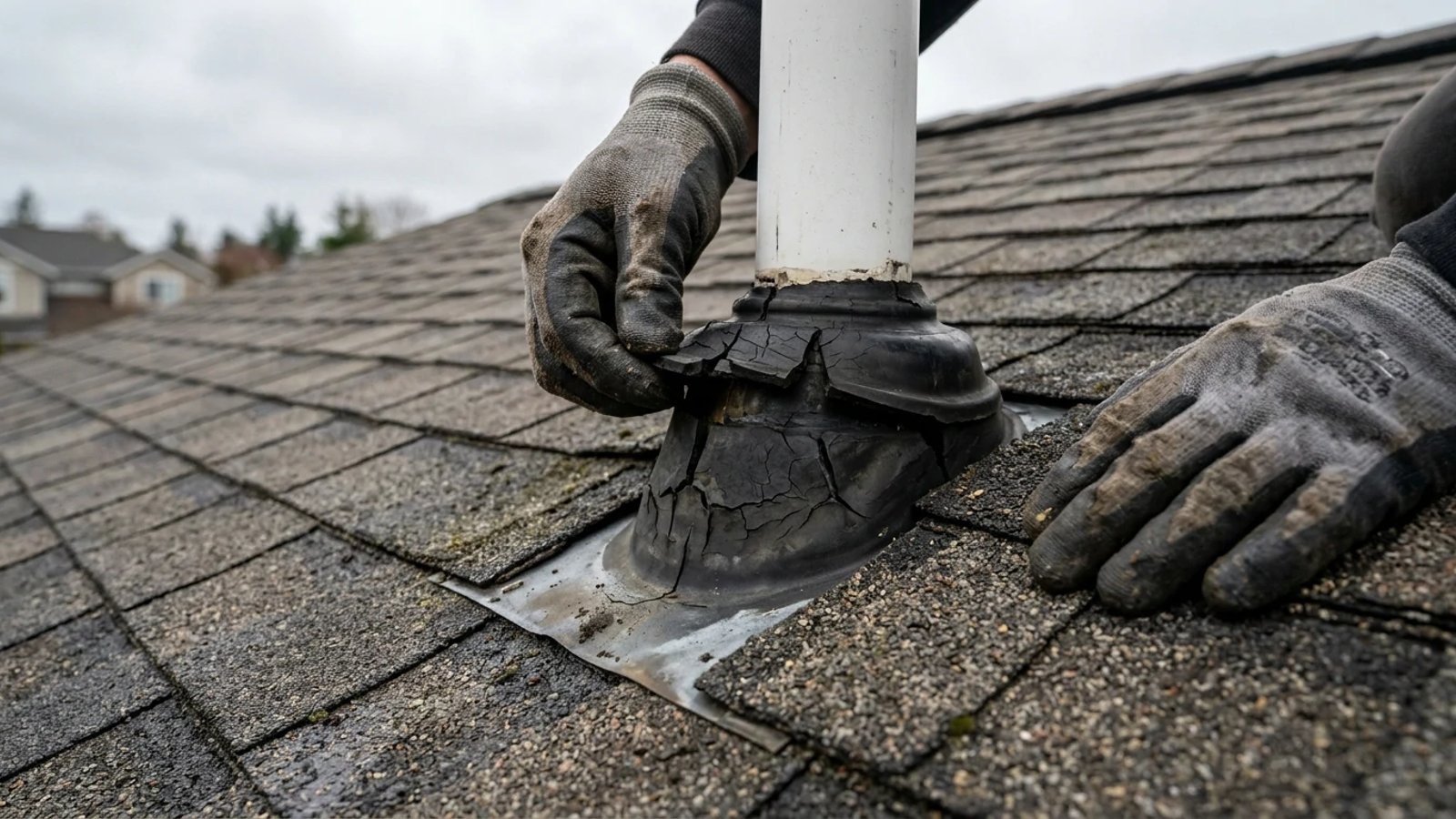
This is the most common cause of a residential roof leak. The rubber or neoprene gasket surrounding the PVC plumbing pipes on your roof dries out and cracks under constant UV exposure. Last fall, I noticed a slow drip above my guest bathroom. It turned out to be a torn $12 neoprene pipe boot. The roofer charged $250 to replace it, and the entire fix took 30 minutes.
Valley Flashing ($500 – $1,200)
The "valley" is the V-shaped metal channel where two downward-sloping roof sections meet. Because this area handles a massive volume of rushing rainwater, any failure in the metal flashing or the surrounding sealant leads to heavy leaking. Repairing a valley requires a contractor to strip away shingles on both sides, lay new ice and water shield, install new metal flashing, and weave in new shingles.
Missing or Damaged Shingles ($200 – $600)
High winds can lift, crease, or completely tear off asphalt shingles. If the damage is limited to a three-foot section, a roofer can easily slide out the broken pieces and nail down replacements. The cost scales up depending on how many squares (a roofing term for a 100-square-foot area) need attention.
Chimney Flashing ($300 – $1,000)
Chimneys are notorious for leaking. They require a complex, multi-layered system of step flashing and counter-flashing cut directly into the brick mortar. If the mortar crumbles or the metal rusts, water pours down the brickwork into your attic. Re-flashing a chimney is a highly skilled job, which is why the labor cost is steep.
The Hidden Variables That Drive Up Your Bill
Two houses with the exact same leaking vent boot might receive wildly different repair quotes. Several hidden factors influence the final number on your invoice.
Roof Pitch and Accessibility
Roofers charge more for steep, dangerous roofs. A walkable 4/12 pitch (which rises 4 inches for every 12 inches of horizontal run) allows a crew to work quickly. A steep 10/12 or 12/12 pitch requires safety harnesses, roof jacks, and scaffolding. If your house is three stories tall or surrounded by dense trees that block ladder access, expect a 20% to 30% markup for the extra time and hazard.
Premium Roofing Materials
Standard three-tab or architectural asphalt shingles are cheap and easy to source. If you have a slate, clay tile, or standing-seam metal roof, repairs require specialized skills. Stepping on clay tiles incorrectly will crack them, creating more leaks. Slate repairs demand special ripper tools and copper nails. Expect repairs on these premium materials to cost double or triple the price of an asphalt shingle fix.
A $15 cracked rubber vent boot is the most common cause of residential roof leaks, yet it can cause thousands in drywall damage if ignored.
Water Damage to the Decking
The shingles are just the outer armor. Underneath sits a layer of tar paper or synthetic underlayment, and below that is the wooden roof decking (usually OSB or plywood). If a leak goes unnoticed for months, that wood turns to wet cardboard. Roofers cannot nail new shingles into rotted wood. They will have to cut out the bad decking and install new sheets. Expect to add $75 to $150 for every sheet of plywood replaced. According to standard building practices outlined by the National Roofing Contractors Association, proper fastener holding power requires a solid, rot-free deck.
How to Temporarily Tarp a Roof Leak
If a heavy storm rolls through and tears off a section of shingles, you might wait days or weeks for a contractor to arrive. You need to stop the water immediately to protect your drywall and insulation. Throwing a tarp up there is a common DIY stopgap, but you have to do it correctly so the wind doesn't rip it away.
- Measure the damaged area. You need a heavy-duty woven plastic tarp that extends at least three feet past the leak on all sides, and ideally reaches over the roof's peak.
- Cut wooden furring strips. Buy 1x2 or 1x3 wooden boards to act as anchor weights for the tarp edges.
- Roll the tarp around the wood. Wrap the top and bottom edges of the tarp tightly around your wooden strips to prevent the plastic from tearing out under stress.
- Screw the strips into the roof. Use 2-inch exterior deck screws to fasten the wood strips directly through the tarp and into the roof decking.
- Secure the sides. Add vertical wooden strips along the left and right edges of the tarp so wind cannot get underneath and create a parachute effect.
How to Vet a Roofer for an Honest Quote
The roofing industry has its share of storm-chasers and high-pressure salespeople. To ensure you pay a fair roof leak repair cost, you need to vet the person climbing your ladder.
First, always demand photographic evidence. A trustworthy roofer will take out their phone, snap pictures of the cracked flashing or missing shingles, and show you exactly what is failing. If a contractor claims your entire roof is ruined but refuses to show you photos of the specific damage, ask them to leave.
Second, get a highly specific, itemized quote. The estimate should list the exact materials they plan to use, the scope of the tear-off, and how they handle unexpected rot. A quote that just says "Roof repair - $800" leaves you vulnerable to upcharges. You want to see line items for ice and water shield, matching asphalt shingles, and a per-sheet price for any plywood replacement.
Finally, verify their local standing. Check that they have a physical address in your town, a valid state contractor's license, and active general liability and workers' compensation insurance. A guy in an unmarked truck offering a suspiciously cheap cash deal is a massive liability if he falls off your roof or does shoddy work that leaks again next month.
Taking care of a leak quickly is the best way to protect your home's structure. By understanding the typical costs and knowing the right questions to ask, you can hire a professional with confidence, stop the water, and keep your repair budget intact.
- Do not ignore a small ceiling stain; early repairs cost hundreds, while delayed repairs cost thousands in structural damage.
- A $15 cracked rubber vent boot is the most common cause of residential roof leaks.
- If you must tarp a roof temporarily, use wood furring strips to secure the edges so wind doesn't rip it off.
- Never accept a quote from a contractor who won't provide photographic proof of the roof damage.