What Assessed Value Means
When you own a house, your local government needs a way to figure out your property taxes. To do this, they assign a specific dollar amount to your property. This number is your assessed value. The word assessed comes from the Latin word assidere. This means to sit beside or to evaluate. Tax collectors have used this term since medieval times to describe the official valuation of land.
Today, your county tax assessor calculates this number. They look at the size of your lot, the square footage of your house, and any major improvements you have made. They also look at recent sales of similar homes in your neighborhood. Most counties update this number every one to five years to keep up with local real estate trends.
How It Affects Your Wallet
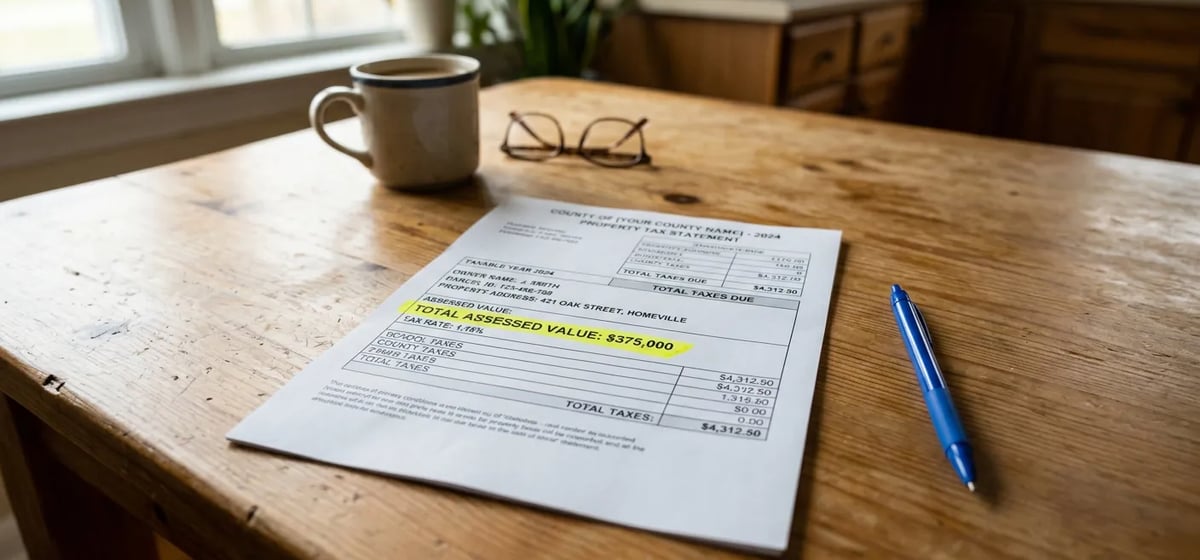
Your assessed value directly controls your property tax bill. The county takes this value and multiplies it by the local tax rate. If your local government raises the assessed value, your property taxes will probably go up. You can learn more about how these numbers work together in our guide to Property Taxes & Home Finances.
You will usually get a notice in the mail from your county assessor early in the year. This letter tells you the new value they assigned to your home. It also tells you how much time you have to disagree with their number.
Assessed Value vs. Market Value
Many homeowners confuse assessed value with market value. They are completely different numbers. Market value is the actual price a buyer would pay for your house on the open market. Assessed value is strictly for taxes.
In most places, the assessed value is much lower than the market value. Some states even have laws that cap the assessed value at a certain percentage of the market value. If you are Selling Your Home, buyers will care about the market value. They will not care much about the assessed value, except to estimate their future tax bills. Do not panic if your tax assessment comes in lower than what you paid for the house. That is normal and actually saves you money on taxes.
How Home Improvements Change Your Value
When you pull a permit for a major renovation, the county tax office takes notice. Adding a new bedroom, finishing a basement, or building a large deck will increase your assessed value. The county sees that your house is now bigger or nicer, so they want to collect more taxes on it.
Minor repairs like painting or replacing a faucet will not trigger a new assessment. However, large projects definitely will. It is a good idea to budget for higher property taxes when you plan a big remodel. You can read more about planning these projects in our guide to Hiring Contractors & What Things Cost. You should expect your tax bill to jump the year after you finish the work.
What to Watch For
Sometimes the county gets the math wrong. They might think you have three bathrooms when you only have two. They might overvalue your house compared to identical homes on your street. If you think your assessed value is too high, you can appeal it. This process is called a tax grievance.
You will need to provide proof that your home is worth less than they claim. You can hire an independent appraiser to help you. A professional appraisal usually costs 300 to 500 dollars, though ranges vary depending on where you live. If you win the appeal, the county will lower your assessed value and reduce your tax bill.