
What Is a Homestead Exemption?
A homestead exemption is a local tax break for homeowners. It lowers your property tax bill by shielding a portion of your home value from taxes. If your county values your home at $300,000 and you get a $50,000 exemption, you only pay taxes on $250,000. It is a simple way to keep more money in your pocket.
This break only applies to your primary residence. You cannot use it for a rental property or a summer cabin. Learning how to file for this is a big part of buying a home and settling in.

How the Math Works
Every state handles this tax break differently. Some give you a flat dollar amount off your home value. Others give a percentage off. Many states also cap how fast your property taxes can go up each year.
For example, if your local tax rate is 2 percent, a $50,000 exemption saves you $1,000 a year. These savings add up fast. Keep in mind that exact savings vary by region, local tax rates, and home age.
How to Apply for Your Exemption
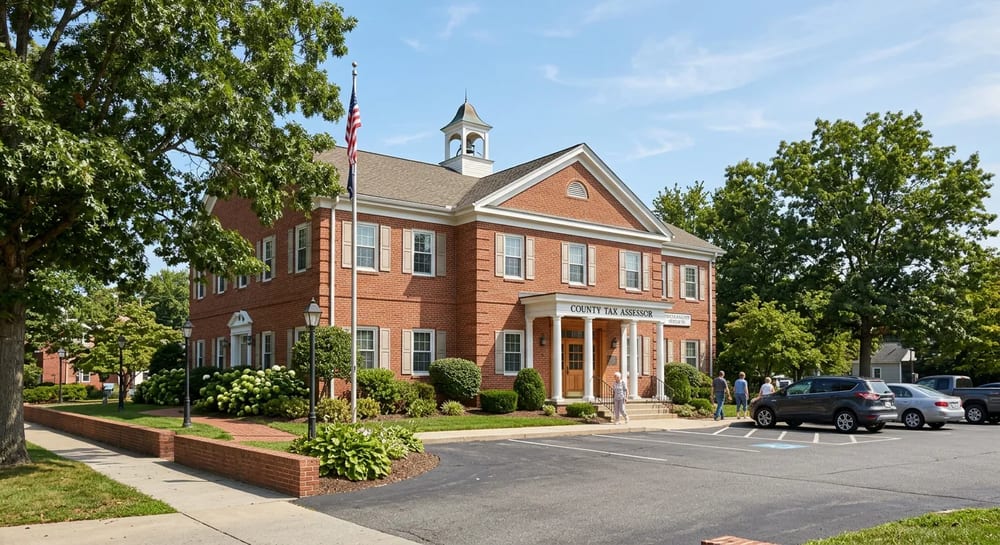
You apply through your county tax assessor or property appraiser office. Most counties let you apply online, by mail, or in person. The process is completely free. You will need a few simple documents.
- A copy of your recorded deed.
- A state driver license or ID card showing your new address.
- Your vehicle registration showing the same address.
- Your social security number.
Never pay a third party to file this paperwork for you. Scammers often mail official looking letters offering to file your exemption for a fee of $50 to $100. Throw those letters away. You can do it yourself for free in ten minutes.
Deadlines to Watch
Timing matters. In most places, you must own and live in the home on January 1 of the tax year to claim the break for that year. You also face a strict filing deadline. This deadline is usually in the spring.
Missing the deadline means you pay the full tax amount for the year. Mark your calendar during your first year as a homeowner so you do not forget.
| State | Typical Filing Deadline | Base Exemption Amount |
|---|---|---|
| Texas | April 30 | $100,000 (School taxes) |
| Florida | March 1 | Up to $50,000 |
| Georgia | April 1 | $2,000 to $10,000 |
| California | February 15 | $7,000 |
Remember that local rules change. Always check your specific county website for exact dates and amounts.
Extra Breaks for Seniors and Veterans
Many counties offer bonus tax breaks. If you fall into certain groups, you can stack these extra exemptions on top of your standard one. This drops your tax bill even lower.
- Seniors: Homeowners over age 65 often get a larger exemption. Some counties freeze the home value completely so taxes stop going up.
- Veterans: Disabled veterans get massive property tax breaks. In some states, a fully disabled veteran pays zero property tax.
- Disabilities: Homeowners who are legally blind or totally disabled qualify for extra relief.
- Widows and Widowers: Surviving spouses often get a small extra deduction.
Homestead Exemptions by State (2026)
The same two words mean wildly different things depending on where you live: a five-figure exemption in Texas, a $7,000 token in California, a rebate check in New Jersey, and nothing at all for a regular owner-occupant in nearly half the states. The table below is the 2026 picture for a primary, owner-occupied home — senior, veteran, and disability add-ons are noted where they are the main event. The effective rate column is what owners actually paid statewide (property tax ÷ home value, 2024 Census data) — a state with a big exemption and high rates can still cost more than a no-exemption state with low rates.
| State | What a homeowner gets | Effective tax rate |
|---|---|---|
| Alabama | Up to $4,000 of assessed value exempt from the state levy + $2,000 from county levies (assessed value = 10% of market); 65+ fully exempt from the state property tax with larger income-tested county exemptions. | 0.37% |
| Alaska (no general exemption) | No statewide general exemption — municipalities MAY adopt an optional residential exemption up to $75,000 (Anchorage and others have); mandatory statewide $150,000 exemption for 65+ and disabled veterans (AS 29.45.030). | 0.9% |
| Arizona (no general exemption) | No general homestead property-tax exemption (Arizona's 'homestead exemption' is creditor protection only). Instead: an automatic Homeowner Rebate pays ~50% of the school-district primary tax (capped ~$600-700/yr) on primary residences; assessed-value exemptions for widows/widowers, disabled, and disabled veterans; a senior valuation freeze for income-qualified 65+. | 0.43% |
| Arkansas | Homestead property tax CREDIT (Amendment 79): $600/yr starting with 2026 tax bills ($500 for 2025), plus a 5%/yr taxable-value cap on homesteads and an assessed-value freeze for 65+/disabled. | 0.54% |
| California | Homeowners' Exemption: only $7,000 off assessed value (~$70-80/yr savings, unchanged since 1974). The real protection is Prop 13: a 1% base rate cap + a 2%/yr assessment growth cap while you own the home. | 0.69% |
| Colorado (no general exemption) | No general homestead exemption. Seniors 65+ (10-year owner-occupancy) and 100% disabled veterans: 50% of the first $200,000 of value exempt. Statewide assessment-rate cuts (residential ~6.25-6.8% for 2025-26) act as general relief. | 0.52% |
| Connecticut (no general exemption) | No statewide homestead exemption. A municipal-option homestead exemption (5-35% of assessed value) was created in 2024 — only one town adopted it; an income-based Circuit Breaker credit ($150-$1,250) covers 65+/disabled. | 1.36% |
| Delaware (no general exemption) | No general homestead exemption. Senior School Property Tax Credit: 50% of school taxes up to $500/yr for 65+ (3-10 year state residency depending on move-in date). | 0.51% |
| Florida | $25,000 exemption on all levies + a second, inflation-indexed exemption ($26,411 in 2026 — total ~$51,411) on non-school levies; Save Our Homes 3%/yr assessment cap with up to $500k portability between Florida homes. | 0.76% |
| Georgia | Base statewide exemption only $2,000 of assessed value (many counties add much larger local exemptions); NEW: HB 581 statewide 'floating' exemption caps homestead taxable-value growth at CPI — but only where jurisdictions didn't opt out. | 0.77% |
| Hawaii | County-level home exemptions: Honolulu $120,000 ($160,000 for 65+) for TY2026, rising to $140k/$180k in TY2027; Maui $300,000; Kauai and Hawai'i County have their own tiers. Owner-occupants also get the lowest tax-rate classes. | 0.31% |
| Idaho | Homeowner's Exemption: 50% of the home + 1 acre exempt, capped at $125,000; an income-tested circuit breaker up to ~$1,500 for 65+/widowed/disabled. | 0.43% |
| Illinois | General Homestead Exemption: $6,000 off equalized assessed value ($10,000 in Cook County); senior exemption +$5,000-$8,000; a Senior Assessment Freeze for income-qualified 65+. | 1.79% |
| Indiana | Homestead standard deduction (phasing down from $48,000/60% of AV) + a supplemental deduction (rising to 66.7%) + a NEW automatic credit of 10% of the homestead bill up to $300 (from 2026); the 1%-of-value tax cap is constitutional. | 0.76% |
| Iowa | Homestead exemption = 10% of taxable value (min $5,500, max $20,000), replacing the old $4,850 credit from assessment year 2026; PLUS a 65+ exemption of $6,500 of taxable value (2023 law). | 1.25% |
| Kansas | First $75,000 of appraised value exempt from the statewide 20-mill school levy (all residences); circuit-breaker refunds (Homestead Refund up to $700; SAFESR; a 'golden years' freeze for 65+/disabled veterans). | 1.2% |
| Kentucky (no general exemption) | Homestead exemption only for 65+/totally disabled: $49,100 off assessed value for 2025-2026 (reset every 2 years for inflation). No general owner-occupant exemption. | 0.72% |
| Louisiana | First $7,500 of assessed value ($75,000 market value) exempt from most parish/local taxes (not municipal in some cities); a special assessment freeze for income-qualified 65+. | 0.56% |
| Maine | Homestead Exemption: $25,000 of just value exempt (state reimburses towns); veteran ($6,000) and blind ($4,000) add-ons. | 0.9% |
| Maryland (no general exemption) | No flat homestead exemption. The Homestead Tax Credit caps taxable assessment growth at 10%/yr statewide (counties/cities often lower); the Homeowners' Property Tax Credit is an income-based circuit breaker. | 0.9% |
| Massachusetts (no general exemption) | No statewide homestead exemption. A local-option residential exemption up to 35% of average residential value exists in ~16 communities (Boston, Cambridge, Somerville…); a Senior Circuit Breaker income-tax credit up to $2,820 (TY2025); local senior exemptions (Clause 41C). | 0.95% |
| Michigan | Principal Residence Exemption (PRE): exempts the home from up to 18 mills of local school operating tax; a Homestead Property Tax Credit on the income tax (up to ~$1,800, income-tested); taxable-value growth capped at the lesser of 5%/CPI. | 1.13% |
| Minnesota | Homestead Market Value Exclusion: 40% of value excluded up to a max $38,000 (homes ≤ $95,000), phasing out at $517,200; homestead classification also unlocks lower class rates and the income-based Homestead Credit Refund. | 0.99% |
| Mississippi | A tax credit up to $300/yr on the first $7,500 of assessed value for under-65; 65+/100% disabled get the first $7,500 of assessed value (~$75,000 market) fully exempt. | 0.54% |
| Missouri (no general exemption) | No general homestead exemption. The SB 190 senior freeze is a county-opt-in credit freezing the property tax bill at a base year for 62+; a separate small circuit-breaker credit for low-income seniors/disabled. | 0.85% |
| Montana | The new 'Homestead Rate' (2026): owner-occupied primary residences (and long-term rentals) taxed at reduced tiered rates — the lowest tier ~0.76% assessment rate vs 1.35% before, while second homes pay a higher default rate. | 0.59% |
| Nebraska (no general exemption) | No general homestead exemption — the homestead exemption is limited to 65+, disabled, and veterans with income limits; all owners get an automatic ~30% school-tax credit (LB 34). | 1.38% |
| Nevada (no general exemption) | No homestead property-tax exemption (Nevada's homestead is creditor protection up to ~$605k). Instead: a 3%/yr tax-increase abatement cap on primary residences (8% on other property). | 0.5% |
| New Hampshire (no general exemption) | No general homestead exemption. Town-administered elderly exemptions (amounts set locally, income/asset tested) and a small state Low & Moderate Income Homeowners rebate on the statewide education tax. | 1.35% |
| New Jersey (no general exemption) | No homestead exemption — relief is via rebates/credits: ANCHOR ($1,000-$1,500 + $250 65+ bonus, income ≤ $250k), Senior Freeze (reimburses increases), and StayNJ (from 2026: 50% of the bill up to $6,500 for 65+ with income < $500k). | 1.68% |
| New Mexico | Head-of-Family exemption: $2,000 off taxable value; a 3%/yr residential valuation cap; a veteran exemption of $10,000 (indexed from 2025); 65+/disabled with income ≤ ~$42k can freeze valuation. | 0.61% |
| New York | STAR school-tax relief instead of a classic exemption: Basic STAR (income ≤ $500k) exempts ~$30k of value from school taxes (~$300-$800/yr); Enhanced STAR for 65+ (2026 income limit $110,750) exempts ~$84k+. NYC has its own co-op/condo abatements. | 1.23% |
| North Carolina (no general exemption) | No general homestead exemption. The Elderly/Disabled Exclusion removes the greater of $25,000 or 50% of value for 65+/disabled with income ≤ $38,800 (2026, indexed); a Circuit Breaker deferral and a $45,000 disabled-veteran exclusion also exist. | 0.62% |
| North Dakota | Primary Residence Credit: $1,600/yr off the property tax bill for every owner-occupied primary residence (no income or age limits); plus an expanded homestead circuit breaker for 65+/disabled up to a $9,000 taxable-value reduction. | 0.94% |
| Ohio (no general exemption) | Homestead exemption only for 65+/disabled: ~$29,000-30,000 of market value shielded (TY2026, indexed) with an income limit ~$41,000 MAGI; $60,000 for 100% disabled veterans (no income test). All owner-occupants get a small 2.5% owner-occupancy credit on qualifying school levies. | 1.28% |
| Oklahoma | Homestead exemption: $1,000 off assessed value (assessed at 11-13.5% of market — worth ~$100-150/yr); an additional $1,000 for household income ≤ $30,000; a Senior Valuation Freeze for 65+ with income ≤ the county HUD median (~$90,300 in many counties for 2026). | 0.78% |
| Oregon (no general exemption) | No homestead exemption for property tax. The Measure 5/50 system (1990s) caps rates and limits assessed-value growth to 3%/yr for ALL property; seniors/disabled can DEFER taxes (state lien, 6% interest). | 0.79% |
| Pennsylvania | A local-option homestead EXCLUSION (Act 1, gaming-funded): a fixed assessed-value reduction set by each school district (typically $100-$400/yr); Philadelphia's is $100,000 off assessed value (~$1,399/yr); a Property Tax/Rent Rebate for 65+/widowed 50+/disabled (max $1,000-$1,500, income ≤ $48,110 for 2026). | 1.14% |
| Rhode Island (no general exemption) | No statewide homestead exemption — city/town option only: Providence exempts 40%+ of value for owner-occupants; several municipalities have their own percentages; local elderly/veteran exemptions. | 1.0% |
| South Carolina | Legal-residence treatment: a 4% assessment ratio (vs 6%) + 100% exemption from school OPERATING taxes (Act 388) for owner-occupied homes; 65+/blind/disabled additionally get a $50,000 homestead exemption off fair market value. | 0.44% |
| South Dakota | No dollar exemption — the owner-occupied classification gives a substantially lower school levy rate; an assessment freeze for income-qualified 65+/disabled (income ≤ $55k single/$65k multi, home ≤ $500k after the 2025 update). | 1.0% |
| Tennessee (no general exemption) | No homestead exemption. A Property Tax Relief REBATE for 65+/disabled (income ≤ ~$36,950) and disabled veterans (on the first $175k of value); a local-option tax FREEZE for 65+ in adopting counties/cities. | 0.46% |
| Texas | $140,000 school-district homestead exemption (up from $100k) after the Nov 2025 Prop 13 vote; 65+/disabled get +$60,000 (a $200,000 school exemption) plus a school-tax ceiling; a 10%/yr appraisal cap on homesteads; local-option extra exemptions up to 20%. | 1.25% |
| Utah | Primary Residential Exemption: 45% of market value exempt (the home is taxed on 55%) for primary residences, including rentals occupied as someone's primary home; a circuit breaker for 66+/widowed with low income. | 0.45% |
| Vermont | The annual Homestead Declaration gets you the homestead education tax rate; an income-based Property Tax Credit up to $5,600 education + $2,400 municipal for household income ≤ $115,400 (2026 filing). | 1.4% |
| Virginia (no general exemption) | No statewide general homestead exemption (property tax is entirely local). The constitution lets localities exempt/defer for 65+/disabled (rules vary widely — e.g., Fairfax up to 100% relief); a mandatory statewide full exemption for 100% disabled veterans. | 0.75% |
| Washington (no general exemption) | No general homestead exemption. A senior/disabled exemption (61+/disabled/veterans) removes all excess levies + part of regular levies, with income thresholds tied to county median income; a deferral program also exists. | 0.74% |
| Washington, DC | Homestead Deduction: $91,950 off assessed value for TY2026 (indexed annually), plus a 10% assessment-increase cap; seniors 65+ with income under ~$149k get a 50% tax reduction. | 0.57% |
| West Virginia (no general exemption) | Homestead exemption only for 65+/permanently disabled: $20,000 off assessed value. General owner-occupants benefit from Class II status (owner-occupied homes taxed at half the rate of other property). | 0.48% |
| Wisconsin (no general exemption) | No homestead exemption. Credits instead: the Lottery & Gaming Credit (~$200-350/yr on primary residences), the School Levy Credit (built into all bills), and the income-tax Homestead Credit circuit breaker (max $1,168, income < $24,680 — unindexed for years). | 1.19% |
| Wyoming | A 25% exemption on the first $1,000,000 of fair market value of a single-family primary residence — tax years 2025-2026 ONLY (repealed for 2027 unless extended); a separate 50% exemption for 65+ who paid Wyoming property taxes 25+ years; a 4%/yr tax-increase cap (2024). | 0.58% |
States marked no general exemption reserve their homestead relief for seniors, veterans, or disabled owners — everyone else pays on full value, softened at most by assessment caps or small credits.
The Homestead Arms Race (2023–2026)
Property values spiked after 2020, tax bills followed, and statehouses have been in a homestead arms race since. The scoreboard, as of mid-2026:
- Texas tripled-then-some its school exemption: $40,000 → $100,000 (2023) → $140,000 (approved Nov 2025, retroactive to 2025) — $200,000 for 65+/disabled.
- Florida indexed its second exemption to inflation (2025) and put a jump to $150k–$250k — plus a path to eliminating non-school homestead taxes — on the November 2026 ballot.
- North Dakota went from no credit to $1,600 off every primary-residence bill (2023: $500; 2025: tripled) — roughly 50,000 households now pay zero.
- Wyoming passed a 25% exemption on the first $1M of value — but only for 2025–2026, and whether it survives 2027 is the state’s big open tax question.
- Montana rebuilt its system: from tax year 2026 owner-occupied homes get a reduced “homestead rate” while second homes pay more — the sharpest owner-vs-investor split in the country.
- Iowa (10% exemption, 2026), Kansas ($75k school-levy exemption, 2024), Indiana (automatic $300 credit, 2026), and Arkansas (credit to $600, 2026) all sweetened general relief.
- New Jersey launched StayNJ (Feb 2026): up to 50% of the bill back, capped at $6,500, for 65+ — stacked on ANCHOR and the Senior Freeze.
- Georgia voters approved a statewide assessment cap — and then ~65% of counties, covering most of metro Atlanta, opted out of it.
The pattern: exemptions are growing, but unevenly — and several (Wyoming’s sunset, Florida’s ballot, Ohio’s pending expansion) will be decided in the next 18 months. We review this page every six months; the figures here are 2026-current.
State Details, Deadlines, and Recent Changes
Filing rules and recent legislation, state by state. Deadlines matter: most exemptions are not retroactive, and a missed date usually means waiting a full tax year. Every entry links to the official source — always confirm with your county before relying on a number.
Alabama — effective rate 0.37%
Who qualifies: All owner-occupants; larger exemptions for 65+, disabled, and blind homeowners.
How to file: One-time application with the county revenue commissioner; typically by December 31 for the following tax year.
Recent changes: No major statewide change 2023-2026.
Source: revenue.alabama.gov
Alaska — effective rate 0.9%
Who qualifies: General owner-occupants only where the borough/city adopted the optional exemption; 65+/disabled veterans everywhere.
How to file: Application with the municipal assessor; deadlines vary by municipality (commonly Jan-Mar).
Recent changes: 2024-2025 proposals to raise the optional municipal cap from $75k to $150k discussed, not enacted statewide.
Source: commerce.alaska.gov
Arizona — effective rate 0.43%
Who qualifies: Rebate: all owner-occupants automatically; exemptions: widows/widowers, disabled, veterans; senior freeze: 65+ with income ≤ ~$47,712 single / $59,640 joint (2026).
How to file: Rebate automatic; senior freeze application with the county assessor by September 1 (renew every 3 years).
Recent changes: Prop 130 (2022) consolidated veteran exemptions; from Jan 2026, 100% VA-disabled veterans get a full property-tax exemption.
Searching for an Arizona 'homestead exemption' form comes up empty — the term means creditor protection here. The real relief is the invisible automatic homeowner rebate on school taxes and the 65+ valuation freeze.
Arkansas — effective rate 0.54%
Who qualifies: All owner-occupants (one homestead per household); freeze for 65+/disabled.
How to file: One-time registration with the county assessor (by October 15 for that year's taxes).
Recent changes: Credit raised repeatedly: $425 (2023) → $500 → $600 from tax year 2026 (Act 330 of 2025).
Source: dfa.arkansas.gov
California — effective rate 0.69%
Who qualifies: All owner-occupants of a primary residence.
How to file: One-time claim (form BOE-266) with the county assessor; file by February 15 for the full exemption.
Recent changes: No change to the $7,000 exemption 2023-2026; Prop 19 (2021) remains the last big shift (55+ base-value portability, curbed inherited low assessments).
Prop 13 (1978) means neighbors in identical houses can pay wildly different taxes based on purchase year. Prop 19 lets 55+/disabled owners move their low tax base anywhere in-state up to 3 times.
Source: boe.ca.gov
Colorado — effective rate 0.52%
Who qualifies: 65+ with 10 consecutive years of owner-occupancy, disabled veterans; regular owner-occupants get only the rate cuts.
How to file: Senior exemption: one-time application with the county assessor by July 15.
Recent changes: Prop HH failed Nov 2023 → special session; SB24-233 + the Aug 2024 special session cut assessment rates and capped local revenue growth; 2025-26 only: temporary senior-exemption portability.
The 2023-24 saga: post-Gallagher value spikes, the failed Prop HH ballot fight, two special sessions, and the SB-233 truce. Seniors' big gripe — the exemption dies if you downsize — got only a temporary patch.
Source: dpt.colorado.gov
Connecticut — effective rate 1.36%
Who qualifies: General owner-occupants only in adopting towns (rare); elderly/disabled for the circuit breaker (income ~$45k).
How to file: Circuit breaker: apply with the local assessor Feb 1 - May 15, biennial renewal.
Recent changes: 2024: municipal-option exemption enacted (near-zero adoption); the 2026 session advanced a $50,000 municipal-option exemption from Oct 2027 grand lists — pending as of mid-2026.
Source: cga.ct.gov
Delaware — effective rate 0.51%
Who qualifies: 65+ only (plus county-level senior/disability programs); nothing general for younger owner-occupants.
How to file: Application with the county by April 30.
Recent changes: HB 73 (raise the credit to $1,000) was defeated Aug 2025 — stays $500 for 2026; the first county reassessments in ~40-50 years completed 2024-25, shifting many bills.
Source: finance.delaware.gov
Florida — effective rate 0.76%
Who qualifies: All permanent-resident owner-occupants; add-ons for 65+ (local option), widows, disabled, veterans.
How to file: Application with the county property appraiser by March 1; auto-renews annually.
Recent changes: Amendment 5 (Nov 2024): second exemption inflation-indexed from 2025. The June 2026 special session put an amendment on the Nov 2026 ballot: exemption to $150k (2027) then $250k (2028) + a path toward eliminating non-school homestead taxes (needs 60%).
Save Our Homes is the religion here — the 3% cap plus portability means long-time owners pay a fraction of what new buyers pay next door. And Nov 2026 could be the biggest homestead vote in state history.
Source: floridarevenue.com taxfoundation.org
Georgia — effective rate 0.77%
Who qualifies: All owner-occupants; extensive county add-ons for 62+/65+ (some fully exempt school taxes).
How to file: Application with the county by April 1; one-time, auto-renews.
Recent changes: HB 581 (2024, effective 2025): floating CPI cap; ~65% of counties (≈83% of population, incl. Fulton, Gwinnett, Cobb, DeKalb) opted OUT by Mar 2025; HB 92 (2025) lets opt-outs rescind through 2029.
A county-by-county patchwork — the $2k state exemption is symbolic; real relief lives in local senior exemptions. The 2025 drama: nearly every metro Atlanta county opted out of the statewide cap voters had just approved.
Source: dor.georgia.gov
Hawaii — effective rate 0.31%
Who qualifies: All owner-occupants filing as Hawaii residents; larger amounts for seniors.
How to file: County deadlines: Honolulu Sept 30, Maui Dec 31 (for the following tax year); one-time.
Recent changes: Honolulu raised exemptions to $120k/$160k (TY2024), scheduled $140k/$180k for TY2027.
Source: realproperty.honolulu.gov
Idaho — effective rate 0.43%
Who qualifies: All owner-occupants for the 50% exemption; circuit breaker for income-qualified 65+/disabled/widowed.
How to file: One-time application with the county assessor; from 2026, new buyers can apply year-round with proration.
Recent changes: Cap fixed at $125k since 2021 (not indexed — a running complaint); HB 292 (2023) added school-levy relief credits; 2026: year-round prorated applications.
Source: tax.idaho.gov
Illinois — effective rate 1.79%
Who qualifies: All owner-occupants; freeze for 65+ with household income ≤ $65,000 (rising to $75,000 for TY2026).
How to file: County-dependent — Cook County auto-renews most; elsewhere apply with the county assessment office (freeze re-applied annually).
Recent changes: Senior Freeze income limit raised: $65k → $75k for TY2026, then $77k (2028) and $79k (2029).
The highest effective rates of any big state — the tax bill often rivals the mortgage. For seniors the income-capped assessment freeze is the lifeline everyone asks about.
Source: tax.illinois.gov
Indiana — effective rate 0.76%
Who qualifies: All owner-occupants; stackable new credits for 65+ (+$150), disabled (+$125), disabled veterans (+$250).
How to file: One-time deduction filing with the county auditor by Dec 31; the new 10%/$300 credit is automatic.
Recent changes: SEA 1 (2025) overhaul: the standard deduction phases out 2026-2030 while the supplemental % rises and the automatic $300-cap credit begins with 2026 bills.
Source: in.gov
Iowa — effective rate 1.25%
Who qualifies: All owner-occupants (183+ days occupancy); extra exemption for 65+.
How to file: One-time application with the county assessor by July 1; existing credit holders auto-converted.
Recent changes: HF 718 (2023) created the 65+ exemption; SF 2472 (May 2026) replaced the credit with the 10% exemption, cap indexed from 2027.
Source: revenue.iowa.gov
Kansas — effective rate 1.2%
Who qualifies: All homeowners get the $75k school-levy exemption automatically; refunds/freeze are income- and age-tested.
How to file: School-levy exemption automatic; refund claims filed annually with the income tax (April 15).
Recent changes: SB 1 (June 2024 special session) raised the school-levy exemption from $42,049 to $75,000 starting TY2024.
Source: klrd.gov
Kentucky — effective rate 0.72%
Who qualifies: 65+ or totally disabled owner-occupants only.
How to file: Application with the county PVA; one-time for age-based, annual verification for disability.
Recent changes: Biennial inflation adjustment: $46,350 (2023-24) → $49,100 (2025-26).
Source: revenue.ky.gov
Louisiana — effective rate 0.56%
Who qualifies: All owner-occupants; freeze for 65+ with income ≤ ~$100k (indexed).
How to file: One-time application with the parish assessor; permanent while owner-occupied.
Recent changes: No change to the homestead exemption 2023-2026.
Source: latax.state.la.us
Maine — effective rate 0.9%
Who qualifies: All owner-occupants with 12+ months Maine residency in the home.
How to file: One-time application with the municipal assessor by April 1; permanent.
Recent changes: Unchanged at $25,000 since 2020; the 2026 session debated a phased increase toward $50k-$95k — not final as of mid-2026.
Source: maine.gov
Maryland — effective rate 0.9%
Who qualifies: All owner-occupants for the assessment cap (after a one-time application); circuit breaker for combined income ≤ $60,000.
How to file: Homestead Credit: one-time application with SDAT; Homeowners' Credit: annual by October 1.
Recent changes: No structural change 2023-2026.
Source: dat.maryland.gov
Massachusetts — effective rate 0.95%
Who qualifies: All owner-occupants in adopting cities; circuit breaker for 65+ with income/home-value limits.
How to file: Residential exemption via the city assessor (new owners apply, often by April 1); circuit breaker claimed on the state return.
Recent changes: The Oct 2023 tax package doubled the senior circuit breaker (now $2,820, indexed).
Source: mass.gov
Michigan — effective rate 1.13%
Who qualifies: All owner-occupants for the PRE; credit for household resources ≤ ~$69k (indexed).
How to file: One-time PRE affidavit (Form 2368) with the local assessor (June 1 / Nov 1); credit claimed annually on MI-1040CR.
Recent changes: No major change 2023-2026.
Source: michigan.gov
Minnesota — effective rate 0.99%
Who qualifies: All owner-occupants (and qualifying relatives of owners) who apply for homestead classification.
How to file: One-time application with the county assessor by December 31; refund claimed annually (Form M1PR, Aug 15).
Recent changes: A 2023 law raised the exclusion parameters effective taxes payable 2025 — the first update since 2012.
Source: revenue.state.mn.us
Mississippi — effective rate 0.54%
Who qualifies: All owner-occupants; the full-exemption tier for 65+/disabled.
How to file: Application with the county tax assessor by April 1 (one-time unless circumstances change).
Recent changes: No major statewide change 2023-2026.
Source: dor.ms.gov
Missouri — effective rate 0.85%
Who qualifies: 62+ homeowners in the ~85+ adopting counties (incl. St. Louis, Jackson, Clay, Greene); circuit breaker income-tested.
How to file: Annual application with the county (typical windows Mar 1 - Jun 30).
Recent changes: SB 190 (2023) created the opt-in freeze; SB 756 (2024) fixed eligibility (all 62+); 2026: circuit-breaker credit expanded with higher income limits and indexing.
Source: claycountymo.gov
Montana — effective rate 0.59%
Who qualifies: Owner-occupants living in the home 7+ months/year (second homes/short-term rentals pay more).
How to file: Application with the Dept. of Revenue (2026 deadline was March 20; 2025 rebate recipients auto-enrolled); annual verification.
Recent changes: HB 231 + SB 542 (2025): the split-roll homestead system effective TY2026 after the 2023 reappraisal shock; $675 (2023-24) and $400 (2025) rebates bridged the gap.
Source: revenue.mt.gov
Nebraska — effective rate 1.38%
Who qualifies: 65+/disabled/veteran owner-occupants under income and home-value caps; the school-district credit applies to everyone automatically.
How to file: Annual application (Form 458) with the county assessor Feb 2 - Jun 30.
Recent changes: LB 34 (2024 special session): school-tax credit auto-applied + local property-tax growth caps from July 2025.
Source: revenue.nebraska.gov
Nevada — effective rate 0.5%
Who qualifies: All owner-occupants get the 3% cap; no senior-specific state program.
How to file: Return the assessor's primary-residence claim card (usually by June 30) to secure the 3% cap.
Recent changes: No structural change 2023-2026 (caps in place since 2005).
Source: tax.nv.gov
New Hampshire — effective rate 1.35%
Who qualifies: Elderly/disabled/blind per local rules; the L&M rebate for income ≤ ~$37k single/$47k married.
How to file: Local exemptions: apply with the town by April 15; L&M rebate: file with DRA May 1 - June 30.
Recent changes: No major statewide change 2023-2026.
Source: revenue.nh.gov
New Jersey — effective rate 1.68%
Who qualifies: ANCHOR: owner-occupants with income ≤ $250k; Senior Freeze & StayNJ: 65+.
How to file: Combined PAS-1 application for 65+ (2025 deadline Oct 31); StayNJ paid quarterly starting Feb 2026.
Recent changes: StayNJ first payments went out Feb 2026; the combined PAS-1 application debuted 2025; every budget cycle brings will-they-fund-it drama.
The highest property taxes in America — the average bill near $10k. The alphabet soup (ANCHOR + Senior Freeze + StayNJ) now stacks toward a promised 50% senior cut.
Source: nj.gov
New Mexico — effective rate 0.61%
Who qualifies: Head-of-family residents (one property); veterans; income-qualified 65+/disabled for the freeze.
How to file: One-time application with the county assessor; the freeze requires income proof.
Recent changes: Nov 2024: voters raised the veteran exemption $4,000 → $10,000 + indexing, and added proportional exemptions for partially disabled veterans (TY2025).
Source: tax.newmexico.gov
New York — effective rate 1.23%
Who qualifies: Basic STAR: virtually all owner-occupants under $500k income; Enhanced: 65+ under the indexed limit.
How to file: One-time registration with the NYS Tax Dept for the credit; legacy exemption holders file with assessors by March 1.
Recent changes: 2026: Enhanced STAR needs only one owner 65+ (was: all/spouse), income limit $110,750; new owners get the credit only (the exemption closed to new applicants in 2015).
STAR is the program every NY homeowner knows — the annual check against famously high school taxes. Long Island/Westchester bills top the nation in dollars.
Source: tax.ny.gov
North Carolina — effective rate 0.62%
Who qualifies: 65+ or totally disabled with qualifying income; disabled veterans regardless of income.
How to file: Application with the county assessor by June 1.
Recent changes: Income limit indexed annually ($36,700 → $38,800 for 2026); 2026 proposals to revamp senior relief under discussion.
Source: cao.mecknc.gov
North Dakota — effective rate 0.94%
Who qualifies: All owner-occupants (one per household) for the $1,600 credit; 65+/disabled income-tested for the extra credit.
How to file: Annual online application at tax.nd.gov/prc, January 1 - April 1.
Recent changes: HB 1158 (2023) created a $500 credit; HB 1176 (2025) tripled it to $1,600 and capped homestead taxable-value growth — wiping out the full bill for ~50,000 households. A Nov 2024 measure to abolish property taxes entirely failed 63/37.
Source: tax.nd.gov
Ohio — effective rate 1.28%
Who qualifies: 65+, permanently disabled, disabled veterans, surviving spouses of first responders; income-tested except veterans.
How to file: Application with the county auditor by December 31.
Recent changes: Amounts inflation-indexed since 2023; 2025-26: the House passed a $190M homestead expansion (pending in the Senate); property-tax politics running hot after the 2023-24 reappraisal spikes.
Source: ohiosenate.gov
Oklahoma — effective rate 0.78%
Who qualifies: All owner-occupants for the base exemption; income-tested add-on and the 65+ freeze.
How to file: One-time application with the county assessor by March 15 (the additional exemption re-filed annually).
Recent changes: No structural change 2023-2026; freeze thresholds rise with HUD medians.
Source: assessor.tulsacounty.org
Oregon — effective rate 0.79%
Who qualifies: No general or senior exemption — deferral only, for 62+/disabled under income (~$60k) and home-value limits.
How to file: Deferral application with the county assessor Jan 1 - Apr 15.
Recent changes: No change 2023-2026; periodic homestead-exemption proposals have not passed.
Source: oregon.gov
Pennsylvania — effective rate 1.14%
Who qualifies: All owner-occupants where the district funds an exclusion (most do); PTRR is age/income-gated.
How to file: One-time homestead application with the county assessment office (typically by March 1); PTRR annual.
Recent changes: Act 25 (2023) expanded PTRR (income limits now indexed); Philadelphia raised its homestead exemption to $100,000 (2024).
Source: pa.gov
Rhode Island — effective rate 1.0%
Who qualifies: Owner-occupants in municipalities with a homestead provision.
How to file: Application with the city/town assessor (Providence: annual certification).
Recent changes: No statewide change 2023-2026.
Source: tax.ri.gov
South Carolina — effective rate 0.44%
Who qualifies: All owner-occupants for the 4% ratio + school-operating exemption; the $50k exemption for 65+/blind/disabled with 1-year residency.
How to file: One-time legal-residence application with the county assessor; homestead exemption with the county auditor.
Recent changes: No structural change 2023-2026.
Source: dor.sc.gov
South Dakota — effective rate 1.0%
Who qualifies: All owner-occupants for the classification; the freeze is age/income-tested.
How to file: One-time owner-occupied certification by March 15; freeze application annually by April 1.
Recent changes: SB 216 (2025): a countywide 3%/yr cap on owner-occupied assessment growth for 2027-2031 + raised freeze limits.
Source: dor.sd.gov
Tennessee — effective rate 0.46%
Who qualifies: Elderly/disabled/veteran homeowners only; regular owner-occupants get nothing.
How to file: Annual application with the county trustee when the tax bill arrives.
Recent changes: Relief amounts/income limits adjusted annually; no structural change 2023-2026.
Source: comptroller.tn.gov
Texas — effective rate 1.25%
Who qualifies: All owner-occupants; enhanced amounts + tax ceiling for 65+/disabled; 100% disabled veterans fully exempt.
How to file: One application with the county appraisal district (Jan 1 - Apr 30; can file immediately after purchase since 2022); permanent once granted.
Recent changes: Prop 4 (2023): $40k → $100k; Props 13 & 11 (Nov 2025): $100k → $140k general, $200k total for 65+/disabled, retroactive to tax year 2025.
No income tax means schools live on property taxes, so Austin keeps buying down bills: the school exemption went $25k → $40k → $100k → $140k in a decade. Locals know the ritual: file homestead once, protest your appraisal every spring.
Source: comptroller.texas.gov
Utah — effective rate 0.45%
Who qualifies: All primary residences automatically; circuit breaker income-tested (~$40k).
How to file: Generally automatic; new owners may need a one-time residential declaration with the county.
Recent changes: No change to the 45% exemption 2023-2026.
Source: propertytax.utah.gov
Vermont — effective rate 1.4%
Who qualifies: All owner-occupants must declare; the credit is income-tested (a majority of homesteads qualify).
How to file: ANNUAL Form HS-122 by April 15 — Vermont is the rare state requiring yearly re-declaration.
Recent changes: Act 73 (2025): a multi-year education-finance overhaul (foundation formula, a planned homestead exemption mechanism) phasing in through ~2028.
Source: tax.vermont.gov
Virginia — effective rate 0.75%
Who qualifies: Elderly/disabled per each city/county's ordinance; disabled veterans statewide.
How to file: Annual application with the local commissioner of revenue (deadlines vary).
Recent changes: No statewide change 2023-2026.
Source: tax.virginia.gov
Washington — effective rate 0.74%
Who qualifies: 61+, disabled, or qualifying veterans under county-specific income limits; regular owner-occupants get nothing.
How to file: Application with the county assessor (renewal every 3-6 years); retroactive up to 3 years.
Recent changes: HB 1355 (2023) raised income thresholds; SB 6162 (Mar 2026) adds a standard $7,500/person income deduction effective for 2027 bills.
The biggest no-homestead-exemption state — everyone pays on full value, softened only by the 1% levy-growth limit.
Source: dor.wa.gov
Washington, DC — effective rate 0.57%
Who qualifies: All owner-occupants (domiciled in DC, ≤5 dwelling units); extra 50% cut for qualifying 65+/disabled.
How to file: Application via MyTax.DC.gov; full-year benefit if filed Oct 1 - Mar 31; stays in place once granted.
Recent changes: Deduction indexed each year ($87,650 → $89,850 → $91,950 for 2026).
Source: otr.cfo.dc.gov
West Virginia — effective rate 0.48%
Who qualifies: 65+ or permanently disabled owner-occupants (2-year state residency); Class II rates apply to all owner-occupied homes automatically.
How to file: One-time application with the county assessor by December 1.
Recent changes: No change to the $20,000 amount (unchanged for decades).
Source: tax.wv.gov
Wisconsin — effective rate 1.19%
Who qualifies: Lottery/levy credits: all owner-occupants; the homestead credit: low-income only.
How to file: Lottery credit: one-time certification; homestead credit claimed on the state income tax return.
Recent changes: No change 2023-2026; the frozen $24,680 income limit keeps shrinking the program.
Source: revenue.wi.gov
Wyoming — effective rate 0.58%
Who qualifies: Owner-occupants (8+ months/yr occupancy for 2026); the long-term homeowner exemption for 65+ (can't stack both).
How to file: 2025 was automatic; 2026 required an affidavit to the county assessor by March 1.
Recent changes: 2024: the 4% cap + the long-term homeowner 50% exemption; 2025: SF 69's 25% exemption for 2025-26 — its post-2026 fate is the state's big open tax question.
Source: ptd.wyo.gov
Protection from Creditors
A homestead exemption does more than save you money on property taxes and home finances. In many states, it protects your house from certain creditors. If you fall behind on medical bills or credit cards, a creditor might sue you. They want to force you to sell your house to pay the debt.
The exemption creates a legal shield. It stops unsecured creditors from taking your main home. This shield does not protect you from the bank if you stop paying your mortgage. It also does not stop the government if you stop paying your property taxes. But it offers great peace of mind against sudden financial trouble.