What CFM Means for Your Home
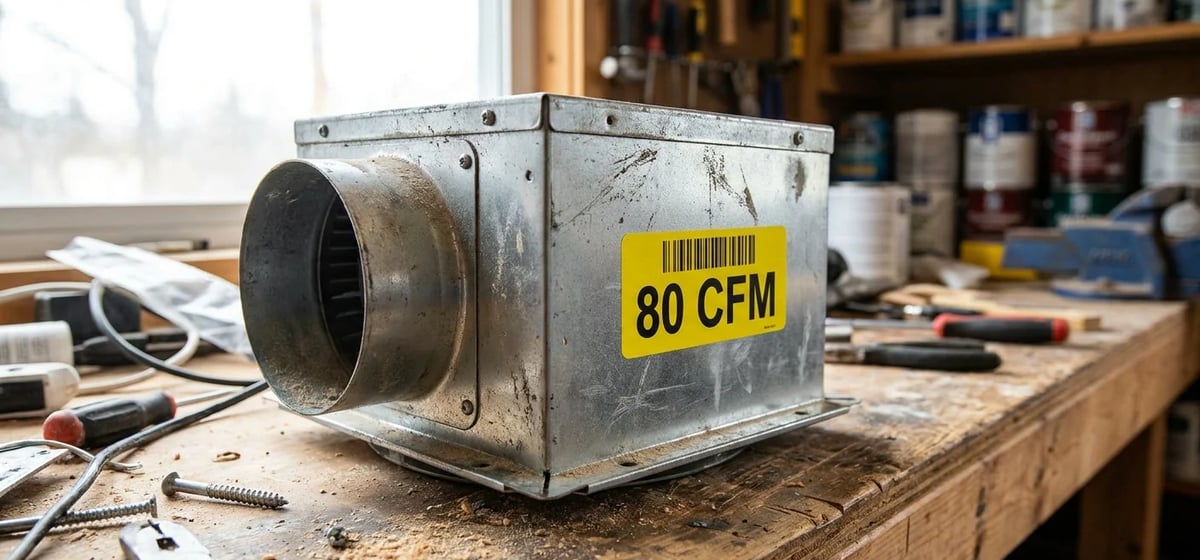
When you shop for a new fan or look at your heating system, you'll see a number labeled CFM. This stands for cubic feet per minute. It measures exactly how much air a piece of equipment moves in one minute. Picture a cardboard box that measures one foot on all sides. A bathroom fan rated at 50 CFM moves 50 of those boxes of air out of your room every 60 seconds.
The higher the number, the more powerful the fan. You need this power to push out bad smells, steam, and smoke. If you buy a fan with a low number for a large room, the fan will run constantly but it won't ever clear the air.
Where You Will Find This Number
You'll run into this measurement in three main spots around your house.
- Bathroom exhaust fans: These pull shower steam out of the room so mold doesn't grow on your ceiling.
- Kitchen range hoods: These sit above your stove. They suck up cooking grease, smoke, and heat.
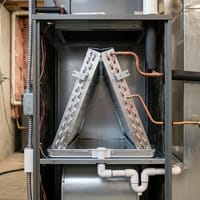
- Heating and cooling systems: Your furnace and air conditioner have blowers. These blowers push treated air through your ducts to heat or cool your rooms. You can learn more about these blowers in our HVAC & Climate Control guide.
How to Pick the Right Size
You'll want a fan that fits your space. If you buy a fan that's too small, it won't do its job. If you buy one that's too big, it'll waste energy and make too much noise.
For bathrooms, the math is simple. You'll need one CFM for every square foot of floor space. If your bathroom is 80 square feet, you need an 80 CFM fan. For larger bathrooms over 100 square feet, you add power based on your fixtures. Add 50 for a toilet, 50 for a shower, and 100 for a jetted tub.
Kitchen range hoods need more power. If you have an electric stove, measure the width of the stove in inches. Multiply that number by 10. A standard 30 inch electric stove needs a 300 CFM hood. Gas stoves produce more heat and fumes. Divide the total BTUs of all your burners by 100 to get your target number. You can read more about this in our Appliances section.
What It Costs to Upgrade
Buying a new fan with a higher rating will cost you money for both the unit and the labor. Prices and ranges vary based on where you live and the brand you pick.
A standard bathroom exhaust fan rated between 50 and 110 CFM usually costs 50 to 200 dollars. Kitchen range hoods cost more. A basic hood runs 100 to 300 dollars. A powerful island hood rated at 400 to 900 CFM can cost 400 to over 1000 dollars.
If you hire a professional to install it, expect to pay 100 to 300 dollars in labor for a simple swap. If the contractor has to cut a larger hole in your ceiling or run new, wider ducts to handle the extra airflow, your labor costs will climb quickly.
Why Too Much Power Is a Problem
You might think bigger is always better. That isn't true for home ventilation. When a massive fan blows air out of your house, new air has to come inside to replace it. This is called makeup air.
If you install a massive 600 CFM range hood in a tightly sealed house, it'll suck out the air so fast that it creates negative pressure. The house will pull replacement air from anywhere it can. It might pull cold winter air through the cracks in your windows. Worse, it could pull dangerous carbon monoxide down your chimney or out of your water heater vent. It can also pull musty air up from your basement, which you can read about in our Smells & Odors guide.