What Is a Circulator Pump
A circulator pump is a small electric device that pushes hot water through your home heating system. The word circulator comes from the Latin word circulare, meaning to form a circle. Plumbers adopted the term in the early 1900s when closed loop heating systems replaced older gravity fed designs. This little pump is basically the heart of a hydronic heating setup. It keeps hot water moving from the boiler out to your radiators or baseboards and then back again. Without it, the hot water would just sit inside your boiler. This means your rooms would stay freezing cold even if the boiler burner is firing perfectly.
Why It Matters to You
This pump is a vital part of your HVAC & Climate Control system. When it works right, your home stays cozy and comfortable all winter long. The pump ensures heat is delivered evenly across your house so you don't have cold spots. Some homes also use a special circulator pump on their main domestic water heater. This specific setup gives you instant hot water at your kitchen or bathroom faucet. You don't have to stand there and let the tap run while waiting for the water to warm up. This simple upgrade saves thousands of gallons of clean water every single year. A good pump runs quietly and efficiently in the background without you ever noticing it.
Where You Find It
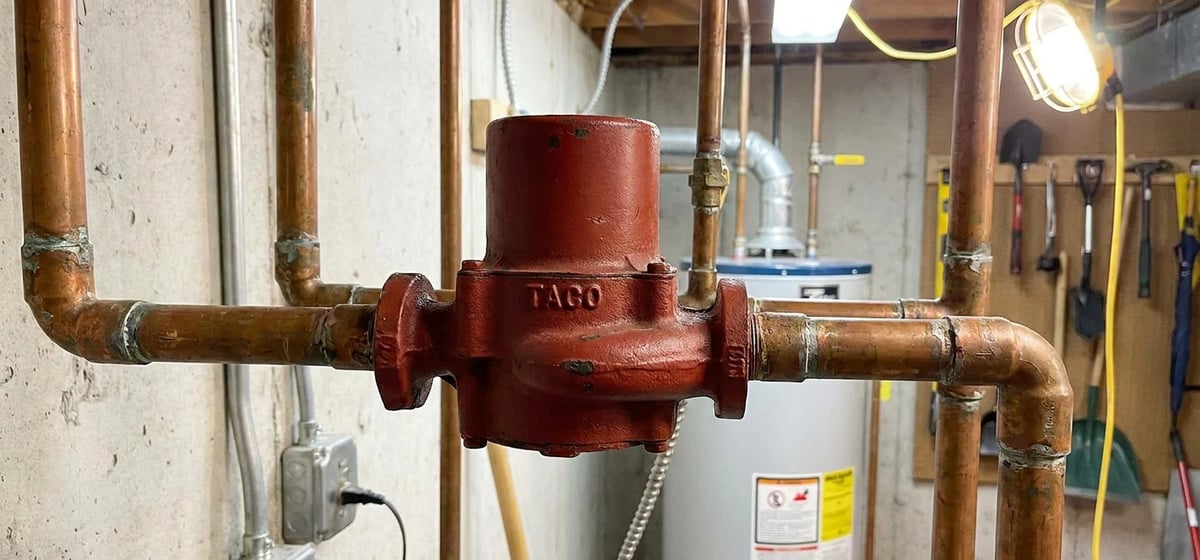
You'll usually find the circulator pump attached to the pipes right near your boiler or water heater in the basement or utility closet. It looks like a heavy metal snail shell bolted directly into the water line. Most of them are painted bright red, green, or cast iron black. They have a small cylindrical electric motor on one side and a pipe connection on the other. Smaller homes might have just one pump for the whole house. Larger homes often have several pumps lined up in a row on a pipe manifold. Each pump controls the heat in a different zone of the house. This setup lets you keep the bedrooms cool while the living room stays warm.
What to Watch For
Circulator pumps are tough and can easily last 10 to 15 years. However, they do wear out eventually. You should listen to your pump when your heat first turns on for the season. It should make a very quiet and steady hum. A loud grinding or rattling noise means the internal bearings are failing. If you hear water sloshing or gurgling, air is trapped inside the pipes and needs to be bled out.
You might also notice that one room stays totally cold while the rest of the house is warm. This usually means a pump for that specific zone is stuck or completely dead. You should also check the floor around the pump for dripping water. A leaky rubber seal will eventually destroy the electric motor. If you see a puddle forming, it is time to call a pro who handles Plumbing repairs.
Typical Costs
Replacing a broken circulator pump is a standard repair for a local heating professional. You'll usually pay between 400 to 800 dollars for the entire job. Prices vary based on your local area and the exact pump model your boiler needs. The pump unit itself usually costs 150 to 300 dollars at a supply house. The rest of the bill goes toward labor and minor parts.
Plumbers can usually swap out a broken pump in one to two hours. They will drain a little bit of water from the system, unbolt the old pump flanges, wire up the new motor, and bleed the trapped air out of the pipes. If you need help finding a good pro to do this work, read our guide on Hiring Contractors & What Things Cost.