What Is a Contactor?
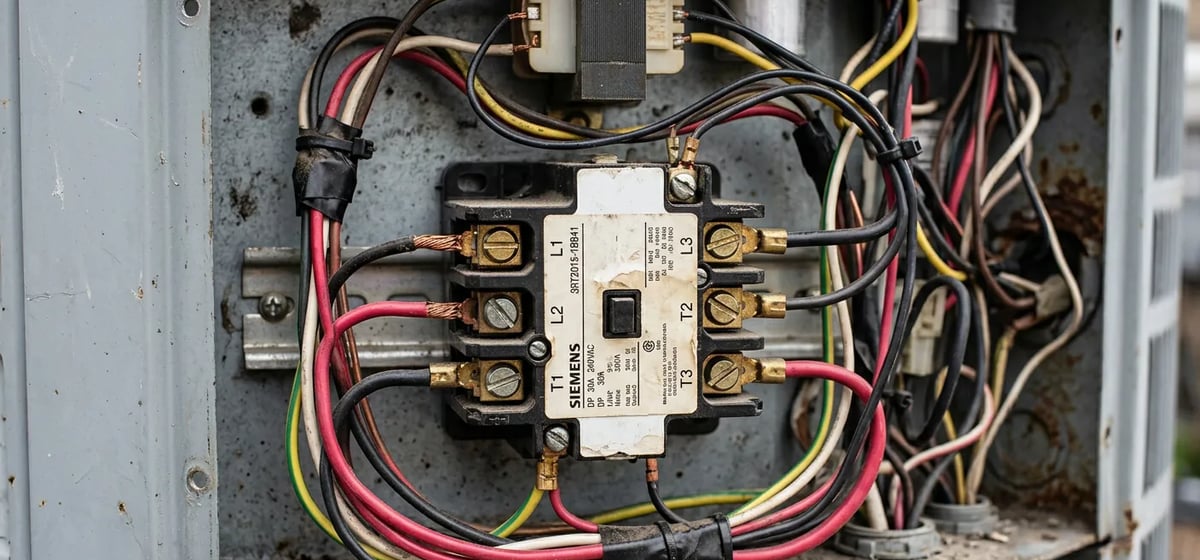
A contactor is a heavy duty electrical switch sitting inside your outdoor air conditioning unit. It controls the high voltage power that runs your compressor and your condenser fan. Think of it as the gatekeeper for your cooling system. When your thermostat inside the house calls for cold air, it sends a low voltage signal outside. This signal tells the contactor to snap shut. Once it closes, high voltage electricity flows through and starts the heavy machinery. The word comes from the Latin word contactus, meaning a touching. Engineers created the term in the early 1900s for switches that physically bring two electrical contacts together.
How Your Contactor Works
Your air conditioner needs a lot of power to cool your home. A standard thermostat can't handle that much electricity safely. That is why your system uses a contactor. The thermostat sends a safe 24 volt signal to a magnetic coil inside the contactor. This magnet pulls the metal contacts together with a loud click. When the metal pieces touch, 240 volts of electricity rush into the compressor. When your house reaches the right temperature, the thermostat stops sending the signal. The magnet releases, a spring pushes the contacts apart, and the outdoor unit shuts off. You can learn more about how these systems operate in our guide to HVAC & Climate Control.
Signs of a Failing Contactor
Contactors wear out over time. Every time those metal pieces snap together, a tiny electrical arc jumps between them. This spark slowly burns and pits the metal. Bugs and dirt can also get trapped between the contacts. If you know what to watch for, you can catch a bad contactor before it ruins your compressor.
- A humming or buzzing sound: If the outdoor unit makes a loud hum but the fan doesn't spin, the contactor coil might be weak or failing.
- A chattering noise: If the switch clicks rapidly over and over, the contacts are struggling to stay closed.
- The AC never shuts off: Sometimes the metal contacts melt and weld themselves together. If this happens, the outdoor unit will run even when the thermostat is off.
- No cold air: If the contactor burns out completely, the outdoor unit won't turn on at all.
How Routine Maintenance Helps
You can extend the life of your contactor with basic yearly maintenance. When an HVAC technician comes out for a spring tune up, they will check this switch. They look for black burn marks on the plastic housing. They also test the voltage dropping across the metal plates. If the voltage drops too much, it means the metal is pitted and needs replacing.
Keeping the area around your outdoor unit clean also helps. Ants and earwigs love the warmth and magnetic field of a contactor. They often crawl inside the switch. When the switch snaps shut, it crushes the bugs. Over time, dead bugs build up and stop the metal plates from touching. You can prevent this by keeping grass, weeds, and mulch pulled back from the unit. If you want to understand more about your home power needs, check out our guide on Electrical systems.
Replacement Costs and Repair
Replacing a contactor is a common and affordable repair. You should never ignore a failing contactor. A bad switch can force your expensive compressor to work too hard and burn out. A new compressor costs thousands of dollars, but a new contactor is cheap. The part itself usually costs 20 to 50 dollars. If you hire a professional HVAC technician, expect to pay 150 to 300 dollars for the part and the labor. Prices vary depending on where you live and the time of year.