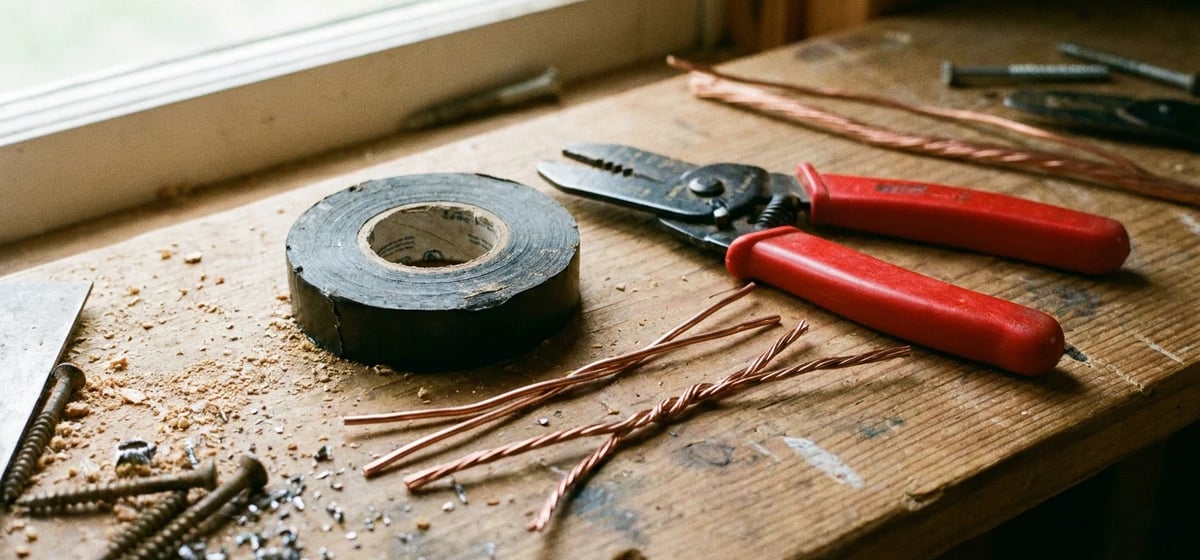
What Electrical Tape Is
Electrical tape is a stretchy plastic tape used to cover exposed wires and keep you safe. Inventors at 3M created the first vinyl electrical tape in 1946. They needed a better product to replace older cloth tapes that rotted and failed quickly. The name describes its specific use in electrical work. This tape is made from a special vinyl that handles electric currents without melting, breaking down, or catching fire.
Most rolls you see are black. You can also find this tape in red, white, green, and blue. Electricians use these bright colors to mark different types of wires so they know exactly what each wire does. A standard roll costs $2 to $5 at any hardware store. Premium brands that stretch better might cost up to $8. Keep in mind that prices vary based on the brand and how much tape is on the roll.
Why You Need It
You need this tape to keep your home safe from unexpected electrical fires. When wires connect to each other, the metal parts cannot stay exposed to the open air. If a bare wire touches another wire, a metal box, or a stray screw, it causes a short circuit. This short circuit can spark and instantly start a fire inside your walls.
Electrical tape wraps tightly around these loose connections. It stretches as you pull it. This stretching action creates a strong, tight seal that keeps moisture, dirt, and dust away from the sensitive metal. The thick vinyl material completely stops the electricity from jumping where it does not belong. It is a very basic but deeply vital part of your home Electrical system. Without it, simple wiring jobs would be incredibly dangerous.
Where You Will Find It
You will see electrical tape almost anywhere wires connect in your house. If you open a light switch box, you might see black tape wrapped around the plastic wire nuts. Electricians do this to make sure the nuts do not vibrate loose over time. You will also spot it inside the ceiling boxes directly behind your heavy light fixtures. Sometimes it is wrapped around the thick wires entering your main breaker panel. You might even see it on the power cord of an old lamp if a previous owner tried to patch a small cut.
- Inside wall outlets and light switches to secure loose wire nuts.
- Around wire connections in heavy ceiling fan boxes.
- Marking white wires as hot wires in older switch loops.
- Bundling loose low voltage wires together near your television or computer.
- Wrapping outdoor wire splices before they go into a waterproof box.
How To Use It Correctly
Applying electrical tape takes a little bit of practice. You should always stretch the tape slightly as you wrap it around a wire. This stretching makes the tape grip the wire tightly. You want to overlap each layer by half the width of the tape. This double layer gives the wire extra protection.
When you reach the end of your wrap, do not stretch the final inch of tape. Just lay it down flat and press it into place. If you stretch the very end, the tape will slowly pull itself backwards and peel off the wire over time.
What To Watch For
Electrical tape is tough, but it does not last forever. Over time, the sticky glue on the back can dry out and fail. The tape might unroll and leave a sticky black goo on your wires. Extreme heat in an attic can also make the tape brittle and cause it to crack open. If you see peeling or cracked tape, you should replace it or call a licensed electrician to inspect the wires.
You also need to know when to stop a project. Wrapping a simple wire nut is easy enough. Fixing a complex wiring mess inside a crowded wall box is not. Read our guide on DIY vs. Hiring a Pro before you tackle big electrical jobs. If you ever smell burning plastic near an outlet, turn off your power immediately. This is one of those Home Emergencies you simply cannot ignore.