What Is Emergency Heat?
Emergency heat is a manual setting on your heat pump thermostat. It forces your backup heating system to turn on and take over completely. Heat pumps move warm air from the outside into your house. When it gets extremely cold outside, your heat pump has a hard time finding warm air. Modern heat pumps have a backup heater to help out. This backup heater turns on automatically when the temperature drops too low. But if your main heat pump breaks down or freezes solid, you can flip the switch to emergency heat. Heating engineers created this term in the late 20th century to separate normal backup heating from manual overrides. The word emergency comes from a Latin root meaning to rise up or come to light.
When you turn this setting on, you bypass the main heat pump completely. Your house relies entirely on the backup heat strip to stay warm. These backup strips are usually electric resistance heaters. They work just like the glowing coils inside a toaster. They get very hot very fast, and a fan blows that heat through your air ducts. While this keeps your family safe and warm, it isn't meant to be a permanent fix.
Why It Matters to Your Wallet
Running your thermostat on emergency heat is incredibly expensive. Your normal heat pump is very efficient because it moves heat rather than making it. Electric backup strips have to create heat from scratch. This uses a massive amount of electricity. If you leave this setting on for a whole month, your power bill will skyrocket.
A normal winter electric bill might run 150 to 250 dollars. If you run your system on emergency heat for a few weeks, that bill can easily jump to 400 to 800 dollars or more. Costs always vary by your local utility rates and the size of your home, but the spike is always huge. You should only use this feature to keep your pipes from freezing while you wait for a repair technician. You can read more about handling sudden home breakdowns in our guide to Home Emergencies.
When to Actually Use It
You should only flip the switch to emergency heat in a true crisis. Your heat pump is smart enough to use its backup heat automatically when the weather gets cold. You don't need to turn on emergency heat just because it is freezing outside. Many new homeowners make the mistake of turning it on during the first snowstorm. Here are the only times you should use this manual setting:
- Your outside heat pump unit is completely encased in a thick block of ice and the defrost cycle isn't working.
- A falling branch or heavy storm physically damaged the outside fan or compressor unit.
- Your house is getting dangerously cold and the normal heat setting is just blowing cold air through the vents.
- An HVAC technician specifically tells you to turn it on while you wait for a repair part to arrive.
What to Watch For
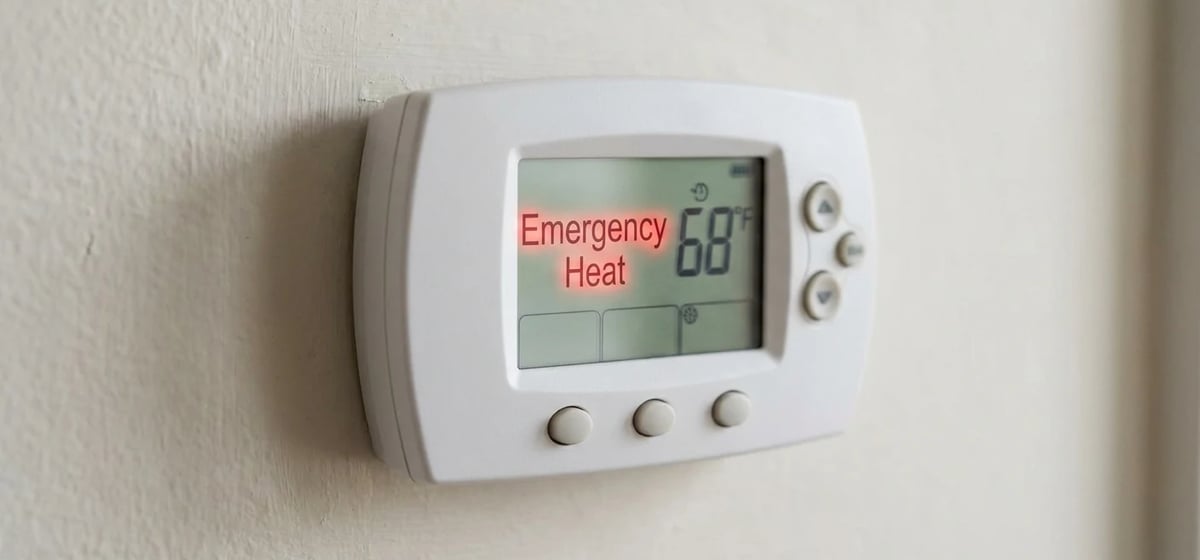
Sometimes homeowners turn on emergency heat by accident. If you are learning the ropes of your HVAC & Climate Control system, always check the thermostat screen. Look for a red light or a small icon that says "EM Heat" or something similar. If you see this light and you didn't turn it on, your system might have a problem.
If your heat pump runs in emergency mode automatically, it means the main compressor outside is failing. You will need to call a professional to inspect the system. A basic service call usually costs 75 to 150 dollars. If the technician needs to replace a bad circuit board or a broken fan motor, expect to pay 300 to 600 dollars. Prices vary depending on where you live and the brand of your equipment. Always turn off the emergency setting as soon as your main system is fixed so you stop burning expensive electricity.