What Is a Heat Strip?
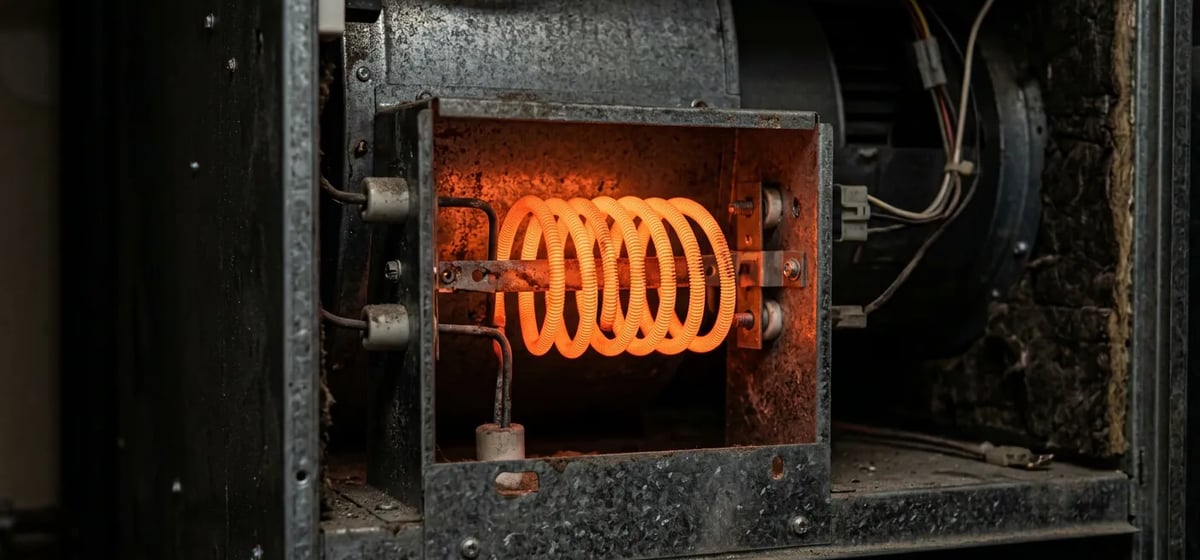
A heat strip is a large coil of wire sitting inside your indoor air handler. It acts as a backup heater for your home. If you have a heat pump, you almost certainly have a heat strip. You can think of it like the glowing wires inside a giant toaster. When electricity flows through the metal coil, the wire gets extremely hot. Your blower fan pushes air over this hot wire. That heated air then travels through your ducts and out of your vents to warm your house.
HVAC technicians often call them strips because these coiled heating elements come mounted on long, narrow metal plates. They slide right into a slot in your ductwork or air handler.
How It Works With Your Heat Pump
A heat pump usually does a great job keeping your house warm. It pulls heat from the outside air and moves it indoors. But when the temperature outside drops below 30 to 35 degrees, there is not enough heat in the air for the pump to grab. The system struggles to keep up.
When your thermostat senses the heat pump falling behind, it turns on the heat strip. This is why you will often see the words "Aux Heat" or "Emergency Heat" light up on your thermostat screen. The heat strip gives your HVAC & Climate Control system the extra boost it needs to keep your family comfortable on freezing nights.
Why It Matters to Your Wallet
Heat strips are cheap to install but very expensive to run. A heat pump uses a small amount of electricity to move heat from one place to another. A heat strip creates heat out of thin air by pulling a massive amount of electrical current. It takes a lot of power to make thick metal wires glow hot.
If your heat pump breaks and your system relies entirely on the heat strip, your electric bill will skyrocket. It is very common for homeowners to see their utility bill double in a single month during a cold snap. You want the heat strip to run as little as possible.
What to Watch For
Heat strips sit unused for months at a time. Dust naturally settles on the metal coils over the spring, summer, and fall. When the first freezing night hits and the strip turns on, that dust burns off instantly.
- Burning smells: You will likely notice a dusty, burning odor coming from your vents the first time the heat kicks on in the winter. This is completely normal and usually fades in 10 to 20 minutes. If you are worried about strange scents, you can read more about Smells & Odors in your home.
- Tripped breakers: Because heat strips draw so much power, a failing strip can easily trip the circuit breaker in your electrical panel. If you reset the breaker and it trips again, leave it alone and call a professional.
- Cold air blowing: If your thermostat says auxiliary heat is on but you feel cold air coming from the vents, the heating coil might be broken. The wire can snap or burn out over time.
Replacement Costs
Eventually, the metal wire inside the strip will break or burn out. When this happens, a technician will need to slide out the old metal plate and install a new one. The part itself is fairly cheap. Most of the cost comes from the labor to open up the air handler and wire the new part safely. Expect to pay $150 to $400 for a professional replacement, though ranges vary based on your local market and the size of your unit. You can learn more about typical home repair prices in our guide to Hiring Contractors & What Things Cost.