What is a gusset plate?
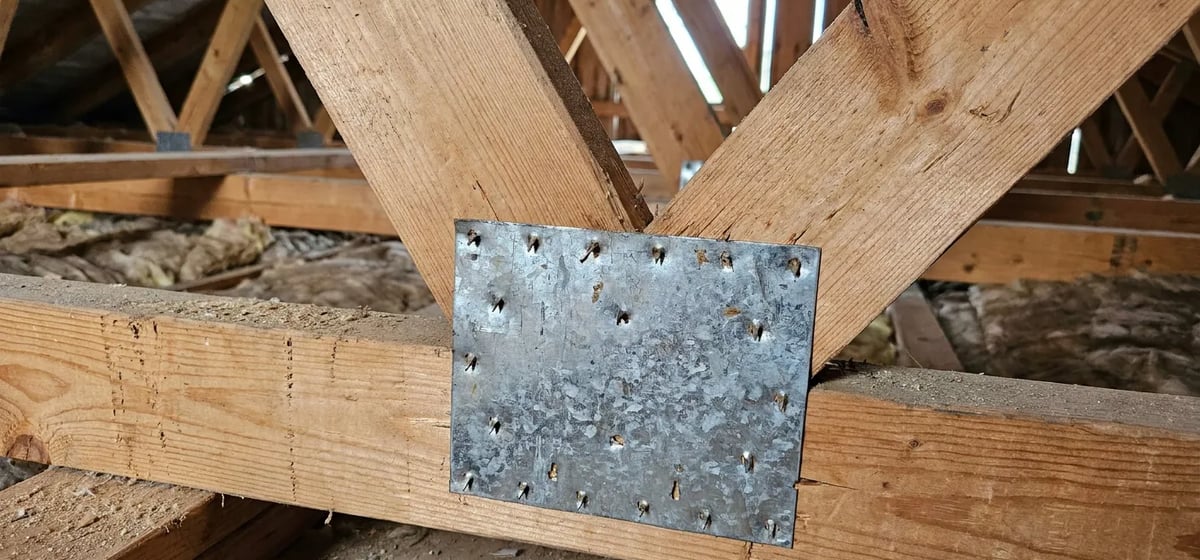
A gusset plate is a flat bracket that connects multiple beams together. You will usually see these flat pieces holding the angled parts of your roof framing securely in place. They add serious strength to joints that carry heavy loads. The word gusset comes from an old French word for a piece of armor that protects the armpit. Builders adapted the term in the late 1800s for a plate that reinforces a weak joint.
In modern homes, these plates are almost always made of galvanized steel. Factory built roof trusses use a special type of metal gusset plate. These have sharp teeth stamped into the metal. A massive press squeezes these teeth into the wood to lock the beams together. Older homes or custom jobs might use thick plywood plates that are glued and nailed over the joints.
Where you will find them
You will spot gusset plates anywhere your home needs extra structural support at a joint. The most common spot is right above your head. If you pop your head into the attic, you will see them connecting the zigzagging wood beams that hold up your roof. You can learn more about how your roof goes together in our guide to Roofing.
You might also find them under your house. Some floor systems use wooden trusses held together by metal plates. If you have a large wooden deck in your backyard, heavy duty metal gusset plates might connect the support posts to the main beams.
Why they matter to your home
Your roof is incredibly heavy. Add a thick layer of winter snow or high winds, and the weight pushes down hard on your house. Gusset plates take all that stress at the joints and spread it out. Without them, the joints would snap or pull apart.
They also keep your walls from bowing out. The plates lock the triangular shape of your roof truss together. This shape pushes the weight straight down into your walls and down to your foundation. You can read more about how weight travels through your house in our Foundation & Structure guide.
What to watch for
Gusset plates are tough, but they can fail if things get wet. Keep an eye out for these common problems when you check your attic or crawlspace.
- Rust: High humidity or a roof leak can cause metal plates to rust. Surface rust is normal over time, but deep rust weakens the metal.
- Pulling away: If the wood dries out and shrinks, or if the roof carries too much weight, the teeth on metal plates can pull out of the wood.
- Wood rot: If you have plywood gusset plates, moisture can cause the wood to rot and the glue to fail.
What repairs cost
Fixing a damaged roof truss is not a weekend DIY project. You need a professional to make sure the repair meets building codes. If you see a damaged gusset plate, you will first need to hire a structural engineer. They will draw up a repair plan. Then, a carpenter or framing contractor will do the actual work. You can check our guide on Hiring Contractors & What Things Cost for tips on finding the right pro.
The contractor will usually cut thick pieces of plywood to match the joint. They will apply strong construction adhesive and nail the new wood directly over the damaged metal plate. This creates a sandwich that makes the joint strong again. Costs will vary based on where you live and how easy it is to reach the damaged area. Keep these ballpark figures in mind.
- Structural engineer inspection: Expect to pay 300 to 800 dollars for an inspection and a stamped repair plan.
- Contractor repair: A pro will typically charge 400 to 1000 dollars to fix a single damaged truss joint.
- Total cost: Most homeowners spend between 700 and 1800 dollars to fix a broken gusset plate connection.