What is MC cable?
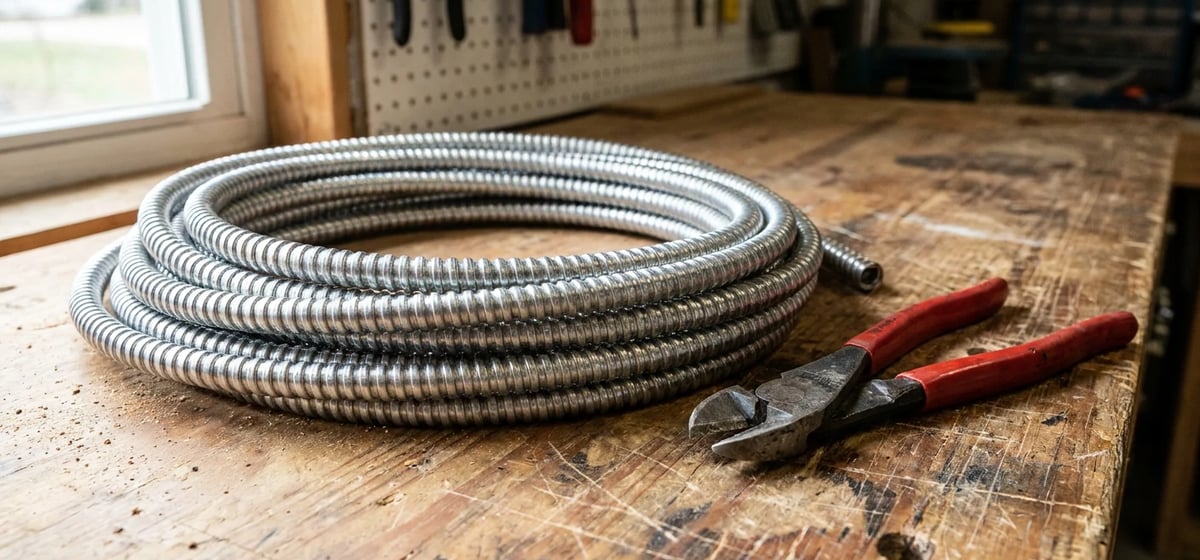
MC stands for metal clad. This type of electrical wire features a flexible metal armor wrapped around the insulated copper conductors inside. The continuous aluminum or steel jacket protects the sensitive electrical parts from physical damage.
Manufacturers introduced this armored design in the early 20th century. It provided a much safer alternative to the exposed cloth wiring that was common in older homes. Today, it remains a highly trusted material in modern home construction and remodeling projects.
You can easily spot this cable because it looks like a long, silver, ribbed tube. The interlocking metal casing bends easily around corners and framing. This flexibility makes it simple for electricians to route the cable through your home without needing rigid metal pipes.
Why it matters for your home
Standard plastic coated wire works great when hidden safely inside your drywall. However, standard wire is incredibly vulnerable when left exposed on a wall or ceiling. A stray nail, a sharp garden tool, or a heavy storage box can easily slice through plastic insulation.
MC cable solves this vulnerability with its tough metal shield. The armor stops everyday objects from piercing the live wires inside. It also provides an excellent defense against mice and rats that love to chew on plastic.
Rodent damage is a leading cause of hidden wiring issues, which is why armored wire is often recommended in Pest Control strategies. By keeping pests out, the metal jacket drastically reduces your risk of unexpected electrical fires.
Furthermore, if a wire ever shorts out inside the cable, the metal jacket helps contain the sparks. This added layer of fire resistance keeps your family and your property much safer over the long term.
Where you will find it
Electricians use this tough cable anywhere wires must run along the outside of a wall or ceiling joist. It is the absolute top choice for exposed indoor wiring. You will frequently see it in the following places around your house:
- Unfinished basements and open crawl spaces
- Detached garages and backyard workshops
- Utility rooms housing large mechanical equipment
You might also spot it connecting heavy utility equipment directly. Your water heater, furnace, or central air handler likely has a short whip of metal cable connecting it to the wall. Since these units sit in busy utility rooms, the metal jacket prevents accidental damage to the power supply.
If you are planning a basement renovation, you can learn more about safe wiring practices in our Electrical guide. Many local building codes legally require metal clad wiring for any exposed runs below a certain height.
What to expect for costs and installation
MC cable costs slightly more upfront than standard plastic wire. You can expect to pay about 1 dollar to 2 dollars per foot for the material itself. Standard plastic wire usually costs 50 cents to 1 dollar per foot in comparison.
Labor will add a significant amount to your total bill. Electricians typically charge 75 to 150 dollars per hour to run new circuits and install outlets. While prices vary by region, a typical garage wiring project using metal clad cable might cost 300 to 800 dollars total.
If you need to find a good professional for this job, check out our tips on Hiring Contractors & What Things Cost. A licensed pro will ensure your new wiring meets all local safety codes and passes your municipal inspection.