What is a Single-Pole Switch?
A single-pole switch is the most basic and common type of light switch in your home. It controls a light, a ceiling fan, or an outlet from one single location. When you flip the switch up, it connects the electrical circuit and turns the power on. When you flip it down, it breaks the circuit and turns the power off.
The term single-pole simply means the switch has only one electrical connection point to open or close. Electricians have used this name since the 1920s when home wiring first became popular. If you are learning about your home Electrical system, this switch is the easiest part to understand.
How to Spot One in Your Home
You can usually identify a single-pole switch just by looking at it. Here are the main clues to look for.
- On and Off labels: Basic toggle styles often have the words ON and OFF stamped right on the plastic lever. Switches that control a light from multiple places usually do not have these labels.
- One control point: If a switch is the only way to turn on a specific room light, it is almost certainly a single-pole switch.
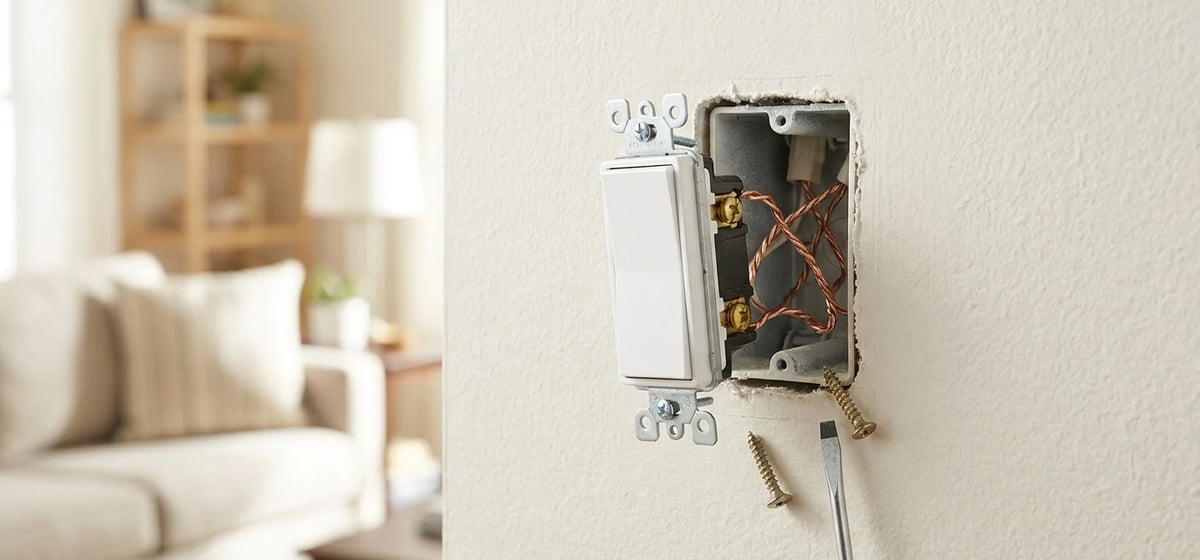
- Two screw terminals: If you take off the cover plate and pull the switch out of the wall, you will see two brass or copper screws on the side. There will also be a green screw for the ground wire.
You will find these switches in almost every room. They sit near bedroom doors, inside bathroom entrances, and next to closets.
What It Costs to Replace
Upgrading or replacing a broken switch is a common project. The parts are very cheap, but labor can add up quickly if you hire a professional. Keep in mind that these price ranges vary based on where you live and the brand you buy.
- Basic switch parts: A standard single-pole toggle or rocker switch costs 2 to 5 dollars at a hardware store.
- Smart switch parts: If you want a switch that connects to your phone or Wi-Fi, expect to pay 20 to 50 dollars per switch.
- Electrician labor: Hiring a professional usually costs 75 to 150 dollars per hour. Many electricians also charge a minimum trip fee of 50 to 100 dollars just to show up at your house.
Because the labor costs much more than the part, many homeowners choose to swap simple switches themselves. You can read more about deciding when to do it yourself in our guide to DIY vs. Hiring a Pro.
When to Replace Your Switch
Single-pole switches are built to last for decades. However, the internal metal parts can wear out over time. You should replace the switch if you notice any of these warning signs.
- The toggle feels loose or spongy when you flip it.
- You hear a crackling, buzzing, or popping sound inside the wall.
- The lights flicker even after you put in a brand new bulb.
- The switch plate feels warm or hot to the touch.
You might also want to replace a perfectly good switch just to update the look of your home. Many people swap out old toggle switches for modern, flat rocker switches. You can also replace a standard single-pole switch with a dimmer switch, as long as the new dimmer is rated for the type of lightbulbs you use.
Common Wiring Mistakes
If you decide to tackle this project yourself, you need to understand how the wires connect. A single-pole switch only controls the hot wire. This is usually the black wire in your wall. The switch interrupts this hot wire to stop the flow of electricity.
A common mistake is connecting the white neutral wires to the switch. Standard single-pole switches do not use neutral wires. The white wires should stay tied together in the back of the electrical box. Another frequent error is forgetting to connect the bare copper ground wire to the green screw on the switch. The ground wire protects you from electrical shocks if something goes wrong.
Finally, if you buy a smart single-pole switch, the rules change slightly. Many smart switches require a neutral wire to stay powered up so they can connect to your home internet. Always check the box before you buy a smart switch to make sure it matches the wiring you actually have in your wall.