What Is A Swale
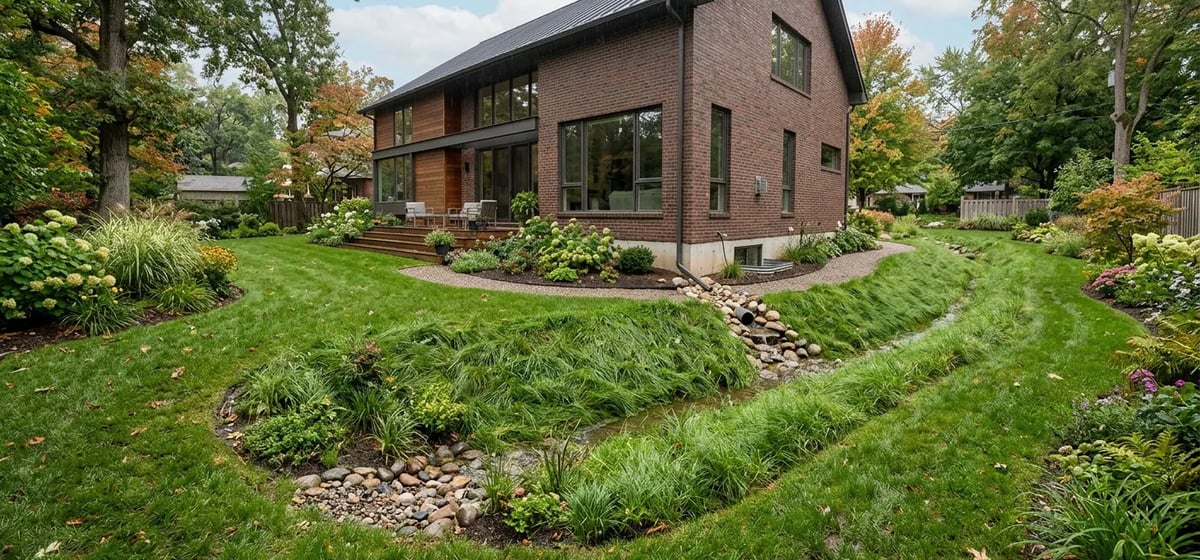
A swale is a shallow and wide ditch in your yard. It directs rainwater safely away from your house. Most of the time, it is covered in grass. This helps it blend right in with your lawn. You might not even notice it is there. The concept is not new. The word comes from the Old English term swalwe. That term referred to a low place or a valley. Early farmers used this idea to manage water runoff long before modern landscape grading existed. Today, landscapers dig these gentle slopes to stop puddles from forming. They are a simple way to guide water exactly where it needs to go.
Why It Matters To Your Home
Water is the biggest enemy of your house. If rainwater pools near your walls, it can seep into your basement or crawlspace. A swale acts like a natural gutter for your lawn. It catches heavy rain and moves it downhill. This protects your Foundation & Structure from serious water damage. Without proper yard drainage, the soil around your house gets soggy. Soggy soil puts pressure on your basement walls. This pressure causes cracks and leaks. A well-built swale takes that water away before it can cause trouble. It also keeps your yard from turning into a muddy swamp after a big storm.
Where You Run Into Them
You usually find swales near the edges of a property. Builders often put them between two houses. This stops water from draining off your neighbor's yard and into yours. You might also see them at the bottom of a steep hill. Sometimes they run parallel to a road or a sidewalk. If you are Buying a Home, you might see the term on a property survey or an inspection report. Inspectors look at the grading around the house to make sure water flows away from the walls. A swale is a big part of that drainage plan.
Maintenance And Costs
Taking care of a swale is easy. You just treat it like the rest of your lawn. However, you do need to keep an eye on a few things.
- Keep the channel clear of fallen branches and heavy leaves.
- Do not plant large trees or thick bushes in the middle of the dip.
- Do not build a shed or a fence right across the lowest point.
- Watch out for deep ruts from your lawnmower tires.
If dirt builds up or the grass gets too thick, the water will stop flowing. Puddles will sit in the ditch. If you need to fix an old swale or dig a new one, you will need to hire a landscaper. The price depends on how much dirt they need to move. A simple grass swale costs 500 to 1,500 dollars. If the landscaper needs to add rocks or a drain pipe underneath, the cost jumps to 2,000 to 4,000 dollars. Keep in mind that prices and ranges vary based on your location and yard size. You can learn more about yard projects in our guide to Landscaping, Drainage & Outdoor.
What To Watch For
Over time, a swale can lose its shape. Dirt washes down the hill and fills in the bottom of the ditch. When this happens, the water slows down. It might start to spill over the sides. You will notice standing water that takes days to dry up. This standing water attracts mosquitoes and ruins your grass. You also need to watch out for erosion. If the water flows too fast, it will wash the topsoil away. This leaves bare dirt and exposed roots. You might need to add river rocks to the bottom to slow the water down. This is called a dry creek bed. It looks nice and stops the dirt from washing away.